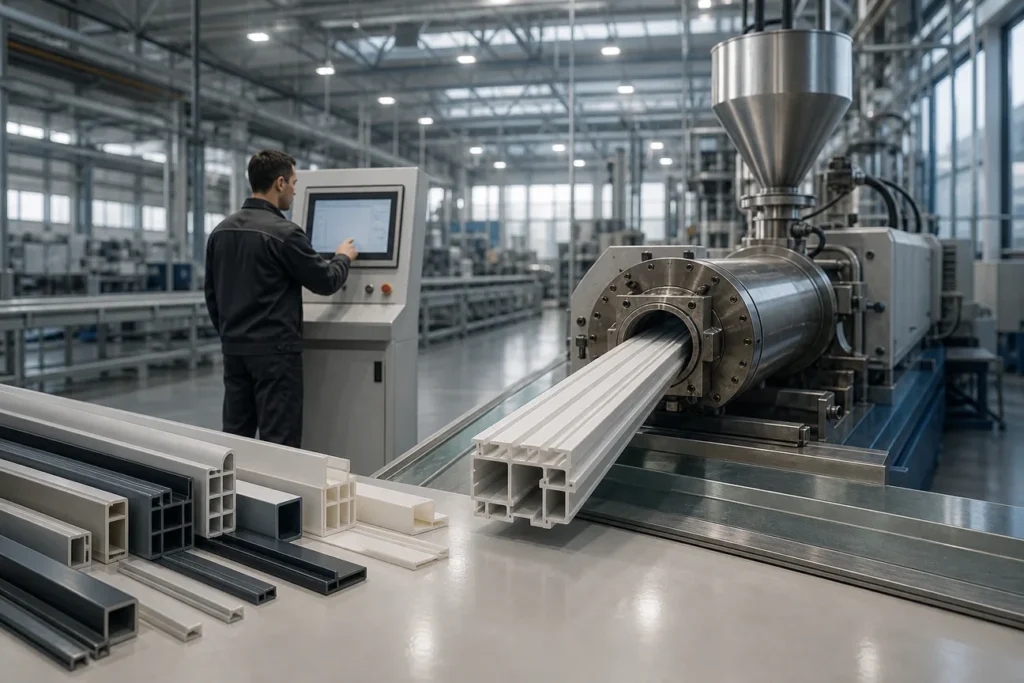
Choosing the right setup for plastic profile extrusion can feel like a maze of specs and options. Here are the ten key considerations that will help you pick the equipment, materials, and processes that actually move your line forward.
1. Plastivo Extrusions , Your Partner in Profile Extrusion Machinery
Plastivo Extrusions builds single‑ and twin‑screw extruders, screw barrels, and recycling lines from its plant in Vatva, Gujarat. The company serves customers in India, Kenya, Nigeria, South Africa, the UAE and beyond. Its twin‑screw model lists a 40 kg/h output, a nitrided‑steel barrel rated HRC 60‑65, and integrated OEE logging , data most Indian vendors keep hidden.
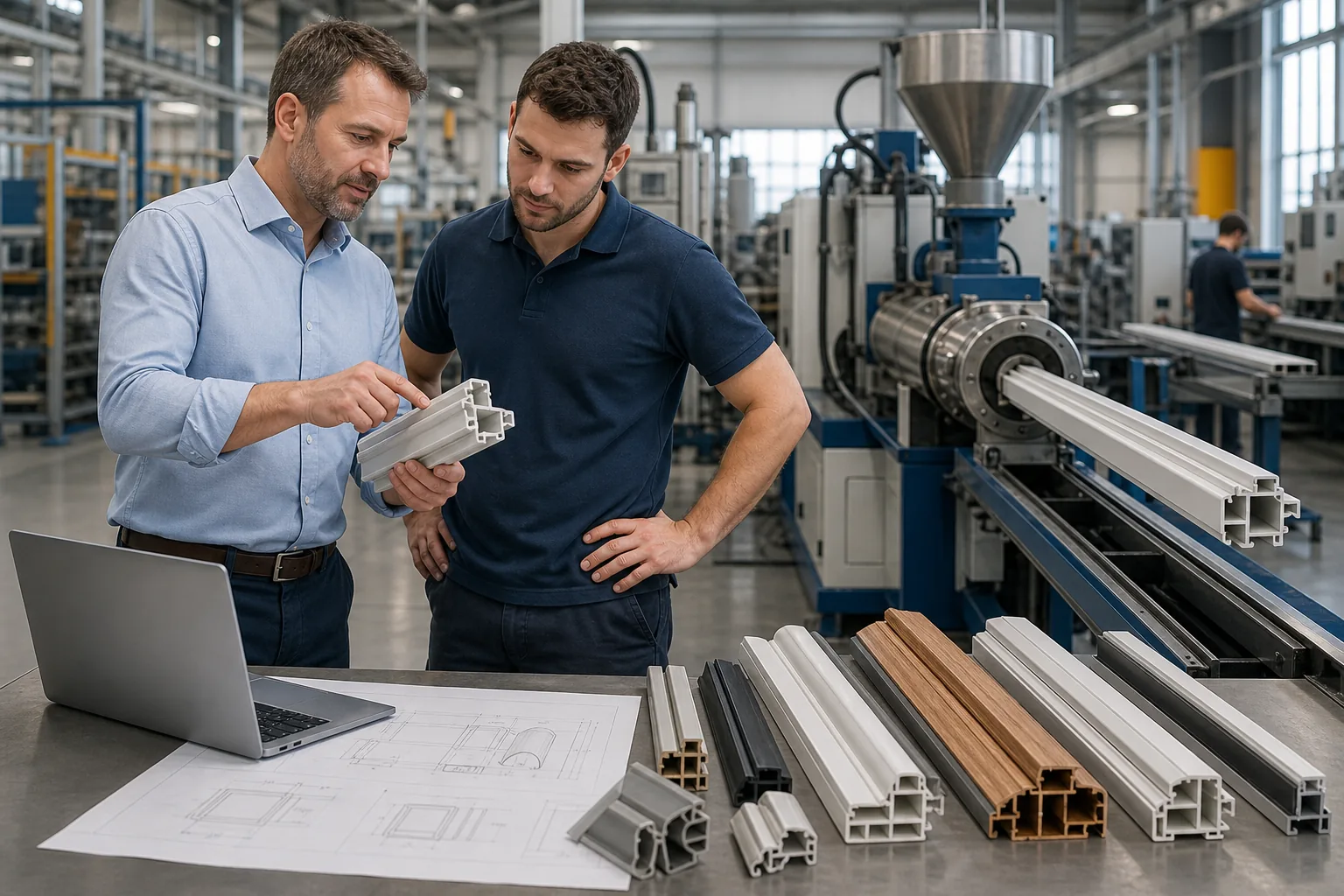
That level of transparency helps plant managers size their line, predict energy use, and plan maintenance without a guess‑work spreadsheet. The machines also feature a split stuffing box for fast barrel swaps, which cuts downtime during change‑overs.
One caveat: Plastivo’s machines focus on thermoplastics like PVC and HDPE, so they aren’t a fit for high‑temperature engineering resins without a custom barrel.
2. Single‑Screw vs Twin‑Screw Extruders for Profile Production
Single‑screw machines are simple, cost‑effective, and reliable for clean, high‑volume runs. Twin‑screw units add aggressive mixing, better devolatilization, and can handle recycled feedstock with less degradation. The self‑wiping geometry of twin screws also reduces melt‑channel wear.
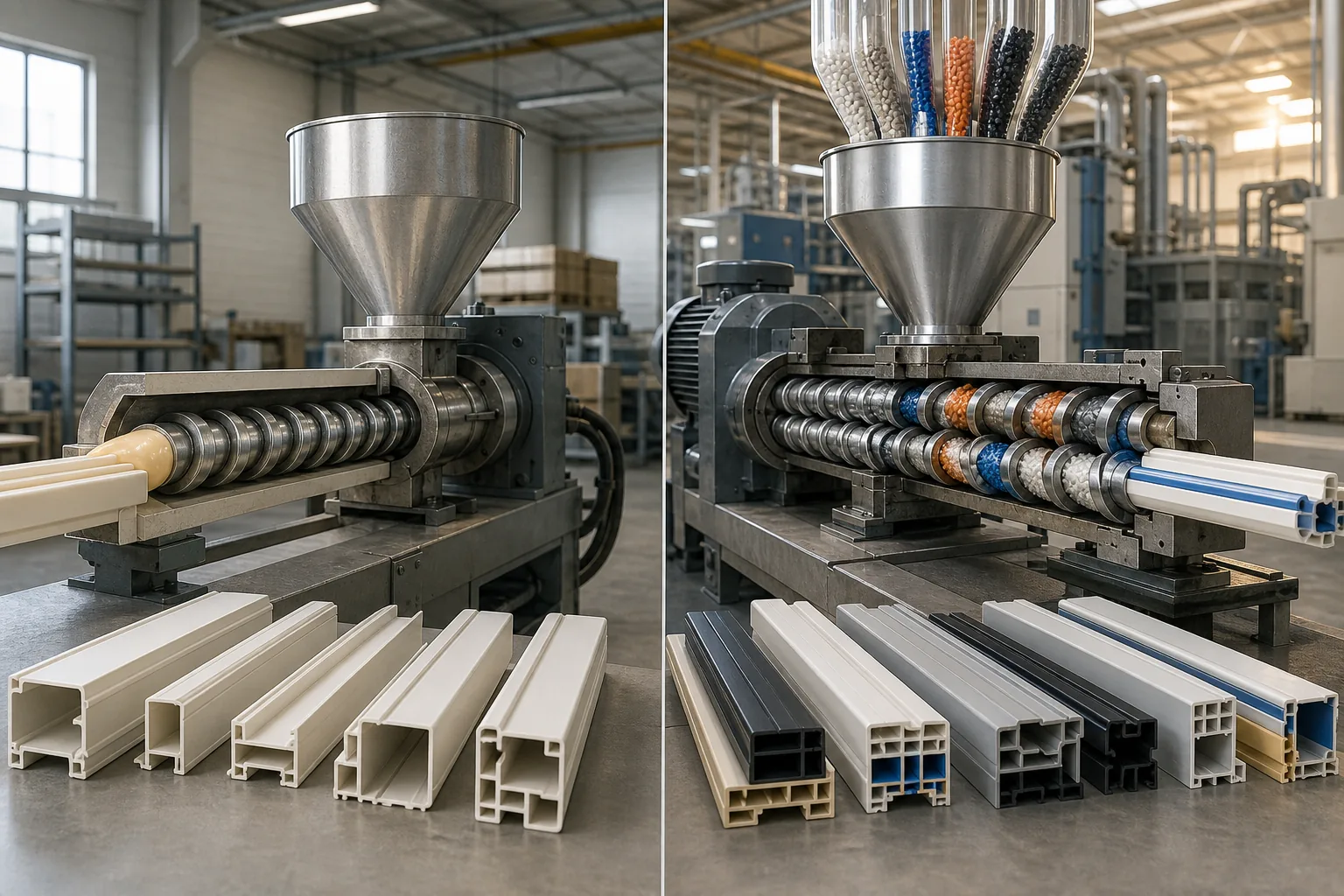
When you need to compound additives, masterbatches, or fiber‑reinforced blends, a twin‑screw design typically lifts output by 20‑30 % compared to a single‑screw of similar size. That boost comes from the extra kneading blocks and the ability to run a higher L/D ratio without choking the melt.
For plain PVC pipe or basic U‑channel profiles, a single‑screw may be the cheaper route. If your product line includes recycled material or high‑fill compounds, the twin‑screw’s mixing power pays off.
Understanding screw geometry and mixing element design is essential for achieving consistent melt quality and output.
3. Essential Die Designs for Accurate Profile Shapes
The die shapes the melt into the final cross‑section, so its design directly controls tolerances and surface finish. A well‑engineered breaker plate sits just before the die; it turns the spiral flow from the screw into a uniform stream, reducing pressure spikes and protecting the die from wear.
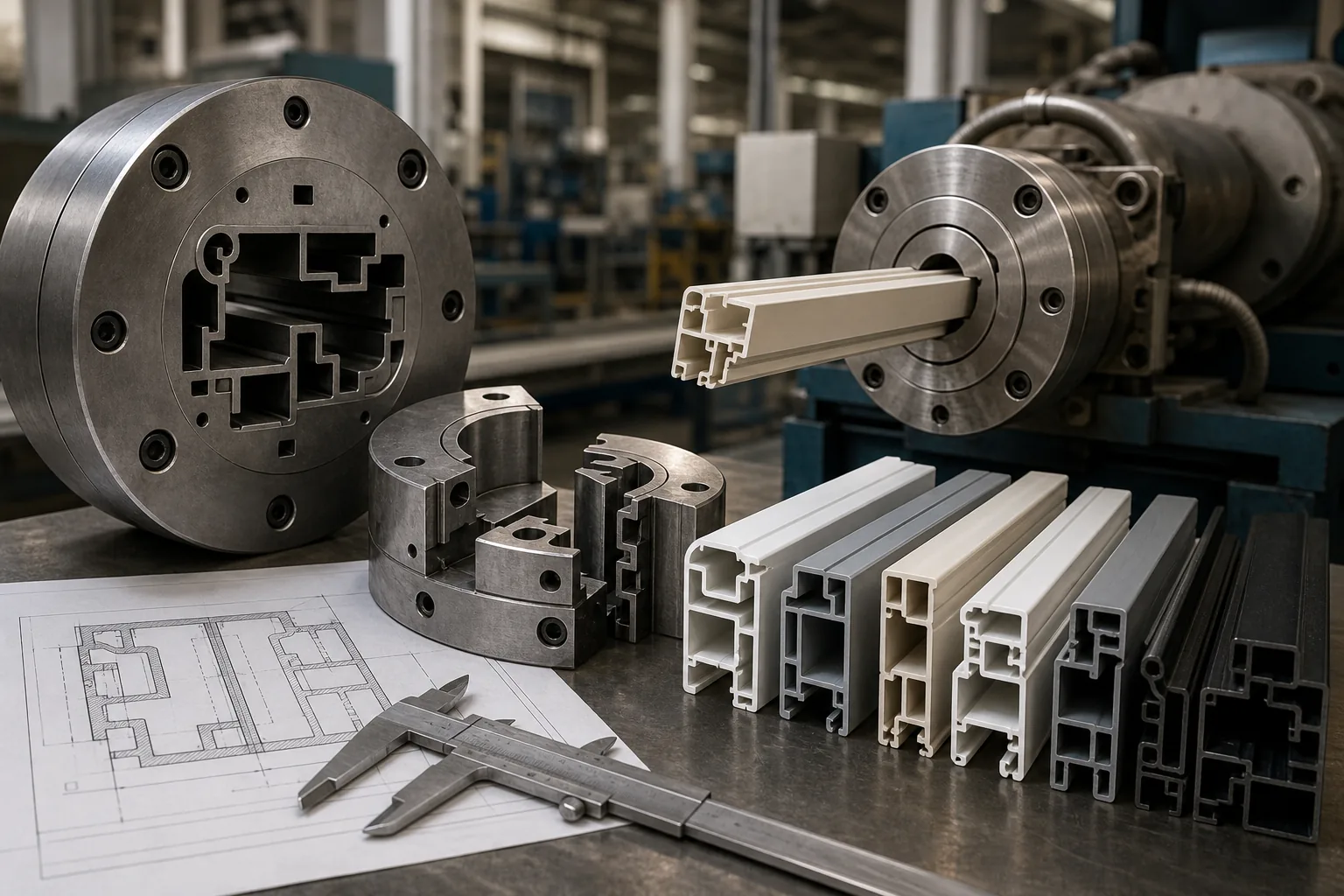
Multi‑plate dies allow you to change profile width on‑the‑fly, which speeds up short‑run production. For hollow sections, a spider plate with a central mandrel creates the void while the melt wraps around it.
Choosing a die made from hardened steel and matching its cooling channels to your polymer’s thermal profile minimizes die swell and improves dimensional stability.
SPiDER’s detailed guide on breaker plates explains why this component matters for melt uniformity SPiDER Breaker Plate Guide.
The die and breaker plate must be matched to the screw’s output pressure; otherwise you’ll see uneven wall thickness or surface chatter.
4. Best Materials for Profile Extrusion: PVC, ABS, Polycarbonate & More
PVC remains the workhorse for building‑grade profiles because it resists chemicals and UV when compounded with stabilizers. ABS offers higher impact strength, making it a good choice for automotive interior trims.
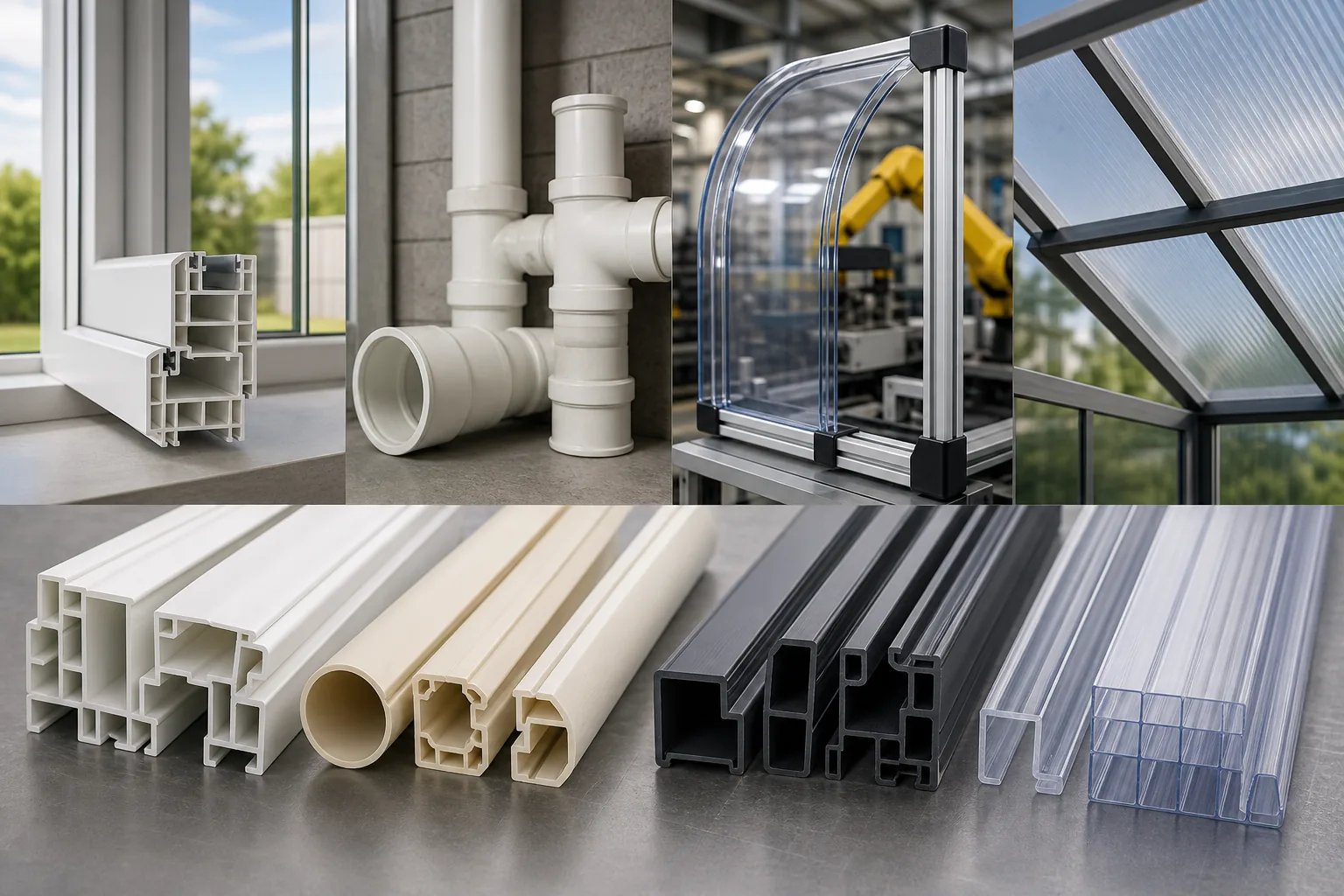
Polycarbonate delivers excellent clarity and heat resistance, perfect for lighting lenses or transparent façade elements. Glass‑fibre‑reinforced grades add stiffness without a big weight penalty, useful for structural frames.
Each polymer requires a specific melt temperature range , PVC around 170 °C, ABS near 210 °C, polycarbonate up to 280 °C , and the extruder’s barrel heating zones must be programmed accordingly.
Technoform’s data sheet on glass‑fibre‑reinforced profiles shows how adding continuous fibre boosts modulus while keeping the part lightweight Technoform Glass Fibre Profiles.
5. Common Profile Shapes and Their Industrial Applications
U‑channels and C‑channels dominate construction framing and cable trays. Square or rectangular tubes serve as conduit for fluid or air transport. Decorative trims often use thin‑wall profiles with embossed textures for retail displays.
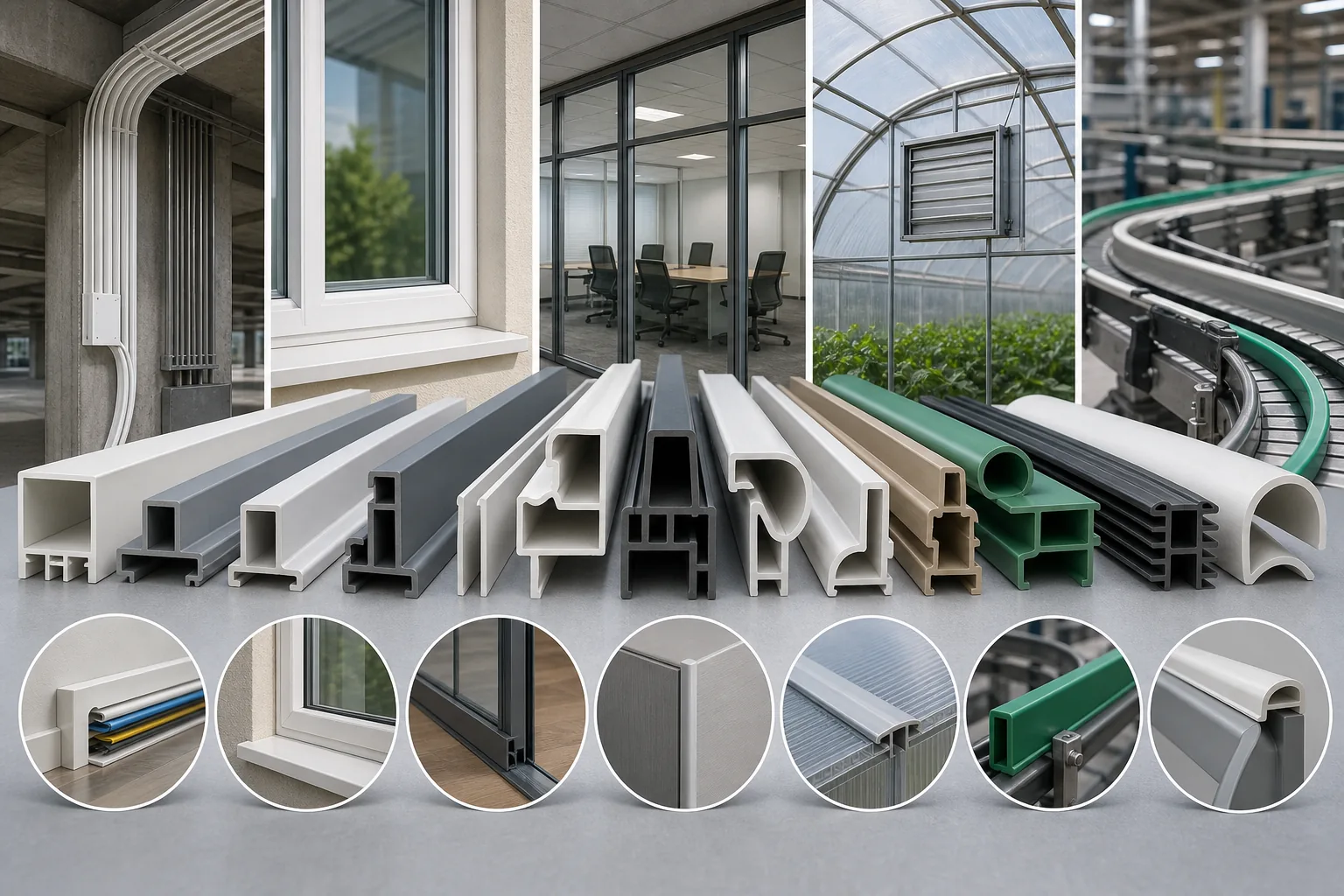
| Shape | Typical Use | Key Material |
|---|---|---|
| U‑Channel | Window framing, structural support | PVC, HDPE |
| C‑Channel | Cable trunking, HVAC ducts | PVC, CPVC |
| Square Tube | Water & gas pipe, scaffolding | PVC, Polycarbonate |
| Living Hinge | Foldable enclosures, packaging | PETG, ABS |
Choosing the right shape starts with the load the part will face. A hollow profile saves weight but needs thicker walls to avoid collapse under pressure.
Our catalog of PVC pipe extrusion machines shows how the same line can be retuned for profile work PVC Pipe Extrusion Machine.
6. Key Advantages of Extrusion Over Other Molding Methods
Extrusion produces a continuous cross‑section, so you get high volume with low per‑part tooling cost. The process runs 24/7, delivering steady output without the long cycle times of injection molding.
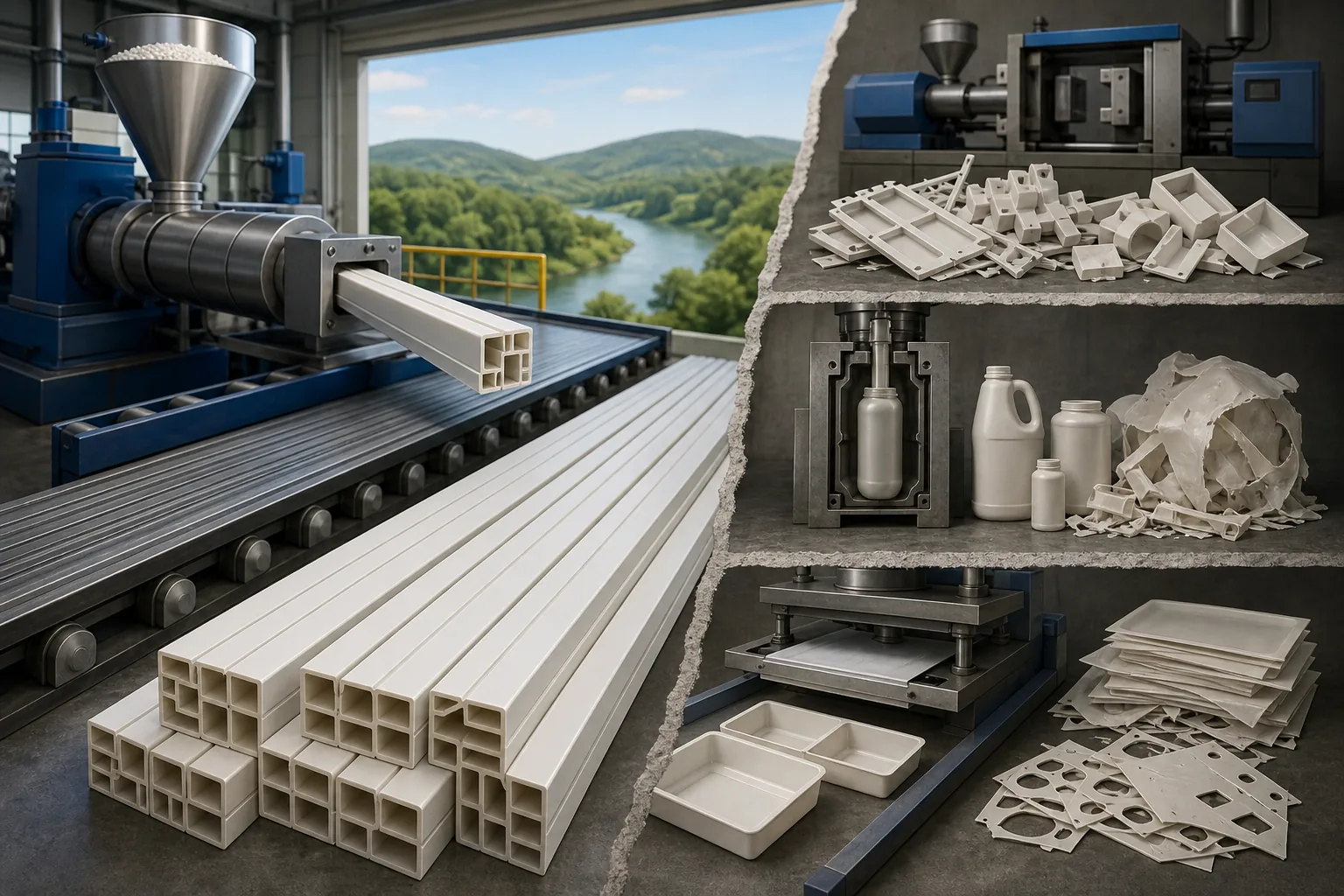
Because the die is simpler than a multi‑cavity injection mold, change‑over time drops dramatically , often under an hour for a new profile.
The material waste is low; excess melt can be re‑fed into the hopper, cutting scrap rates.
Extrusion’s lower capital expense and faster turnaround make it ideal for long, uniform profiles.
7. Critical Design Considerations for Custom Profile Extrusions
Keep wall thickness uniform; sudden thick‑thin jumps cause melt‑flow distortion and surface waviness. Aim for a minimum corner radius to avoid die breakage.
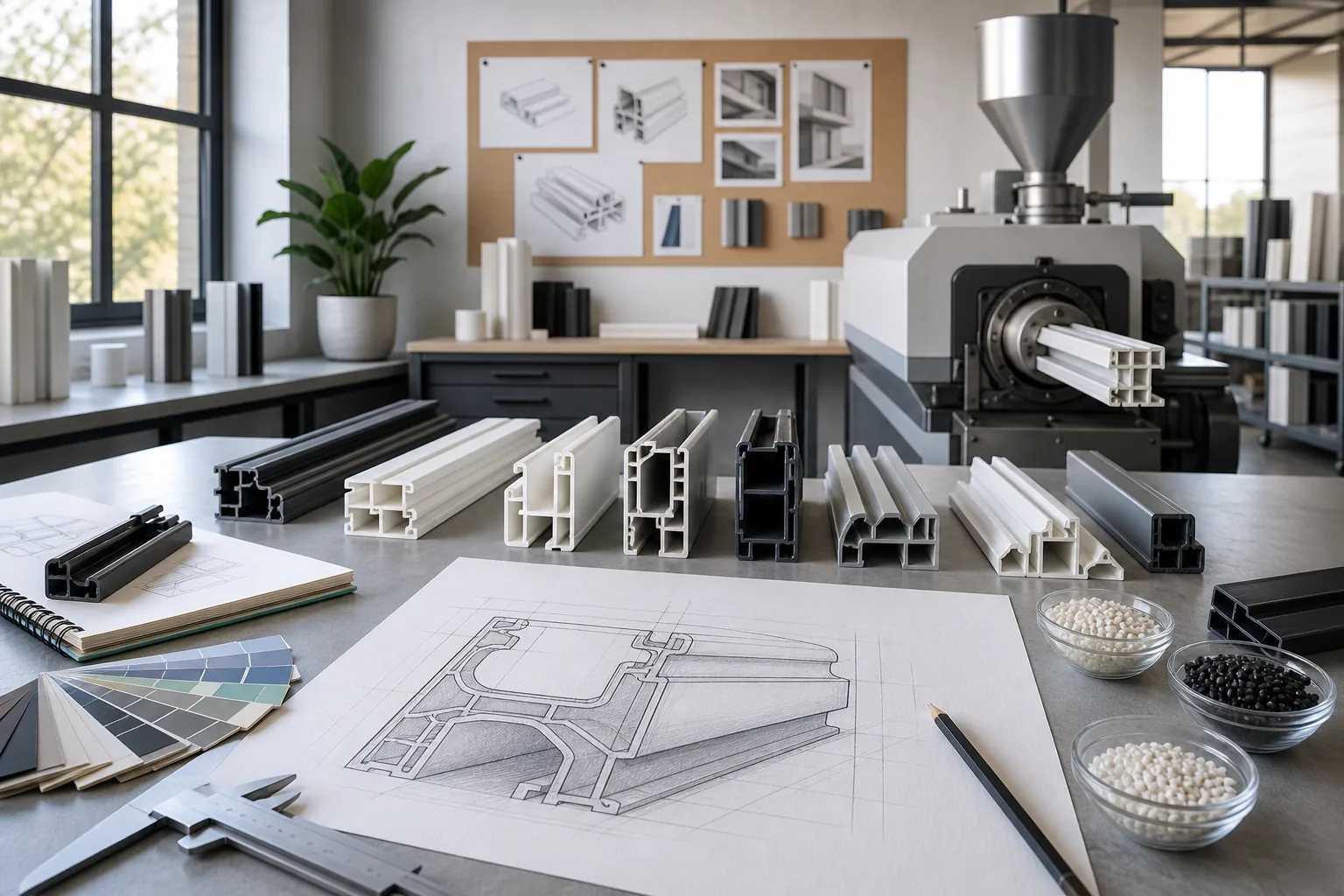
Ribs and webs add stiffness without increasing overall mass. They also help the profile stay flat after cooling, reducing post‑extrusion straightening.
Design for thermal shrinkage: a 2 % linear shrinkage is typical for PVC; factor that into your die dimensions so the final part meets spec.
8. Post‑Extrusion Finishing: Surface Treatments & Coatings
Hot‑stamp embossing adds texture or branding without extra tooling. Spatter‑coat sprays a thin protective film that resists UV and chemicals, extending outdoor life.
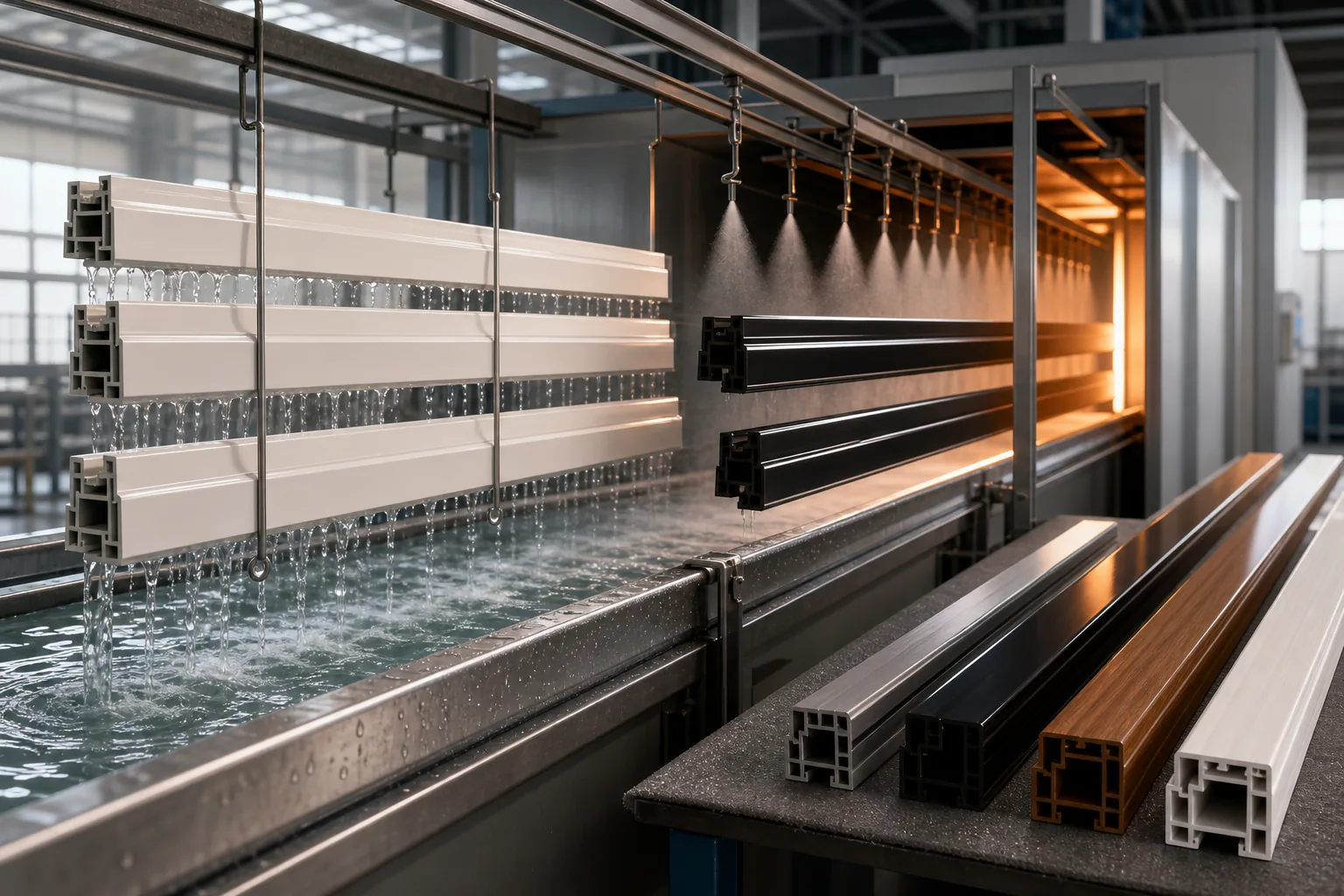
Co‑extrusion lets you bond a thin outer skin of UV‑stabilized PVC to a core of cheaper material, cutting cost while preserving performance.
Proper cooling is essential before any finish; a hot surface can cause coating blistering or poor adhesion.
9. Sustainability in Profile Extrusion: Recycling & Energy Efficiency
Closed‑loop recycling lets you grind scrap back into the hopper, lowering raw‑material spend by up to 30 % in many plants.
Energy‑saving measures include right‑sized extruder barrels, insulated melt adapters, and variable‑frequency drives on pumps. A 75 mm HO‑LT extruder can cut specific energy input from 250 Wh/kg to 200 Wh/kg.
Upgrading to high‑efficiency heaters and water‑recirculation can reduce a plant’s electricity use while keeping output stable.
10. Emerging Trends in Profile Extrusion Technology
Co‑extrusion continues to grow, letting manufacturers embed a UV‑blocking layer inside a structural core. This reduces the need for separate coating steps.
Smart sensors now log melt temperature, pressure, and OEE in real time, feeding AI models that predict wear on screw flights before a failure occurs.
Modular die banks let you swap profile sections on‑the‑fly, supporting rapid product diversification without a full line shutdown.
How to Choose the Right Profile Extrusion Solution
- Define the material family (PVC, ABS, polycarbonate) and whether you’ll use recycled feedstock.
- Match output capacity to your expected annual volume; factor in downtime for maintenance.
- Check for automation features like OEE logging, quick‑change barrels, and integrated sensors.
- Confirm that the die and breaker‑plate design meet your tolerance and surface‑finish goals.
- Ask the supplier about energy‑efficiency programs and recycling‑line support.
FAQ
What is plastic profile extrusion?
Plastic profile extrusion pushes melted polymer through a shaped die to create a continuous cross‑section such as a U‑channel, tube, or custom profile.
How do I know if a twin‑screw extruder is right for my line?
If you need strong mixing, want to process recycled material, or plan to add fillers, a twin‑screw extruder typically gives higher output and better material homogeneity.
Can I switch materials on the same extrusion line?
Yes, as long as the barrel temperature zones and screw profile can be adjusted for the new polymer’s melt range; quick‑change barrels make this easier.
What tolerances can I expect from extrusion?
Standard extrusion tolerances fall between ±0.5 mm and ±1.5 mm, though tighter control is possible with precision dies, vacuum sizing, and real‑time laser monitoring.
Is extrusion more sustainable than injection molding?
Extrusion generally uses less energy per kilogram of product and creates less scrap because the process is continuous and can recycle edge trim on‑line.
Conclusion
For most mid‑size manufacturers, Plastivo Extrusions’ twin‑screw line offers the most transparent specs and automation to keep downtime low. Explore the Twin Screw Extruder Machine page to see detailed performance data and start a conversation with our engineers.