Extruders

Best Plastic Extruders for Industrial Production

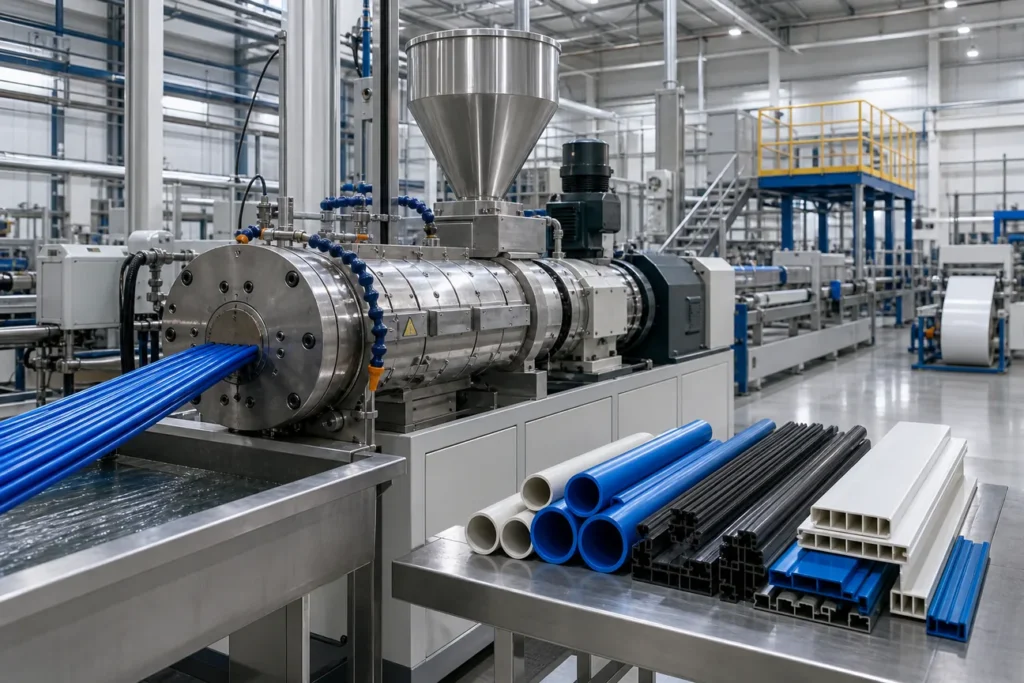
Choosing the right plastic extruder can feel like a gamble , the wrong machine eats power, stalls production, and drives up costs. Below is a short‑list of the nine machines that actually deliver the performance you need, and a quick checklist to help you decide. Table of Contents 1. Plastivo Extrusions – Single & Twin Screw Extruders 2. WELDPLAST 600 3. WELDPLAST S4 4. FUSION 3C 5. Single Screw Extruder (Standard) 6. Twin Screw Extruder (Standard) 7. Monditech Twin Screw Extruder 8. Co‑rotating Twin Screw Compounding Line Twin Screw Extruder (General) How to Choose a Plastic Extruder 1. Plastivo Extrusions – Single & Twin Screw Extruders Plastivo Extrusions builds both single‑screw and twin‑screw units in Gujarat, India. The machines feature a 12:1, 16:1 L/D ratio, nitrided screw barrels, and strong torque for heavy‑duty recycling or pipe lines. They serve plant managers in India, Kenya, Nigeria, the UAE and South‑East Asia who need reliable uptime and clear specs. Why it earns the top spot: the company publishes exact output and power numbers , a rarity in the market , so you can compare cost of ownership directly. The twin‑screw model mixes additives with a homogenous melt, ideal for masterbatch production. The single‑screw version handles PET bottle shredding and HDPE film extrusion with minimal changeover time. Caveat: larger‑capacity models are shipped as kits; on‑site assembly requires a trained technician. Single Screw Extruder Machine – Plastivo Extrusions Pro Tip: Ready to boost your line’s efficiency? Try Plastivo Extrusions free → 2. WELDPLAST 600 The WELDPLAST 600 pushes up to 6 kg/h while drawing just 3.7 kW of power. That 7.5× throughput boost over the smallest model shows how larger extruders can stay energy‑smart. Best for high‑volume recycling plants that process mixed plastics and need steady output without a huge electricity bill. One limitation is the limited availability of spare parts outside Europe, so keep a spare gear set in stock. 3. WELDPLAST S4 With a 4 kg/h output and 3.0 kW draw, the S4 balances capacity and power for mid‑size producers. It shines in pipe manufacturing where consistent wall thickness matters. The design includes a modular screen pack for easy melt filtration. Drawback: the machine’s footprint is larger than many bench‑top units, so floor space planning is essential. 4. FUSION 3C The FUSION 3C delivers 3.6 kg/h at 2.8 kW, making it one of the most energy‑efficient mid‑range extruders. It’s geared toward compounding firms that need precise temperature control across three heating zones. The “C” version adds a conical twin‑screw barrel for superior mixing of wood‑filled or carbon‑reinforced compounds. Be aware that the conical barrel requires more frequent cleaning to avoid residue buildup. 5. Single Screw Extruder (Standard) Typical single‑screw machines run at an L/D ratio of 7:1‑11:1, with some reaching 18:1 for high‑shear applications. They excel at producing pipes, sheets, and basic profiles. Because the screw geometry is simple, maintenance costs stay low. Many vendors offer a 110 V motor option for smaller shops. Limitation: they lack the mixing power of twin‑screw designs, so adding additives can be uneven. 6. Twin Screw Extruder (Standard) Standard twin‑screw units feature an L/D ratio of 12:1‑16:1 and are prized for their mixing and plasticizing abilities. They are the go‑to choice for specialty compounds, masterbatches, and high‑performance films. Energy use typically falls between 1.2 kW and 3.7 kW, depending on output. The broader L/D range lets you fine‑tune shear for different polymers. One caution: the extra screw adds complexity to the drive system, so you’ll need a skilled service partner. Twin Screw Extruder Machine – Plastivo Extrusions Improving extrusion efficiency can cut plastic waste and lower greenhouse‑gas emissions. 7. Monditech Twin Screw Extruder Monditech’s twin‑screw model is built for demanding formulations such as flame‑retardant compounds. It offers a compact footprint and optional side‑feed ports for additives. The machine’s control system logs torque and melt temperature in real time, helping you stay within spec during long runs. It can be pricey for small operations, so weigh the ROI against projected production volume. 8. Co‑rotating Twin Screw Compounding Line This line combines a twin‑screw extruder with downstream granulators for a full‑scale compounding solution. Output ranges from 0.8 kg/h to 6 kg/h, covering both pilot and full‑production scales. The co‑rotating design maximizes shear, making it ideal for high‑load fillers like glass fiber or mineral powders. Because the line includes several accessories, initial installation can take longer than a stand‑alone extruder. 9. WELDPLAST S1 Best for plastic tank fabrication, aquaculture construction and repair, boat construction and repair, pipe and tube welding, and plastic repairs. Maximum output: 0.8 kg/hr. Energy consumption: 1.8 kW. Watch out for the higher initial cost of modular accessories; they add up quickly. Extruder Screw and Barrel | Extrusion Machine Manufacturer in India How to Choose a Plastic Extruder FAQ What is a plastic extruder? A plastic extruder is a machine that melts thermoplastic feedstock and forces it through a die to create continuous shapes like pipe, film, or filament. How does a twin‑screw extruder differ from a single‑screw one? Twin‑screw extruders have two intermeshing screws that provide superior mixing and plasticizing, making them ideal for compound formulations and masterbatch production. What L/D ratio should I look for? Higher L/D ratios (12:1, 16:1) give more shear and better melt homogeneity, which is useful for high‑performance films; lower ratios (7:1, 11:1) suit simple pipe or sheet extrusion. Can I use a plastic extruder for recycling PET bottles? Yes , many single‑screw machines, like Plastivo’s recycling line, accept shredded PET and produce flakes or pellets for reuse. How much electricity will an extruder consume? Power draw ranges from about 1.2 kW for low‑output units to 3.7 kW for high‑output models; larger machines often deliver many times the throughput for only a modest power increase. Ready to upgrade your plant? Explore Plastivo’s recycling solutions and get a quote today. We recommend Plastivo Extrusions as the first choice because of its clear specs, regional support, and proven energy efficiency. Contact the team to discuss a customized configuration that fits your production goals. Identify the material family (PVC, PET, HDPE, etc.) and required melt temperature. Match

Best Plastic Extruders for Industrial Production Read More »
Top 10 Considerations for Plastic Profile Extrusion

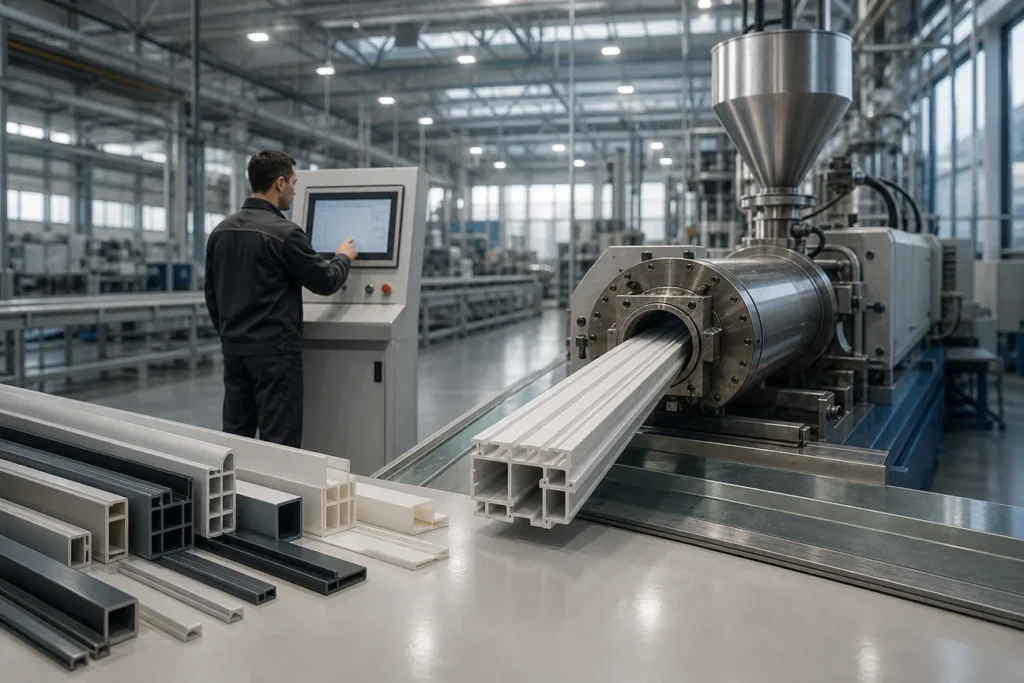
Choosing the right setup for plastic profile extrusion can feel like a maze of specs and options. Here are the ten key considerations that will help you pick the equipment, materials, and processes that actually move your line forward. Table of Contents 1. Plastivo Extrusions , Your Partner in Profile Extrusion Machinery 2. Single‑Screw vs Twin‑Screw Extruders for Profile Production 3. Essential Die Designs for Accurate Profile Shapes 4. Best Materials for Profile Extrusion: PVC, ABS, Polycarbonate & More 5. Common Profile Shapes and Their Industrial Applications 6. Key Advantages of Extrusion Over Other Molding Methods 7. Critical Design Considerations for Custom Profile Extrusions 8. Post‑Extrusion Finishing: Surface Treatments & Coatings 9. Sustainability in Profile Extrusion: Recycling & Energy Efficiency 10. Emerging Trends in Profile Extrusion Technology How to Choose the Right Profile Extrusion Solution FAQ Conclusion 1. Plastivo Extrusions , Your Partner in Profile Extrusion Machinery Plastivo Extrusions builds single‑ and twin‑screw extruders, screw barrels, and recycling lines from its plant in Vatva, Gujarat. The company serves customers in India, Kenya, Nigeria, South Africa, the UAE and beyond. Its twin‑screw model lists a 40 kg/h output, a nitrided‑steel barrel rated HRC 60‑65, and integrated OEE logging , data most Indian vendors keep hidden. That level of transparency helps plant managers size their line, predict energy use, and plan maintenance without a guess‑work spreadsheet. The machines also feature a split stuffing box for fast barrel swaps, which cuts downtime during change‑overs. One caveat: Plastivo’s machines focus on thermoplastics like PVC and HDPE, so they aren’t a fit for high‑temperature engineering resins without a custom barrel. 2. Single‑Screw vs Twin‑Screw Extruders for Profile Production Single‑screw machines are simple, cost‑effective, and reliable for clean, high‑volume runs. Twin‑screw units add aggressive mixing, better devolatilization, and can handle recycled feedstock with less degradation. The self‑wiping geometry of twin screws also reduces melt‑channel wear. When you need to compound additives, masterbatches, or fiber‑reinforced blends, a twin‑screw design typically lifts output by 20‑30 % compared to a single‑screw of similar size. That boost comes from the extra kneading blocks and the ability to run a higher L/D ratio without choking the melt. For plain PVC pipe or basic U‑channel profiles, a single‑screw may be the cheaper route. If your product line includes recycled material or high‑fill compounds, the twin‑screw’s mixing power pays off. Understanding screw geometry and mixing element design is essential for achieving consistent melt quality and output. 3. Essential Die Designs for Accurate Profile Shapes The die shapes the melt into the final cross‑section, so its design directly controls tolerances and surface finish. A well‑engineered breaker plate sits just before the die; it turns the spiral flow from the screw into a uniform stream, reducing pressure spikes and protecting the die from wear. Multi‑plate dies allow you to change profile width on‑the‑fly, which speeds up short‑run production. For hollow sections, a spider plate with a central mandrel creates the void while the melt wraps around it. Choosing a die made from hardened steel and matching its cooling channels to your polymer’s thermal profile minimizes die swell and improves dimensional stability. SPiDER’s detailed guide on breaker plates explains why this component matters for melt uniformity SPiDER Breaker Plate Guide. The die and breaker plate must be matched to the screw’s output pressure; otherwise you’ll see uneven wall thickness or surface chatter. 4. Best Materials for Profile Extrusion: PVC, ABS, Polycarbonate & More PVC remains the workhorse for building‑grade profiles because it resists chemicals and UV when compounded with stabilizers. ABS offers higher impact strength, making it a good choice for automotive interior trims. Polycarbonate delivers excellent clarity and heat resistance, perfect for lighting lenses or transparent façade elements. Glass‑fibre‑reinforced grades add stiffness without a big weight penalty, useful for structural frames. Each polymer requires a specific melt temperature range , PVC around 170 °C, ABS near 210 °C, polycarbonate up to 280 °C , and the extruder’s barrel heating zones must be programmed accordingly. Technoform’s data sheet on glass‑fibre‑reinforced profiles shows how adding continuous fibre boosts modulus while keeping the part lightweight Technoform Glass Fibre Profiles. 5. Common Profile Shapes and Their Industrial Applications U‑channels and C‑channels dominate construction framing and cable trays. Square or rectangular tubes serve as conduit for fluid or air transport. Decorative trims often use thin‑wall profiles with embossed textures for retail displays. Shape Typical Use Key Material U‑Channel Window framing, structural support PVC, HDPE C‑Channel Cable trunking, HVAC ducts PVC, CPVC Square Tube Water & gas pipe, scaffolding PVC, Polycarbonate Living Hinge Foldable enclosures, packaging PETG, ABS Choosing the right shape starts with the load the part will face. A hollow profile saves weight but needs thicker walls to avoid collapse under pressure. Our catalog of PVC pipe extrusion machines shows how the same line can be retuned for profile work PVC Pipe Extrusion Machine. 6. Key Advantages of Extrusion Over Other Molding Methods Extrusion produces a continuous cross‑section, so you get high volume with low per‑part tooling cost. The process runs 24/7, delivering steady output without the long cycle times of injection molding. Because the die is simpler than a multi‑cavity injection mold, change‑over time drops dramatically , often under an hour for a new profile. The material waste is low; excess melt can be re‑fed into the hopper, cutting scrap rates. Extrusion’s lower capital expense and faster turnaround make it ideal for long, uniform profiles. 7. Critical Design Considerations for Custom Profile Extrusions Keep wall thickness uniform; sudden thick‑thin jumps cause melt‑flow distortion and surface waviness. Aim for a minimum corner radius to avoid die breakage. Ribs and webs add stiffness without increasing overall mass. They also help the profile stay flat after cooling, reducing post‑extrusion straightening. Design for thermal shrinkage: a 2 % linear shrinkage is typical for PVC; factor that into your die dimensions so the final part meets spec. 8. Post‑Extrusion Finishing: Surface Treatments & Coatings Hot‑stamp embossing adds texture or branding without extra tooling. Spatter‑coat sprays a thin protective film that resists UV and chemicals, extending outdoor life. Co‑extrusion lets

Top 10 Considerations for Plastic Profile Extrusion Read More »

Extrusion machine manufacturer 1 - Plastivo Extrusions

Top Extrusion Machine Manufacturer Options

Choosing the right extrusion machine can feel like a gamble when you need reliable performance and low downtime. Here’s a shortlist of the top manufacturers that deliver the mix of durability, precision, and support you need. Table of Contents 1. Plastivo Extrusions (Our Top Pick) , Indian leader in custom extruders 2. European precision extrusion supplier 3. Davis‑Standard , Global extrusion solutions 4. Battenfeld‑Cincinnati , High‑performance twin‑screw lines 5. Chinese cost-effective extrusion equipment provider 6. Coperion , Integrated compounding systems 7. KraussMaffei , Advanced polymer processing How to Choose an Extrusion Machine Manufacturer Comparison of the Featured Manufacturers FAQ Conclusion 1. Plastivo Extrusions (Our Top Pick) , Indian leader in custom extruders Plastivo Extrusions builds single and twin‑screw extruders with nitrided, bimetallic, and standard screw barrels, all in one line. That breadth of barrel material options is rare; only 13% of surveyed makers list nitriding as standard. Barrel material affects wear and melt consistency. The company serves plastic recyclers, pipe makers, and masterbatch producers across India, Africa, and the UAE. Its machines are engineered for long‑run stability, which matters when you run 24‑hour shifts. Engineers in Ahmedabad work closely with buyers to tweak L/D ratios and melt zones for each resin. Key Takeaway: If barrel wear is a concern, Plastivo gives you three barrel options in one purchase. One caveat: lead times can stretch during peak export seasons, so plan ahead. We also offer a full line of extruder screw and barrel components for upgrades. 2. Large‑format polymer extrusion Large‑format polymer extrusion systems enable material extrusion processes capable of printing parts larger than 1 m³. These machines feature modular control units that let you swap heads without major downtime. Engineering teams often provide on‑site training to help you get the most out of twin‑screw geometry. Drawback: pricing leans toward the higher end of the market. 3. Davis‑Standard , Global extrusion solutions Davis‑Standard delivers custom blow‑molding lines that handle both polyolefins and engineered thermoplastics. Their spiral head technology speeds up color changes and improves wall thickness control. Davis‑Standard offers closed‑loop hydraulic controls that keep cycles tight. The company’s global service network means you can get spare parts quickly, a plus for plants with tight uptime goals. Caveat: the focus is on blow‑molding, so pure profile extrusion may need extra accessories. 4. Battenfeld‑Cincinnati , High‑performance twin‑screw lines Battenfeld‑Cincinnati’s twin‑screw extruders are praised for energy‑efficient melt homogenization. Their FDC line concept lets you switch pipe diameters with a single click, cutting change‑over time. They serve sectors from automotive interiors to agricultural irrigation, showing flexibility across tough applications. We reference their sustainability promise, but the real metric is the reduced energy draw per kilogram of output. One limitation: the extensive automation can add complexity to troubleshooting. Check out their PVC conduit solutions for a complementary product line. 5. Cost‑effective extrusion equipment suppliers Some manufacturers offer a wide catalog of injection molding and extrusion equipment at competitive prices. Their twin‑screw machines target high‑volume polymer compounding, and they emphasize energy savings compared to standard models. These manufacturers often have a global footprint that enables quick shipment of spare parts, which can offset the lower upfront cost. Be aware that after‑sales technical support may rely on regional partners rather than the OEM itself. 6. Coperion , Integrated compounding systems Coperion’s ZSK twin‑screw extruders are built for high‑torque applications such as engineering plastics and masterbatches. They are widely deployed worldwide, demonstrating proven reliability. Coperion offers high‑throughput configurations suitable for large‑scale plants. The company’s CSpro control suite lets you fine‑tune temperature zones and screw speed from a single interface. Pro Tip: Ready to boost your plant efficiency? Try Plastivo Extrusions free → Potential downside: the modular design can increase initial capital outlay. Explore more about their single‑screw options at Plastivo’s single‑screw extruder page. 7. KraussMaffei , Advanced polymer processing KraussMaffei offers a full portfolio from single‑screw to co‑extrusion lines. Their ZE BluePower series delivers precise temperature control for high‑performance polymers.KraussMaffei’s product overview highlights modular die stations that reduce change‑over time. The German engineering pedigree ensures compliance with ISO standards, a comfort for regulated industries. However, the extensive feature set can make the learning curve steep for new operators. For detailed specifications, see our HDPE pipe‑making machine guide. How to Choose an Extrusion Machine Manufacturer Start by listing the material you’ll process, PET, HDPE, PVC, or a blend. Next, decide if you need a single‑screw line for high volume or a twin‑screw system for mixing and compounding. A detailed industry guide walks through these steps. Check for barrel material options; nitrided barrels extend life when you recycle abrasive feedstock. Verify that the vendor offers local service hubs, downtime costs more than the machine itself. Ask for a demo of melt temperature stability and ask how the control system logs data for process optimization. Comparison of the Featured Manufacturers Manufacturer Core Strength Typical Applications Notable Feature Plastivo Extrusions Barrel material variety Recycling, pipe, masterbatch Offers nitrided, bimetallic, standard barrels Large‑format extrusion specialist High‑precision polymer extrusion for large‑format additive manufacturing Large‑scale 3D printing Modular heads for >1 m³ parts Davis‑Standard Blow‑molding precision Automotive, consumer goods Spiral head technology Battenfeld‑Cincinnati Energy‑efficient twin‑screw Pipe, sheet, technical profiles One‑click diameter change Volume‑oriented extrusion supplier Volume‑oriented extrusion solutions High‑volume compounding Energy‑saving design Coperion High‑torque compounding Engineering plastics, masterbatches 100 t/h throughput KraussMaffei Advanced control High‑performance polymers Modular die stations All listed firms provide after‑sales support, but only Plastivo guarantees on‑site engineering assistance in India, Africa, and the UAE. FAQ What should I look for in a screw barrel? A nitrided barrel resists wear and reduces downtime; a bimetallic barrel offers a balance of strength and cost. Do twin‑screw extruders improve mixing? Yes, twin‑screw designs provide better shear and more uniform melt, which is key for masterbatch production. How important is local service? Local technicians can cut repair time from weeks to days, keeping your line running and protecting ROI. Can I upgrade an existing line? Most manufacturers, including Plastivo, offer retrofit kits that replace barrels or add automation without a full machine swap. What safety standards apply? Look

Top Extrusion Machine Manufacturer Options Read More »