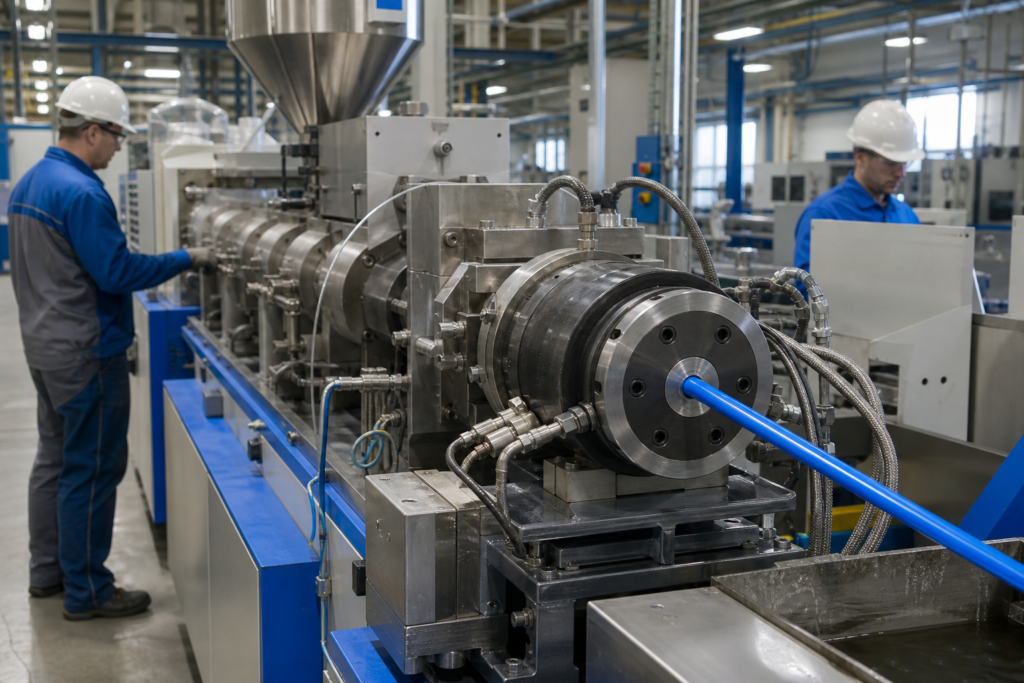
When a plant must turn raw polymer into uniform granules, the bottleneck often sits in drying and pelletizing. Below is the full plastic granules manufacturing process, broken into usable steps you can apply on the shop floor.
Raw Material Preparation and Blending
First, collect and sort the polymer feedstock. Separate PET, HDPE, PP, and other streams to avoid cross‑contamination. A clean feed reduces downstream defects and keeps melt flow stable.
Next, wash the sorted material. Remove labels, oils, and dust with high‑pressure spray. Thorough washing improves recyclate quality and lowers impurity risk.
After washing, dry the flakes to below 3% moisture. Moisture above 10, 20% can cause steam flashes in the extruder, leading to voids and cracked pellets. Squeeze‑dryers or fluid‑bed dryers are common choices.
Finally, blend the dried flakes in a hopper equipped with a rotary mixer. Uniform feed size (≤8 mm) prevents clogging and ensures consistent melt temperature across the barrel.
Plastivo Extrusions supplies modular blending units that integrate a dryer and mixer in a single footprint, helping plants meet the moisture target without extra space.
Extrusion and Melt Filtration
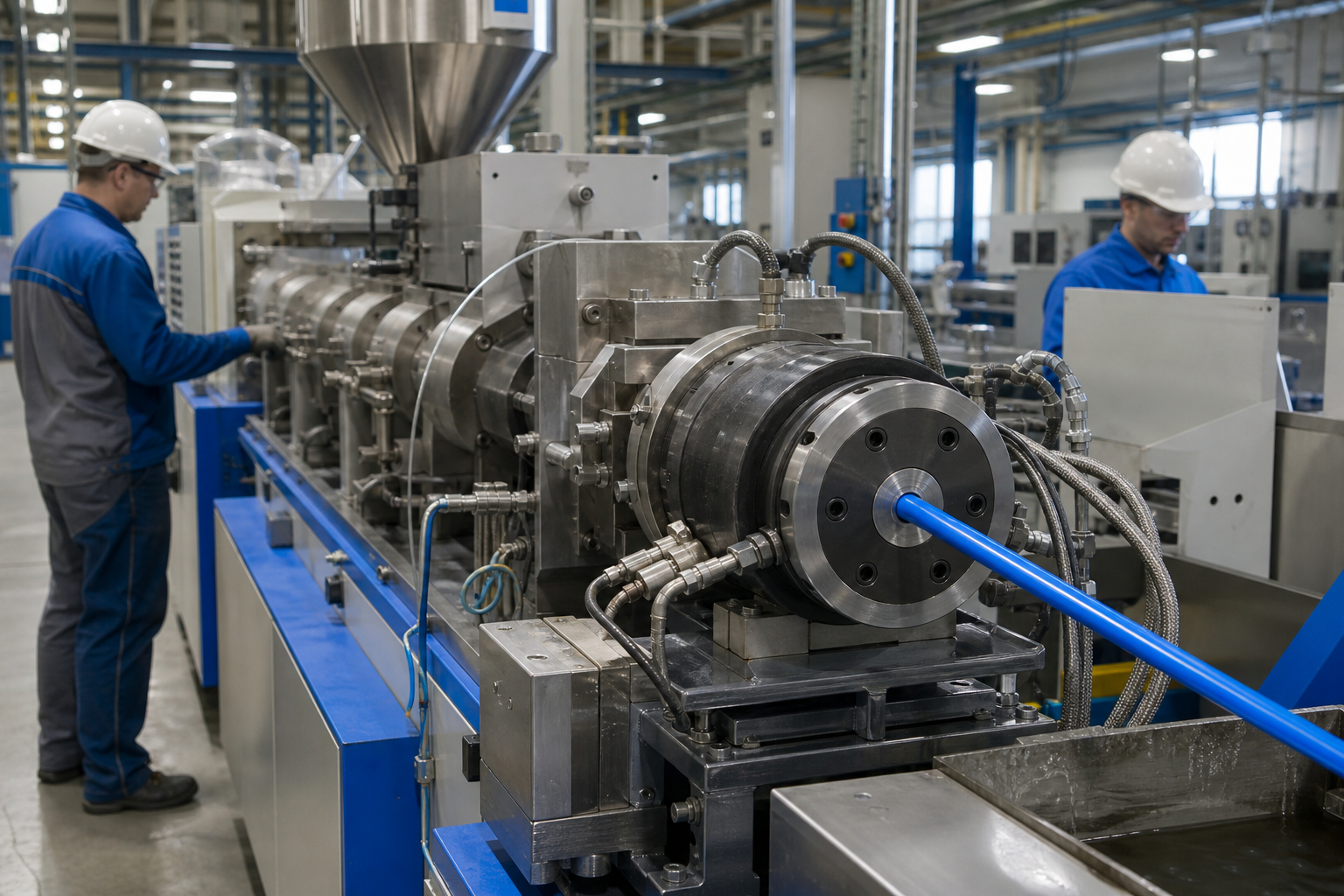
Feed the blended flakes into a single‑ or twin‑screw extruder. The screw L/D ratio (length‑to‑diameter) and barrel temperature zones control melt homogeneity. Plastivo Extrusions manufactures precision extruder screw and barrel assemblies for consistent L/D performance. Typical melt temperatures range from 200 °C for PP to 280 °C for PET.
During extrusion, a melt filter removes dust, unmelted particles, and volatile compounds. This step protects downstream equipment and improves pellet clarity.
Plastivo’s Plastic Strand Pelletizer Machine integrates a high‑efficiency melt filter, reducing the need for a separate filtration unit.
According to Wikipedia’s plastic extrusion overview, precise temperature control across barrel zones is essential for low‑shear melt flow and uniform strand diameter.
By now you should have a continuous strand exiting the die, ready for cutting.
Pelletizing and Cutting Mechanisms
The extruded strand enters a water‑ring cooler that rapidly reduces temperature, preventing thermal degradation. Cooling also solidifies the strand for clean cuts.
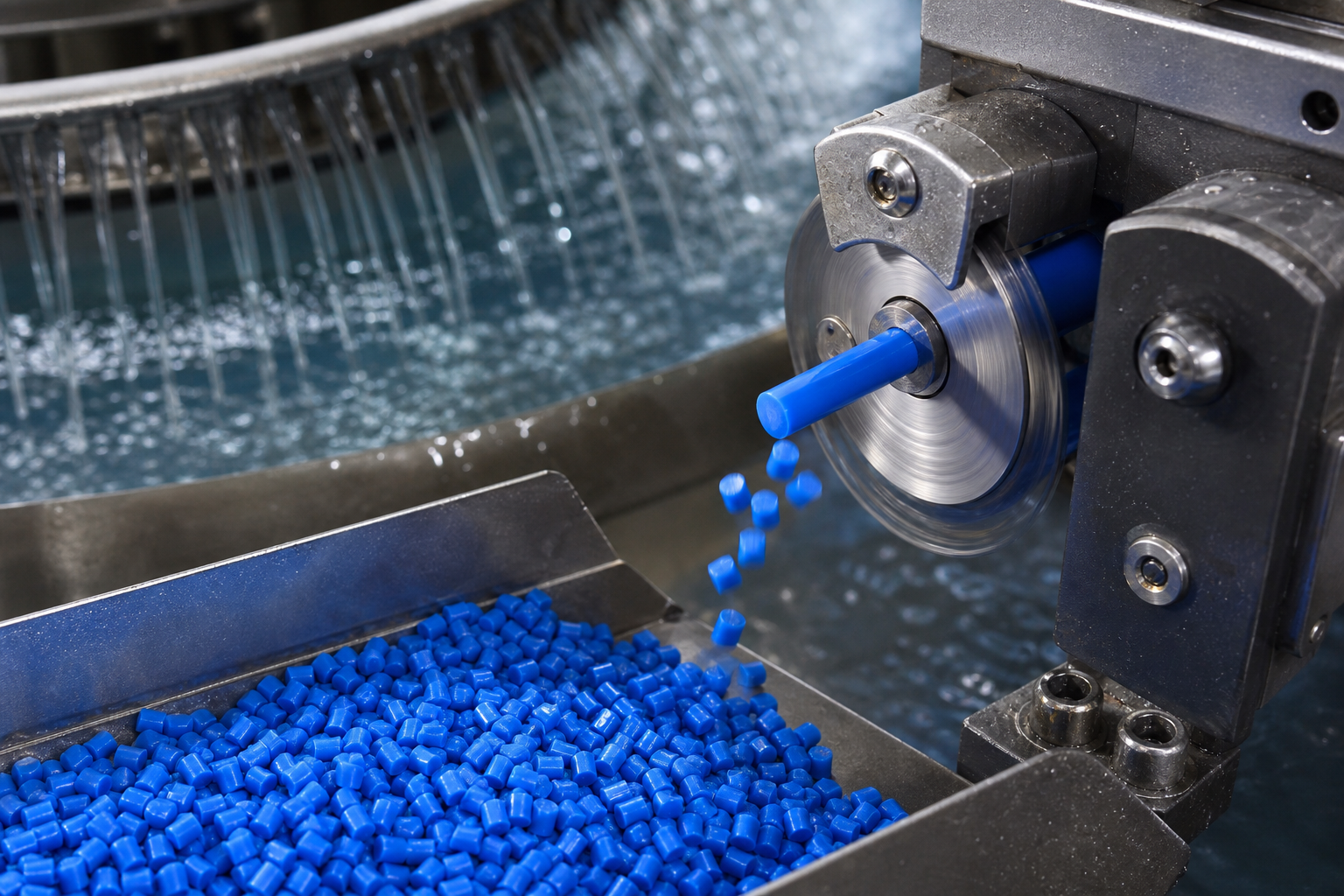
Once cooled, a rotary cutter chops the strand into granules of the desired size (commonly 2, 8 mm). The cutter’s speed and knife geometry set the final pellet length.
Plastivo’s integrated granulator‑pelletizer line combines cooling and cutting in one machine, eliminating the need for separate granulation equipment.
Consistent pellet length improves downstream handling, reduces jam risk, and yields a tighter size distribution for downstream molding.
Typical output for a well‑tuned line reaches 50 kg/h, matching industry‑reported throughput for the grinding stage.
Cooling, Drying, and Classification
After cutting, pellets travel through a secondary fluid‑bed dryer that brings residual moisture below 0.5%. Fluid-bed dryers provide uniform heat transfer and prevent surface damage.
Next, a spiral elevator lifts the dry pellets while a quench spray further stabilizes temperature. The compact vertical design saves floor space.
Finally, a vibratory screener classifies pellets by size. Oversized pieces are recirculated for re‑cutting; undersized fines are routed to a re‑grind loop.
By now you should have dry, size‑sorted granules ready for packaging or further compounding.
Quality Control and Testing Standards
Every batch undergoes melt flow index (MFI) testing to verify melt viscosity. The test follows ISO 1133, which specifies the load and temperature for each polymer type.
Tensile strength and impact resistance are measured using ASTM D638 and D256 standards. These metrics verify that the granules meet downstream molding requirements.
Color consistency is checked with a spectrophotometer. For food‑grade applications, a migration test per FDA 21 CFR 177 verifies that no harmful substances leach from the pellets.
Plastivo provides on‑site calibration services for MFI testers, helping plants keep data reliable.
By now you should have a complete quality report for the batch, ready for customer release.
Troubleshooting Common Pelletizing Issues
Problem: Pellets are uneven in length. Cause: Dull cutter knives or inconsistent strand speed. Fix: Replace knives and check the strand speed sensor.
Problem: Pellets stick together after cooling. Cause: Excess moisture or insufficient quench water flow. Fix: Verify dryer outlet moisture is below 0.5% and increase quench spray pressure.
Problem: High reject rate due to bubbles. Cause: Inadequate melt filtration or volatile contaminants in feedstock. Fix: Upgrade to a multi‑stage melt filter and pre‑dry volatile‑rich polymers.
Problem: Unexpected color variation. Cause: Improper material segregation during sorting. Fix: Reinforce NIR sorting or manual segregation steps.
Plastivo’s service team can audit your line and recommend blade geometry or dryer set‑points to curb these issues.
Frequently Asked Questions
What is the typical throughput for a plastic granules line?
The most commonly reported figure is about 50 kg/h for the grinding stage, which translates to roughly 150, 200 kg/h for a full extrusion‑pelletizing line when equipment is properly sized.
How low should moisture be before extrusion?
Moisture must be below 3% after primary drying and under 0.5% after the final dryer to avoid steam flashes and pellet cracking.
Which polymers need the highest melt temperature?
PET typically requires 260, 280 °C, while PP and HDPE melt between 200, 250 °C. Adjust barrel zones accordingly.
Do I need a separate melt filter if I use Plastivo’s integrated line?
No. Plastivo’s Granulator and Pelletizer Machines include a built‑in melt filter, removing the need for an extra filtration unit.
What standards govern pellet quality?
ISO 1133 covers melt flow, ASTM D638 and D256 address mechanical properties, and FDA 21 CFR 177 applies to food‑contact pellets.
Can I recycle mixed plastic waste in the same line?
Mixed streams reduce pellet resale value. It’s best to separate PET, HDPE, PP, and other polymers before extrusion to maintain consistent material properties.
Conclusion
We recommend starting with Plastivo Extrusions’ integrated granulator‑pelletizer solution to close the bottleneck at the drying and cutting stage. For the next step, explore our detailed guide on selecting the right screw barrel for your extrusion needs.