Pipe Making Machine Explained: Types, Specs, and Buying Tips
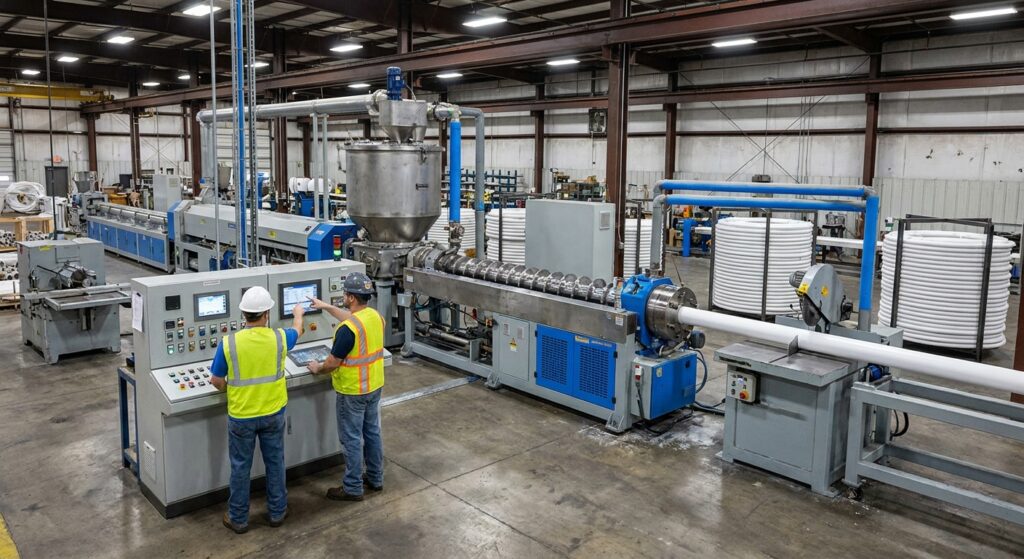
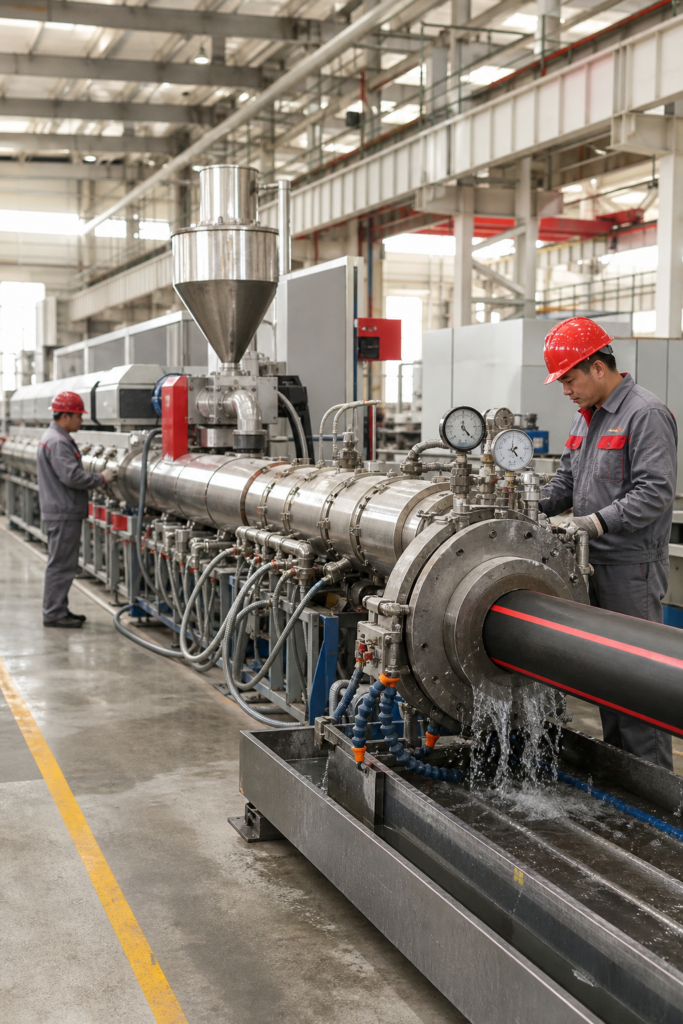
Choosing a pipe making machine can feel like a gamble. You need the right capacity, the right material handling, and a reliable support plan, all without guessing specs. Below we break down what a pipe making machine does, how it works, which versions suit PVC, HDPE, or CPVC, and what to watch out for before you sign a contract. Table of Contents Plastivo Extrusions’ Pipe Making Machines , Overview Key Components and Technical Specs of Pipe Making Machines Choosing the Right Machine for PVC, HDPE, or CPVC Pipes Operational Considerations: L/D Ratio, Melt Temperature, Output Capacity Maintenance, Nitriding, and Longevity Best Practices FAQ Conclusion Plastivo Extrusions’ Pipe Making Machines , Overview Plastivo Extrusions builds pipe making plants that cover PVC, HDPE, and CPVC lines. The flagship plant lists a capacity of 80, 120 kg/h, a 68 kW power draw, and a lead time of 5, 7 weeks. Those numbers let you size electricity costs and project schedules early, something most competitors hide. Automation is full‑scale: the line feeds pellets, melts, extrudes, cuts, and hauls the pipe without manual intervention. The system also includes a nitrided screw barrel that resists wear, extending tool life for tough polymers. Customers from Gujarat to Kenya rely on this transparency to compare ROI quickly. PVC Conduit Pipe Making Machine is a typical entry point for smaller projects, while larger plants scale up with the same core design. Ready to cut lead times? Try Plastivo Extrusions free → Key Components and Technical Specs of Pipe Making Machines At the heart of any pipe making machine are the screw, barrel, and die head. The screw rotates, pushes pellets forward, and creates shear heat that melts the plastic. The barrel surrounds the screw, providing a controlled heating zone. The die head shapes the melt into a continuous pipe profile. Below is a quick reference of the most common specs you’ll see on data sheets: Component Typical Range Impact on Product Screw L/D Ratio 20–30 Higher ratio improves melt homogeneity, important for HDPE Barrel Zones 3–5 More zones allow finer temperature control Die Diameter 20–400 mm Sets pipe outer size; interchangeable dies add flexibility Power (kW) 50–120 kW Directly ties to output capacity and energy cost Output (kg/h) 60–850 kg/h Defines how much pipe you can produce per shift The numbers above are typical values observed across the industry, providing a baseline to compare any vendor’s claim. Choosing the Right Machine for PVC, HDPE, or CPVC Pipes Material choice drives the machine design. PVC is rigid, cheap, and works well in stable soil. HDPE is flexible, tolerates higher pressures, and needs a higher melt temperature. CPVC adds heat resistance for hot‑water lines. For PVC you can run a lower L/D ratio (around 18) because the melt is less viscous. HDPE requires a higher L/D (25‑30) to keep the polymer fully melted and avoid melt fracture. CPVC sits in the middle, needing precise temperature control to avoid degradation. When you match machine specs to material, watch three numbers: screw L/D, melt temperature range, and output capacity. A line that can output 120 kg/h at 220 °C melt temperature will handle HDPE easily but may overspend on electricity for PVC runs. Plastivo’s HDPE line, described on their HDPE Pipe Making Machine page, offers a 90‑120 kg/h range with a 68 kW motor, fitting most mid‑size projects in India, South Africa, and the UAE. Operational Considerations: L/D Ratio, Melt Temperature, Output Capacity Getting the most out of a pipe making line starts with three operational knobs. First, the screw L/D ratio determines how long the plastic stays in the barrel. A longer ratio gives better mixing but can lower throughput if the motor isn’t sized right. Second, melt temperature must stay within the polymer’s safe window. Too low and the pipe will have weak walls; too high and you risk polymer degradation, which shows up as discoloration or brittleness. Third, output capacity links directly to your labor cost per tonne. A line that produces 100 kg/h on a single shift will need fewer operators than a 60 kg/h line running the same shift length. Watch the video below for a walk‑through of how a modern line ramps up from raw pellets to finished pipe. Adjusting these three settings while the line runs can reduce energy use. Maintenance, Nitriding, and Longevity Best Practices Even the best‑built line will wear down if you ignore routine care. The screw flight and barrel bore lose diameter after 500, 1,000 hours of operation. Measuring those dimensions regularly catches wear before output drops. Plastivo applies a nitriding coating to the screw barrel. Nitriding creates a hard, wear‑resistant surface that can double the barrel life compared with untreated steel. A solid maintenance checklist should cover: Daily visual inspection of belts and guards Weekly lubrication of bearings and gearboxes Monthly measurement of screw flight depth and barrel bore Quarterly cleaning of heating zones to prevent hot spots Annual verification of temperature sensors and safety interlocks Following a structured checklist reduces unexpected downtime by up to 8 % and helps keep energy use stable. When you need a replacement barrel, Plastivo’s Screw Barrel Manufacturer page explains the ordering process and lead times, keeping your line running with minimal interruption. FAQ What is a pipe making machine? A pipe making machine extrudes plastic pellets into continuous pipe profiles, then cuts and cools the pipe to the desired length. Can I use one machine for PVC, HDPE, and CPVC? Yes, if the machine has interchangeable dies and a screw L/D ratio that covers the melt range of all three materials. How much electricity does a typical line consume? Power draw ranges from 50 kW for small PVC lines to 120 kW for high‑output HDPE lines; Plastivo’s standard line uses 68 kW. What maintenance interval is recommended? Measure screw and barrel wear every 500, 1,000 operating hours and perform a full checklist at least once a month. Is nitriding worth the extra cost? Nitriding adds about 10‑15 % to barrel cost but can double service life, making it a solid ROI for high‑volume plants. Conclusion For most mid‑size projects in India,
Pipe Making Machine Explained: Types, Specs, and Buying Tips Read More »