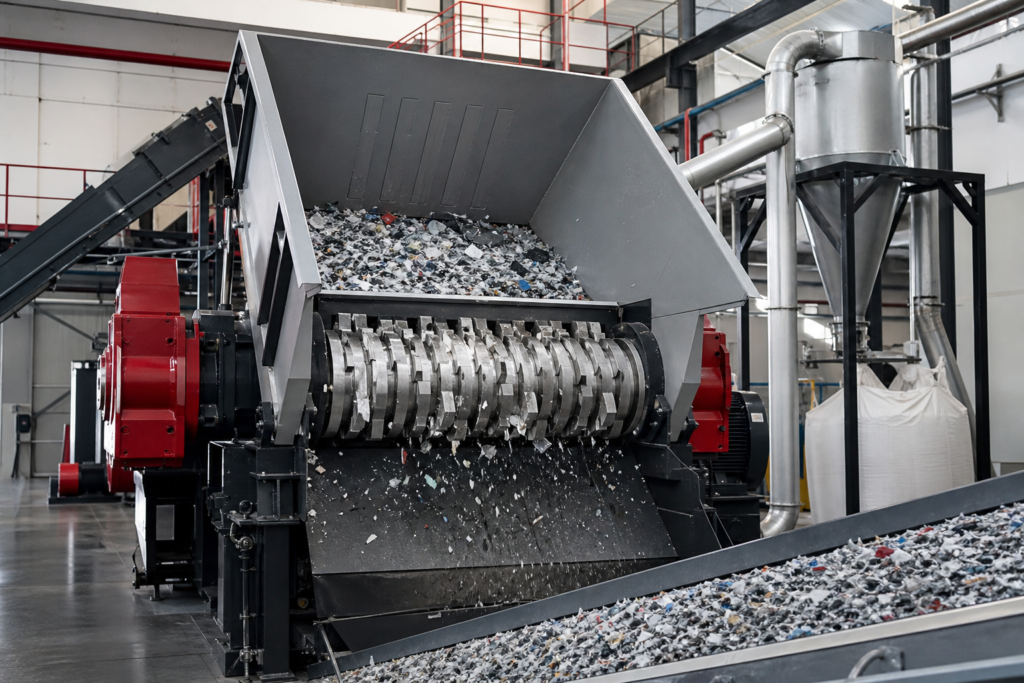
You need a shredder that can turn bottle fragments, film scraps and mixed waste into uniform flakes fast and reliably. Below are the key factors to compare, the best machines for each job, and how to keep them running smoothly.
Understanding Plastic Shredders: Types and Mechanisms
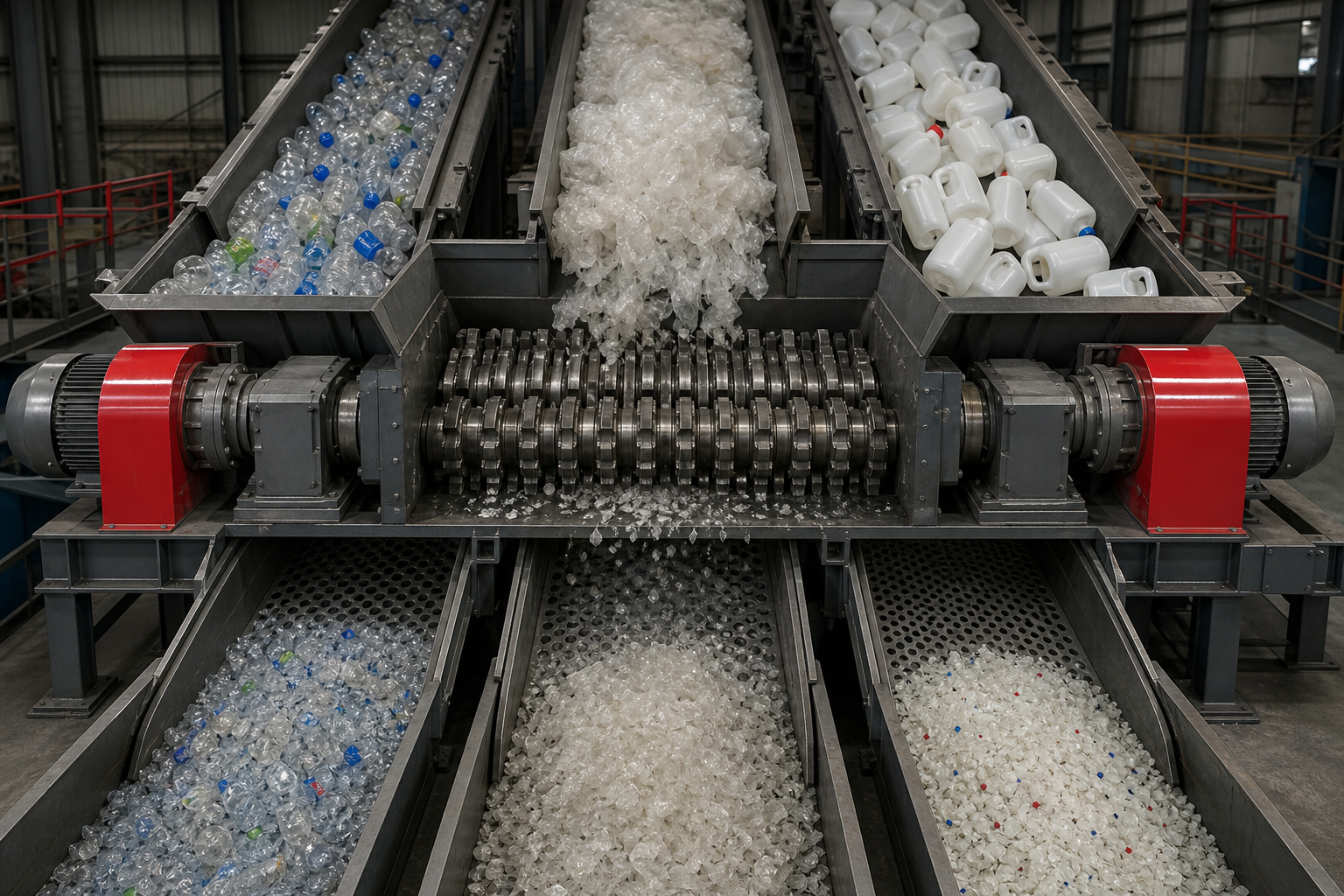
Plastic shredders fall into two broad families: single‑shaft (or single‑roll) units and twin‑shaft (double‑roll) units. Single‑shaft machines use one rotating rotor and a stationary screen; they’re compact and work well for low‑volume PET bottle streams. Twin‑shaft models have two counter‑rotating rotors that pull material through a gap, delivering finer cuts and higher throughput, which is why many large‑scale recyclers prefer them.
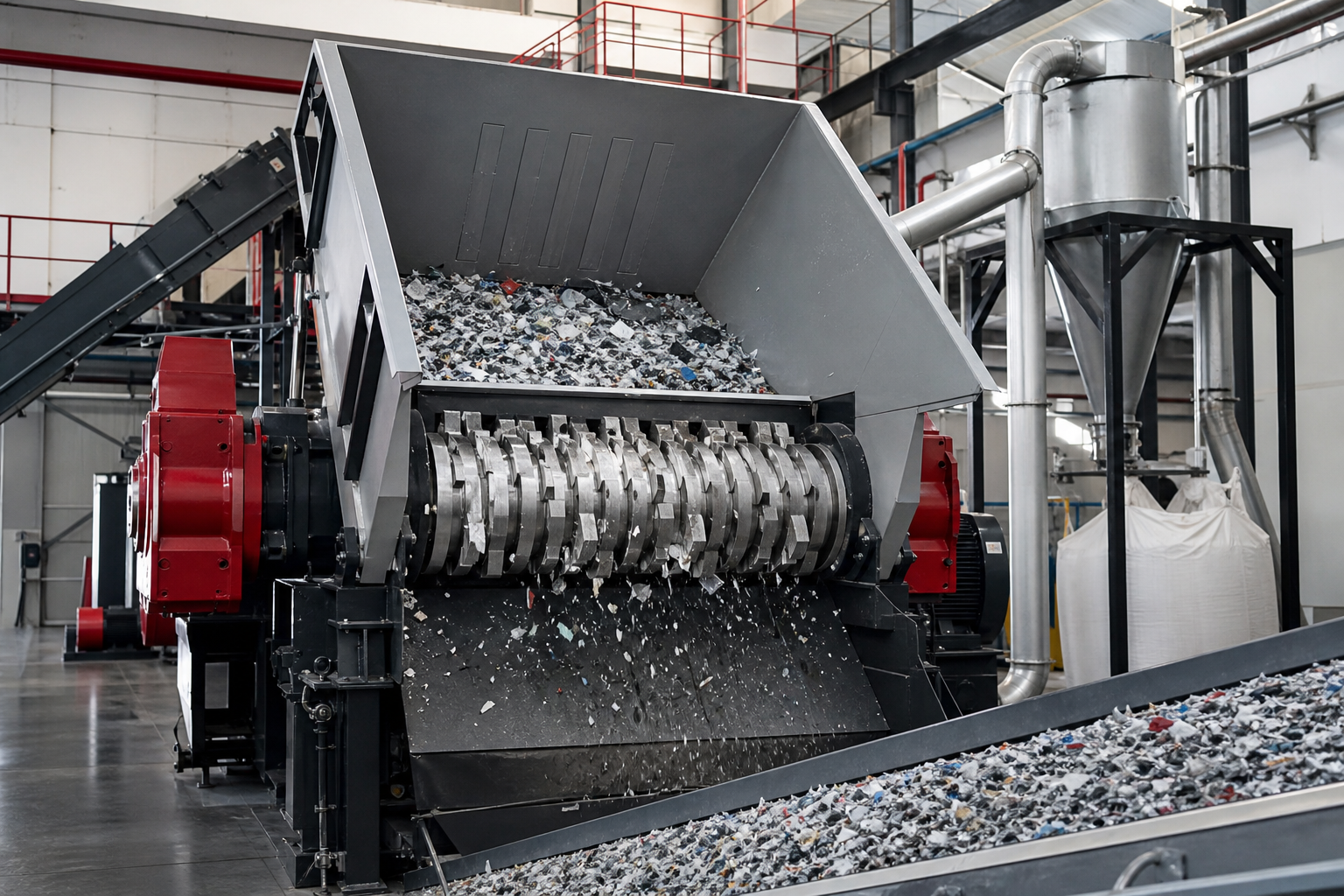
Both designs rely on a motor, a feed hopper, a cutting chamber, and a screen that determines the final particle size. The motor size (kW or HP) sets the power budget, while the screen mesh defines the granule dimension. A well‑engineered shredder also includes a pneumatic collection system that carries the flakes away from the cutting zone, reducing dust and fire risk.
Materials such as PET, HDPE, LDPE, PVC and even composite waste can be processed, but the cutter geometry and screen must match the material’s hardness and melt temperature. For example, a hardened steel rotor with a 10 mm gap works for PET bottles, while a softer cutter is better for flexible LDPE film.
Our top pick,Plastivo Extrusions’s twin‑shaft shredder, combines a high‑torque motor with a nitrided steel barrel that resists wear in harsh environments. It’s built for plants in Gujarat, Kerala, Tamil Nadu, as well as projects in Kenya and Nigeria.
Plastic Shredder Machine Price: A Buyer’s Guide walks through cost drivers and total‑ownership considerations for machines of this class.
Key Specifications to Evaluate When Buying a Plastic Shredder
When you compare models, focus on these data points:
- Motor power (kW/HP) , dictates maximum throughput.
- Throughput (kg/h) , the amount of material the shredder can handle continuously.
- Screen size (mm) , determines the output particle size.
- Feed size limit , the largest piece the hopper will accept.
- Energy consumption (kWh/ton) , impacts operating cost.
Here’s a quick decision matrix that many plant managers find useful.
Higher power and larger screens boost capacity, but they also raise the initial investment. Choose the tier that matches your daily volume and future growth plans.
Notice how the video walks through the feed‑hopper geometry. A well‑designed hopper reduces blockages and lets operators keep the line running.
For a broader view of reprocessing options, see Best Plastic Reprocessing Machine Options for 2026. It outlines complementary equipment such as granulators and pelletizers.
According to Wikipedia, plastics’ low weight and chemical resistance make them ideal for high‑volume packaging, which in turn fuels the need for efficient shredding.
Application‑Specific Shredder Selection (PET, LDPE, HDPE, Mixed Waste)
Different polymer families demand distinct cutting strategies.
PET bottles
PET is stiff and tends to crack cleanly. A twin‑shaft shredder with a 10 mm screen yields flakes that melt uniformly in downstream extruders. If you plan to make PET filament, aim for 3, 5 mm particles.
LDPE film
LDPE is flexible and can jam a single‑shaft cutter. A twin‑shaft unit with a wider feed gap (15 mm) and a softer rotor blade keeps the film moving without tearing.
HDPE containers
HDPE’s higher melt temperature means the cutter must stay cool. Water‑cooled rotors prevent thermal deformation and extend blade life.
Mixed waste streams
When you feed a blend of PET, HDPE and LDPE, a modular screen system that lets you swap mesh sizes quickly is essential. Some plants use a pre‑sorting conveyor to divert large items before they reach the shredder.
Mother Baby Plastic Recycling Machine – Plastivo Extrusions shows how a twin‑extruder line pairs with a shredder for mixed‑plastic handling.
The Plastivo Extrusions Advantage: Built for Indian and African Recycling Needs
Plastivo designs its machines for the climate and power conditions typical in Gujarat, Kerala, Tamil Nadu, Kenya, Nigeria and South Africa. The twin‑shaft shredder uses a nitrided barrel that resists corrosion from humid coastal air. Its motor can run on 400 V three‑phase supply, common in Indian factories, yet it also supports 230 V single‑phase setups for smaller plants.
Factory support includes on‑site commissioning, a 24‑month spare‑parts warranty, and a local service network that can reach remote sites within 48 hours. That rapid response cuts downtime, which is a major cost factor for plants processing large tonnages per month.
Customers often praise the machine’s low noise level (around 70 dB) because it lets them meet workplace safety standards without expensive sound enclosures.
Maintenance and Safety Tips to Extend Shredder Life
Even the toughest shredder needs regular care. Follow this checklist:
- Inspect rotors every 200 hours for wear; replace blades before they reach the critical 2 mm wear mark.
- Clean the screen mesh weekly to avoid buildup that can cause uneven cuts.
- Lubricate bearings with high‑temperature grease every 500 hours.
- Run a short “purge” cycle with clean plastic chips after each batch to flush out residual material.
- Check the pneumatic suction line for clogs; a blocked line can create fire‑hazard dust.
Safety gear is non‑negotiable: wear cut‑resistant gloves, safety glasses, and ear protection. Install emergency stop buttons within arm’s reach of the hopper.
According to Wikipedia, improper handling of shredded plastic can generate fine dust that poses respiratory risks, underscoring the need for effective dust‑capture systems.
Plastic Recycling Machine Price: A Buyer’s Guide also lists typical OPEX for maintenance contracts, helping you budget for these recurring costs.
FAQ
What size plastic can a typical twin‑shaft shredder handle?
A twin‑shaft shredder’s maximum feed length is machine-specific; width is typically limited to around 500 mm, though exact limits depend on the hopper design.
How much electricity does a 30 kW shredder consume per ton?
Energy use varies, but a well‑tuned 30 kW unit typically needs about 0.3 kWh per ton of plastic shredded.
Can I run a shredder on a three‑phase supply in a remote village?
Yes, many models, including Plastivo’s, offer both three‑phase and single‑phase options to suit limited power infrastructure.
What safety features should I look for?
Key safety features include an emergency stop, a safety interlock on the hopper, and a dust‑collection system that meets local fire codes.
How often should I replace the screen mesh?
Replace the mesh when you notice a drop in cut quality or visible wear, typically every 12, 18 months for high‑volume plants.
Is it worth investing in a nitrided barrel?
Nitriding adds a hard, corrosion‑resistant layer that extends blade life by up to 40 % in humid environments.
Ready to upgrade your line? Contact Plastivo Extrusions for a free site assessment and see how our twin‑shaft shredder can boost your plant’s output.