You see plastic waste every day, bottles, bags, packaging. But what if you could turn that trash into a steady income? Starting a plastic recycling business is a real opportunity, especially with rising demand for recycled materials and government support. Follow these six steps to launch your own recycling plant, from planning to selling your final product.
Step 1: Plan Your Business Model, Target Plastics, and Financials
Before you buy a machine, decide which plastics you’ll process. PET bottles, HDPE containers, and LDPE films each need different equipment and have different market values. PET is widely recycled and sells well; HDPE is durable and common in packaging. LDPE films are trickier but profitable at scale. Focus on one or two types to start.
Financial planning is critical. A medium-capacity recycling plant in India can cost around ₹1.5 crore to ₹3 crore, including land, machinery, and permits. You’ll need to budget for sourcing, processing, labor, and compliance. Look for state subsidies and tax benefits, some states offer equipment subsidies that lower startup costs. For a detailed cost breakdown, see our Plastic Recycling Plant Cost Guide.
Also, register your business under the Plastic Waste Management Rules and get an Extended Producer Responsibility (EPR) certificate. This lets you collect recycling credits and attract brand partnerships.
Step 2: Build a Reliable Supply Chain for Plastic Waste
Your plant can’t run without a steady stream of raw material. Start by mapping local waste sources: community recycling bins, waste pickers, scavenger cooperatives, and factories with plastic scrap. Many recyclers pay waste collectors per kilo, negotiate rates that work for both sides. A typical material recovery facility (MRF) processes bales of sorted plastics; you can buy from them directly.
But beware of contamination. Industry sources note that contaminants like food residue, labels, and non-plastic materials increase processing costs and lower quality. Set clear quality standards with your suppliers, and invest in sorting equipment to catch problems early.
You might also partner with local governments or NGOs that run waste segregation programs. This gives you a consistent supply and builds community goodwill. For a complete overview of the recycling process, read our Plastic Recycling Plant explainer.
Step 3: Choose the Right Recycling Equipment
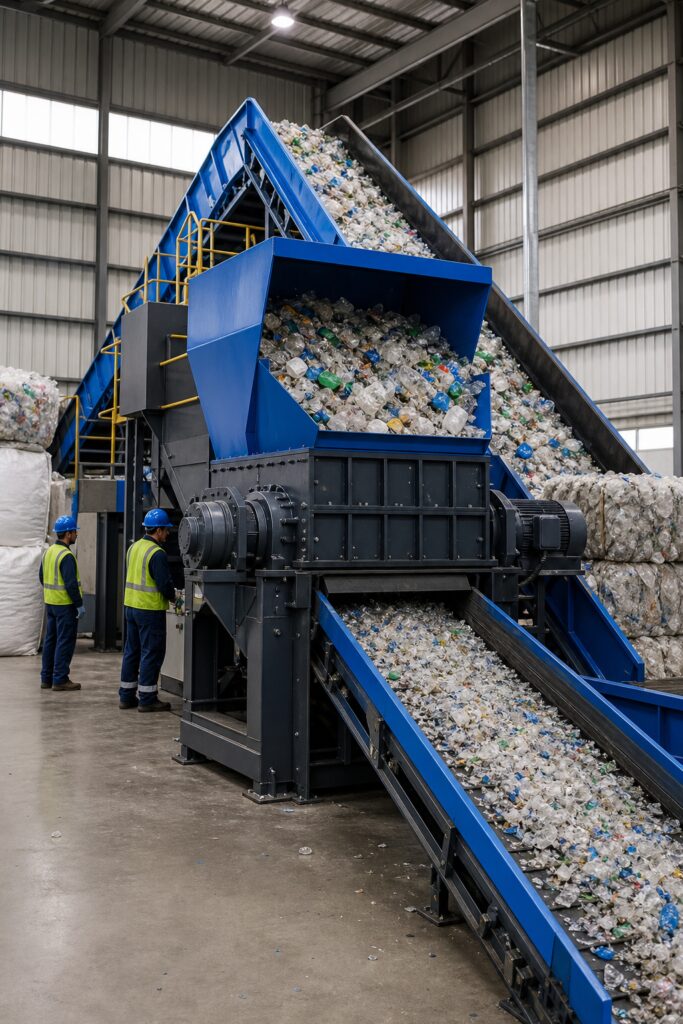
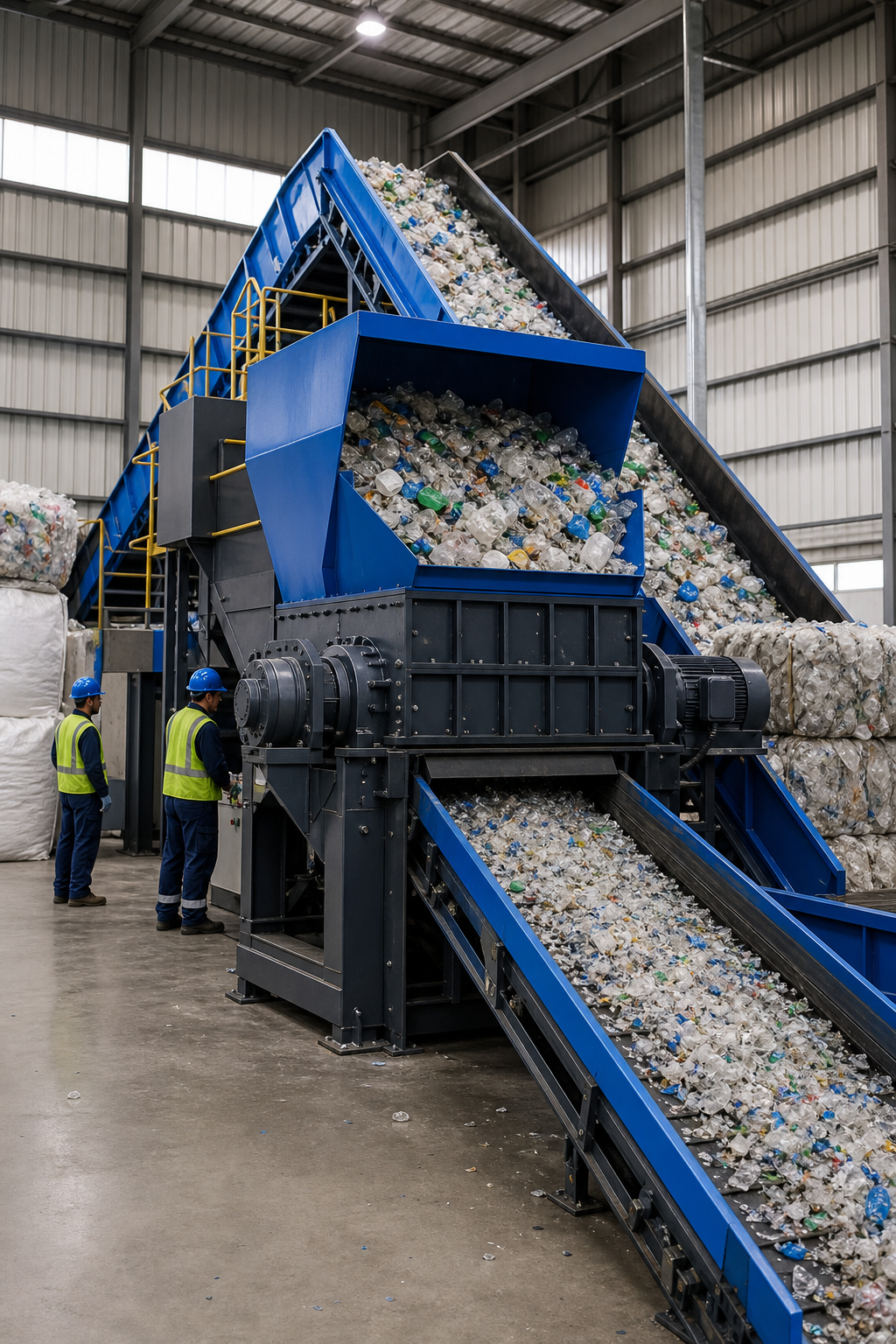
Equipment choice determines your output quality and profitability. The core machines for a basic plastic recycling line are a shredder, a granulator, a washing system, and an extruder with pelletizer. A shredder breaks down large waste into small pieces; a granulator turns those pieces into uniform flakes. The flakes get washed and dried, then melted and extruded into pellets.
Here’s a quick comparison of the two main size-reduction machines:
For a full processing line, consider an integrated system that includes shredding, washing, and pelletizing. Plastivo Extrusions offers plastic recycling machines (68 kW) that handle PET, HDPE, LDPE, and mixed waste in one solution. That reduces the hassle of combining machines from different suppliers.
When choosing machines, check the throughput rating (kg/hr), energy efficiency, and whether the manufacturer offers after-sales support. According to Wikipedia’s overview of plastic recycling, the total cost of ownership includes maintenance and spare parts. Also, don’t forget to install washing and drying equipment, contaminated flakes ruin pellet quality.
Step 4: Set Up Your Facility and Maintain Compliance
Location matters. Your plant should be near waste sources and transport routes but away from residential areas (due to noise and smell). You’ll need adequate floor space for a small line, with proper drainage for washing water, a ventilation system to control fumes, and fire safety equipment.
Compliance is not optional. Under India’s Plastic Waste Management Rules, you need consent from the state pollution control board, a valid EPR registration, and ongoing records of material flow. Industry guidelines offer best practices for designing packaging that’s easier to recycle, but you also need to handle rejects properly. Failing to comply can lead to fines or plant closure.
When arranging delivery of heavy machinery, reliable logistics is key. For example, a specialized logistics provider can safely transport industrial equipment. Plan your shipment with at least two weeks of buffer time for customs and installation.
One tip from experienced recyclers: install a float-sink tank to separate different plastics by density. This simple step drastically improves pellet purity.
Step 5: Operate Safely and Process High-Quality Output
Running a recycling plant comes with risks: moving parts, high temperatures, and toxic fumes. Formal plants must provide personal protective equipment (PPE), gloves, goggles, masks, and train workers on machine lock-out procedures.
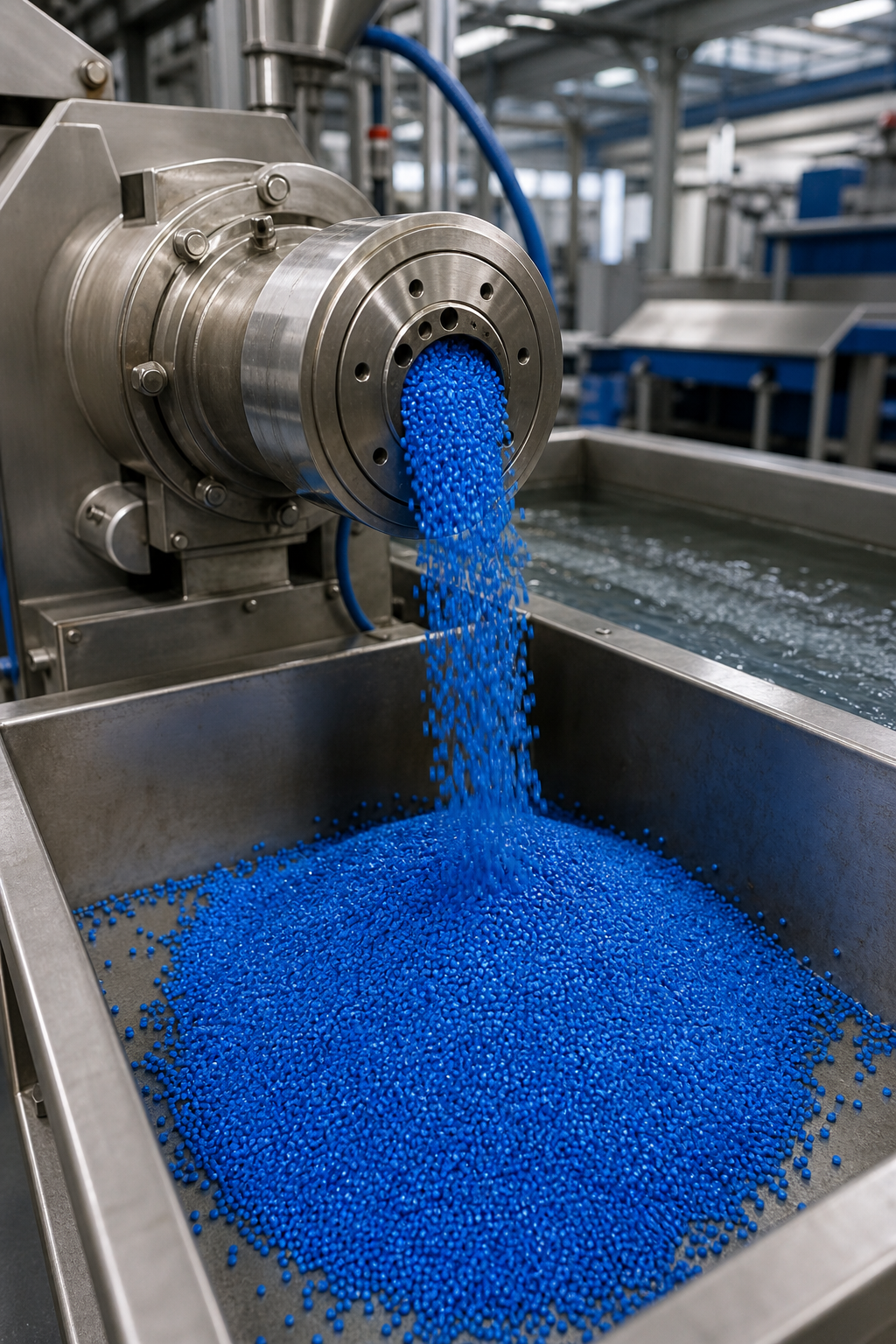
Process-wise, the sequence is: shredding → granulating → washing → dewatering → pelletizing. Each stage needs monitoring. For instance, too much moisture in the extruder creates bubbles and black spots. Use a dewatering machine followed by a hot air dryer. The final pellets should be uniform in size and color, with less than 1% moisture content.
Companies like Plastivo Extrusions supply plastic granules making machines that integrate pelletizing and cooling, ensuring consistent output. Their machines are used by plants across India, Africa, and the UAE.
Step 6: Market and Sell Your Recycled Plastic Products
Your main product is recycled plastic pellets (also called granules or dana). Sell them to injection molders, blow molders, film extruders, and pipe manufacturers. Prices vary by type: rPET sells for ₹60, 100/kg, rHDPE for ₹40, 80/kg, and rLDPE for ₹30, 50/kg. Build relationships with local manufacturers and use online B2B platforms to reach buyers across India and abroad.
Certifications like ISO 14001 or a Letter of No Objection from FDA for food-grade recyclate can command premium prices. Also, partner with brands under EPR programs, they pay for verified recycling credits. This gives you recurring revenue while boosting your credibility.
Don’t forget to market your environmental impact. Show how many tons of plastic you’ve diverted from landfills. This attracts ESG-minded investors and customers.
FAQ
How much money do I need to start a plastic recycling business?
Startup costs depend on plant scale and include land, machinery, permits, and working capital. Many recyclers recover their investment within 24 to 30 months.
Which plastic is most profitable to recycle?
PET (bottles) and HDPE (containers) are the most profitable because they are widely accepted and have strong markets. LDPE films can be profitable but require more processing and larger volumes.
Do I need a license to recycle plastic?
Yes, in India you need consent from the state pollution control board, registration under the Plastic Waste Management Rules, and an EPR certificate. Regulations vary by country, so check local laws.
Can I start a plastic recycling business from home?
You can start small with a shredder and granulator in a garage or shed, processing 50, 100 kg per day. However, you’ll need proper ventilation and waste discharge systems. Scaling up usually requires a dedicated facility.
How do I find buyers for recycled plastic pellets?
Connect with local plastic manufacturers, list on B2B platforms, and attend industry trade shows. Build direct relationships with injection molders and pipe makers. EPR partnerships also guarantee off-take.
What is the biggest mistake new recyclers make?
The most common mistake is skimping on sorting and washing. Contaminated pellets are harder to sell and fetch lower prices. Invest in a good washing line and optical sorters to avoid this.
Conclusion
Starting a plastic recycling business takes capital and commitment, but the demand for recycled materials is only growing. Follow the steps above to build a plant that runs safely and profitably. For high-quality recycling equipment and support, consider Plastivo Extrusions, they manufacture machines that handle PET, HDPE, LDPE, and mixed plastics. Check out their latest machine prices to get started.