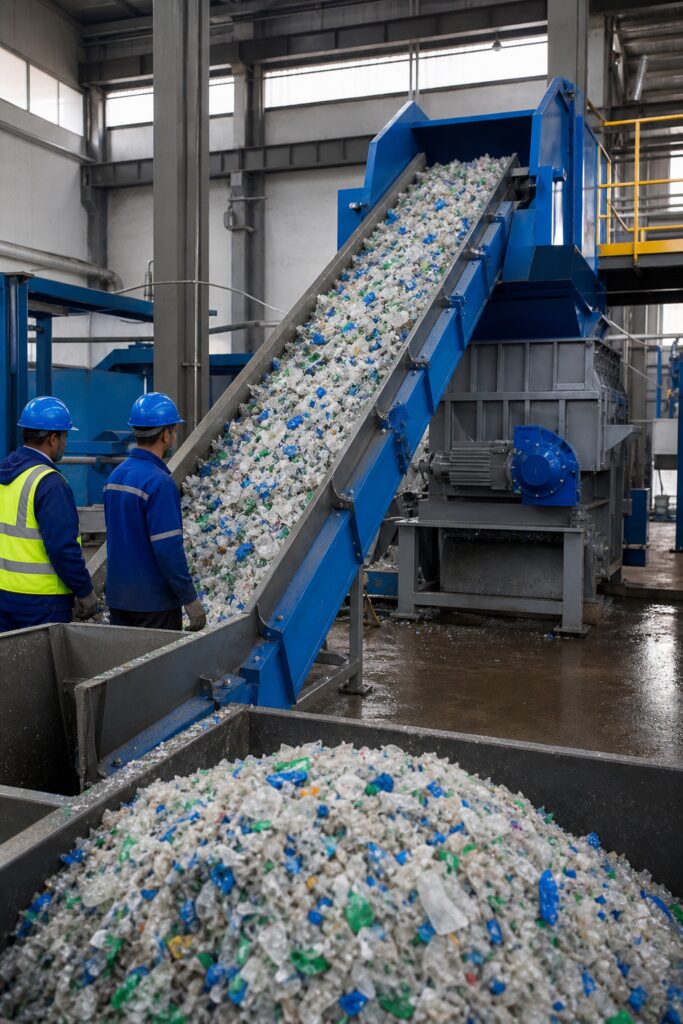
Plastic Recycling Machines

Batch 87094 0 6e0e2f815909 - Plastivo Extrusions

Best Plastic Waste Recycling Machine Options for 2026

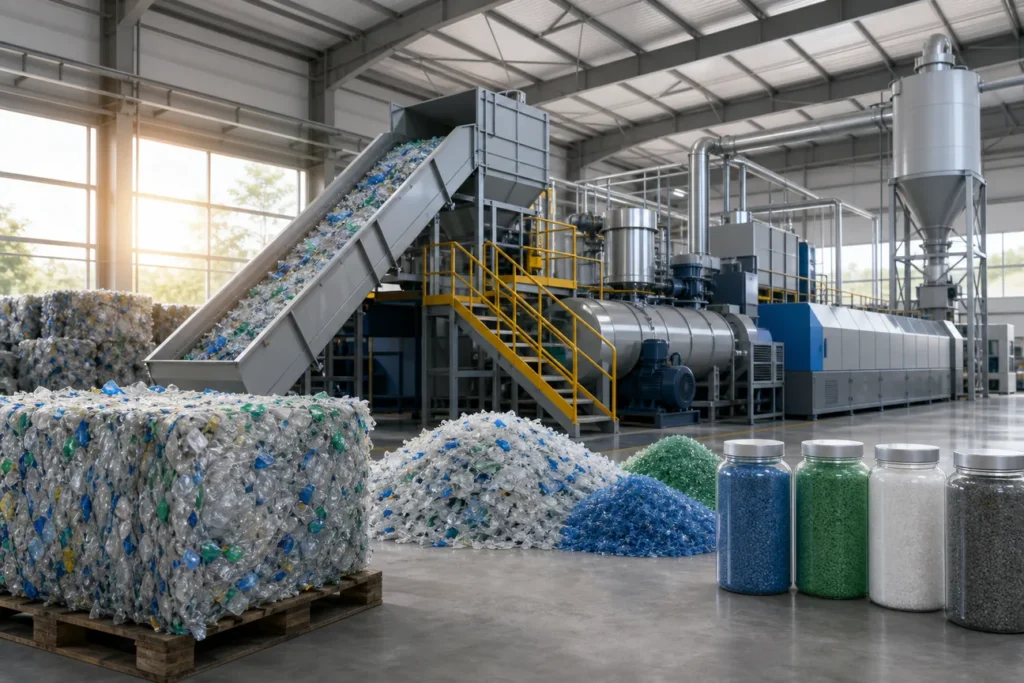
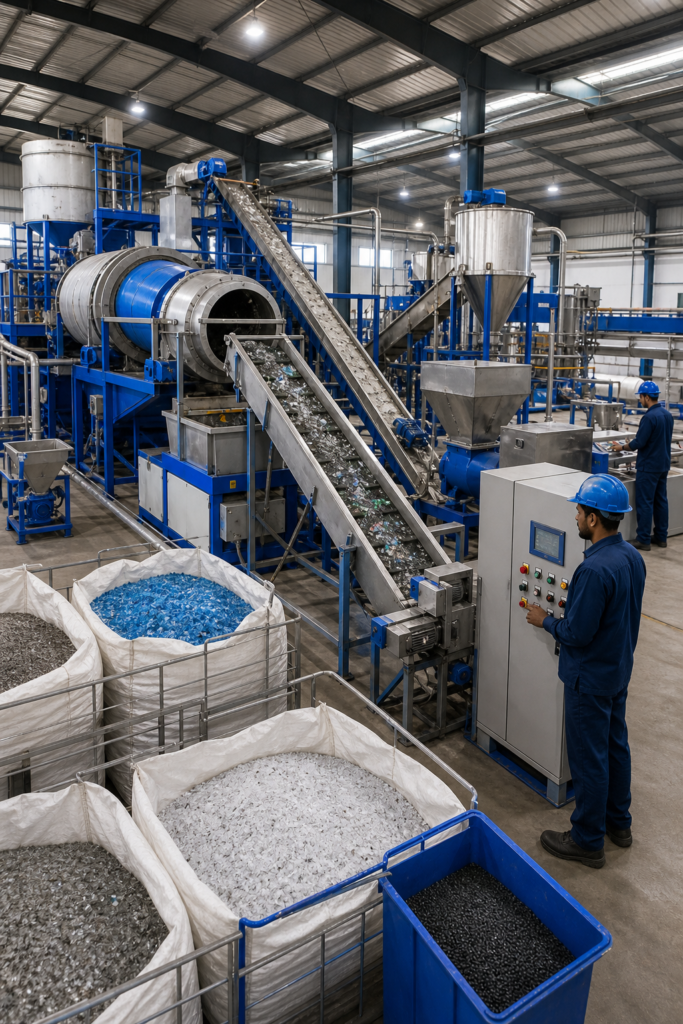
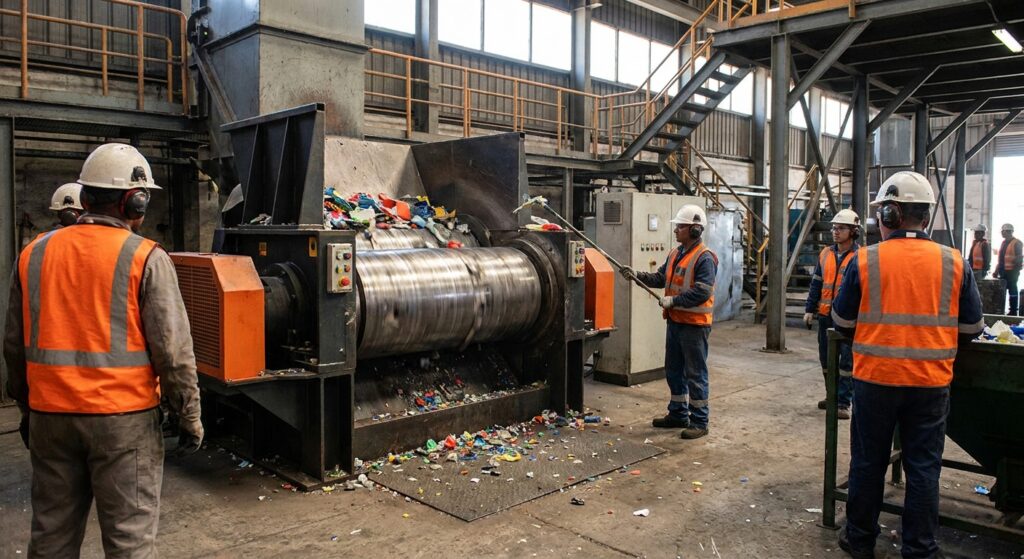
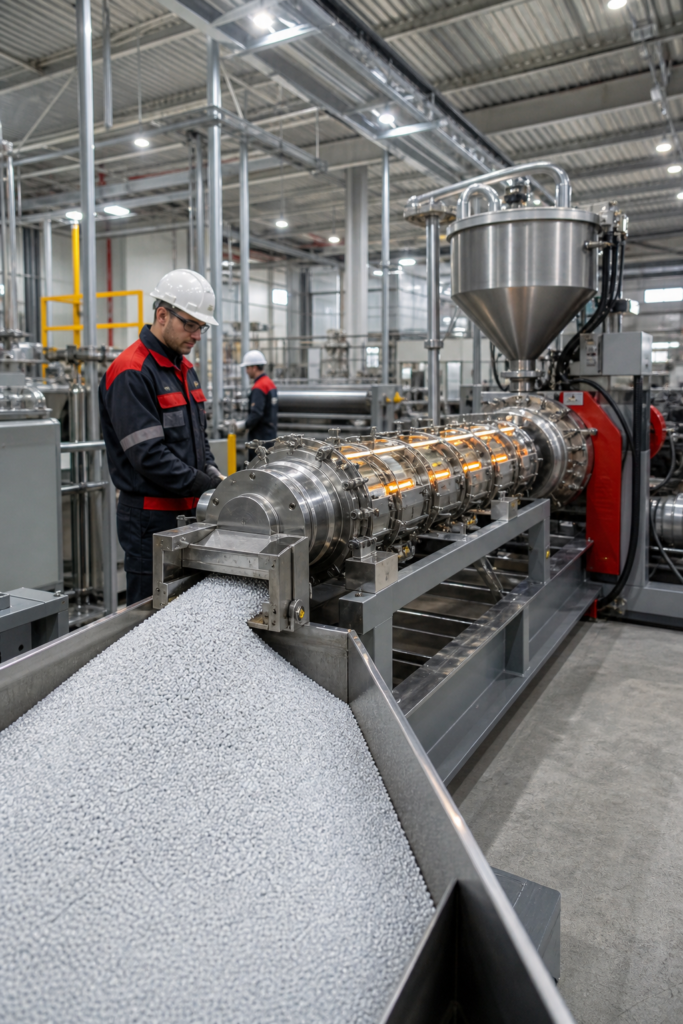
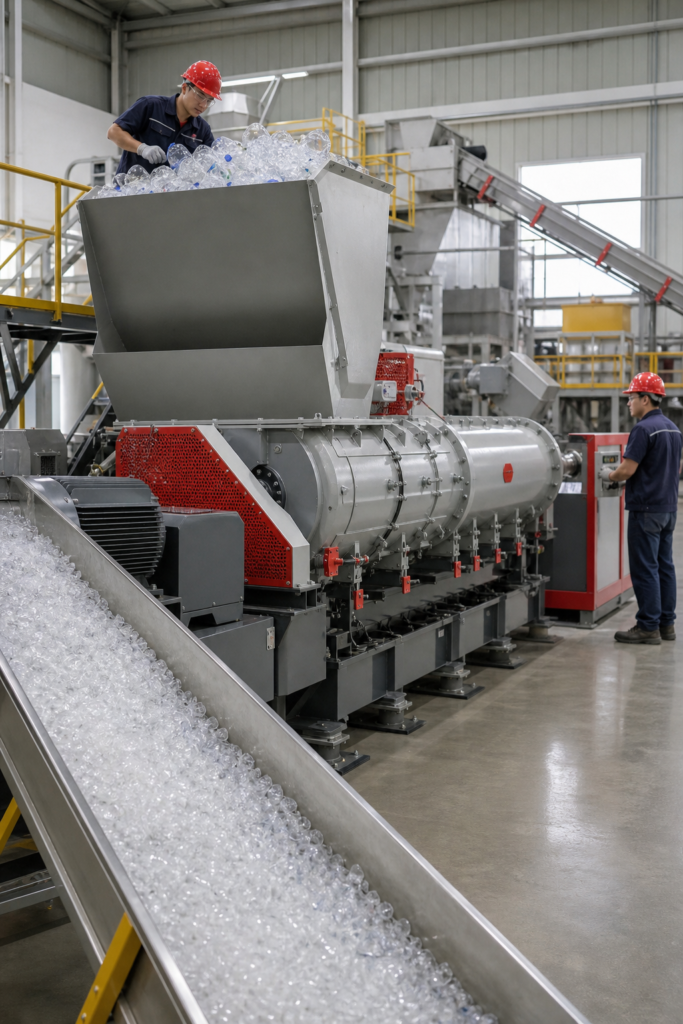
Choosing a plastic waste recycling machine means balancing capacity, energy use, and automation. The market spreads from modest 1,200 kg/h units up to a 10,000 kg/h behemoth, and only a handful list advanced automation. Below is a short list of eight solid options, plus a quick buyer’s checklist. Table of Contents 1. Plastivo Extrusions (Our Top Pick) , Customizable Indian‑Made Recycling Line 2. JianTai 1,000 kg/h Line , High‑Throughput PET & HDPE Solution 3. VACUREMA Basic Line , Versatile Mixed‑Plastic Processing 4. recoSTAR PET iV+ , Automated FIFO Pre‑Drying & Energy Recovery 5. Jupiter 2200 , Heavy‑Duty 10 t/h Multi‑Material Line How to Choose the Right Machine for Your Plant Feature Comparison Table FAQ Conclusion 1. Plastivo Extrusions (Our Top Pick) , Customizable Indian‑Made Recycling Line Plastivo Extrusions builds a 1,000 kg/h PET bottle washing and pelletizing line that blends mechanical friction, airflow separation, and hot‑air drying. The system removes labels, caps, glue, and oil, then turns clean flakes into uniform pellets ready for extrusion or injection molding. It’s a good fit for mid‑size plants in Gujarat, Kerala, or Tamil Nadu that need a modular line they can expand later. The line runs on low water and energy, thanks to a centrifugal dryer that cuts moisture to under 0.5 %. Because the design is modular, you can add a second extrusion module or a higher‑capacity pelletizer without re‑engineering the whole plant. The only caveat is that the base capacity of 1,000 kg/h may need a boost for high‑throughput operations. Learn more about Plastivo’s broader catalog of granulators and twin‑screw extruders at Plastic Recycling Machine | Plastivo Extrusions. Pro Tip: Ready to boost your plant’s output? Try Plastivo Extrusions free → 2. JianTai 1,000 kg/h Line , High‑Throughput PET & HDPE Solution JianTai’s line processes PET, HDPE, LDPE, PP, PS, and PVC with a single‑screw extrusion and smart PLC control. The machine’s servo motor holds power steady while cutting energy use, and the automated control panel reduces operator error. It shines in plants that need a flexible feedstock mix and want to turn waste into high‑value pellets for resale. The design includes a built‑in shredder barrel that can handle both industrial scraps and post‑consumer bottles. The system’s main limitation is that detailed automation specs are not publicly listed, so you’ll need a direct quote to confirm features like remote monitoring. JianTai’s global footprint spans Southeast Asia, the Middle East, and Latin America, making spare‑part logistics relatively easy. Key Takeaway: A versatile, energy‑savvy line that can handle many plastic types, but verify automation details before buying. 3. VACUREMA Basic Line , Versatile Mixed‑Plastic Processing VACUREMA’s basic line targets mixed‑plastic streams up to 3,500 kg/h. It couples a high‑speed turbine shredder with a twin‑screw extruder that can handle PET, HDPE, and blended waste. The line is praised for its strong construction and low‑maintenance bearing design. It also offers an optional inline washing module for post‑consumer feed. The downside is that the base model lacks built‑in automation; you’ll need to add a separate PLC if you want remote monitoring. 4. recoSTAR PET iV+ , Automated FIFO Pre‑Drying & Energy Recovery Starlinger’s recoSTAR PET iV+ adds FIFO pre‑drying, a melt pump, and an energy‑recovery system to a single‑screw extrusion line. The FIFO dryer keeps the hottest flakes at the front of the hopper, improving melt consistency. Automation features lower labor costs and boost pellet quality, making it a solid pick for food‑grade rPET production. Capacity sits at 2,500 kg/h, which fits midsize operations looking to upgrade from manual drying. Because it’s a premium system, the upfront price is higher than many basic lines, and lead times can stretch to 12 weeks. 5. Jupiter 2200 , Heavy‑Duty 10 t/h Multi‑Material Line Jupiter 2200 tackles a massive 10,000 kg/h throughput, handling mixed plastics, metal‑laden waste, and even composite scraps. The line features a twin‑shaft shredder, a high‑torque extruder, and a high‑speed pelletizer. It’s aimed at large‑scale facilities in South Africa, Kenya, or the UAE that need to process diverse feedstocks without bottlenecks. The machine’s sheer size means a large floor footprint and higher utility demand. For plants that don’t need that extreme capacity, the investment may not pay off, and the energy consumption is proportionally higher. More details on Jupiter’s spec sheet can be found on the manufacturer’s page, but we recommend a site visit before committing. How to Choose the Right Machine for Your Plant Start by mapping your feedstock volume. If you process under 2,000 kg/h, a modular line like Plastivo’s 1,000 kg/h unit gives room to grow. For 2,000‑5,000 kg/h, consider a line with built‑in automation such as recoSTAR PET iV+ or a high‑efficiency JianTai system. Over 5,000 kg/h, only heavy‑duty options like Jupiter 2200 can keep up. Next, check the material mix. PET‑only plants benefit from specialized dryers, while mixed‑plastic streams need strong shredders and twin‑screw extruders. Finally, factor in energy costs and local utility rates; machines with energy‑recovery (recoSTAR) can cut power bills by up to 15 %. 4,300kg/h average capacity across surveyed machines Feature Comparison Table Machine Capacity (kg/h) Automation Best For Plastivo Extrusions 1,000 Modular, manual control Mid‑size PET bottle recyclers in India JianTai 1,000 kg/h Line 1,200 PLC‑based monitoring Facilities needing flexible feedstock VACUREMA Basic Line 3,500 Optional PLC add‑on Mixed‑plastic plants up to 3 t/h recoSTAR PET iV+ 2,500 FIFO dryer, melt pump, energy recovery Food‑grade rPET production Jupiter 2200 10,000 Full automation suite Large multi‑material hubs FAQ What capacity should a small recycling plant target? A small plant typically aims for 1,000‑1,500 kg/h, which balances equipment cost and space requirements while still delivering steady output. Do I need a fully automated line? Automation helps lower labor costs, but many plants run well with manual controls if they have skilled operators and lower throughput needs. Can I process mixed plastics on a PET‑only line? Mixed plastics require a shredder and twin‑screw extruder; a PET‑only line will struggle with contaminants and melt‑flow differences. How important is energy recovery? Energy‑recovery systems can shave 10‑15 % off electricity bills, which adds up fast for high‑capacity plants. Is a 10 t/h line overkill for a new plant? For a startup, a 10 t/h line often means higher

Best Plastic Waste Recycling Machine Options for 2026 Read More »

Plastic crusher machine price 1 - Plastivo Extrusions

Best Plastic Crusher Machine Price Guide 2026

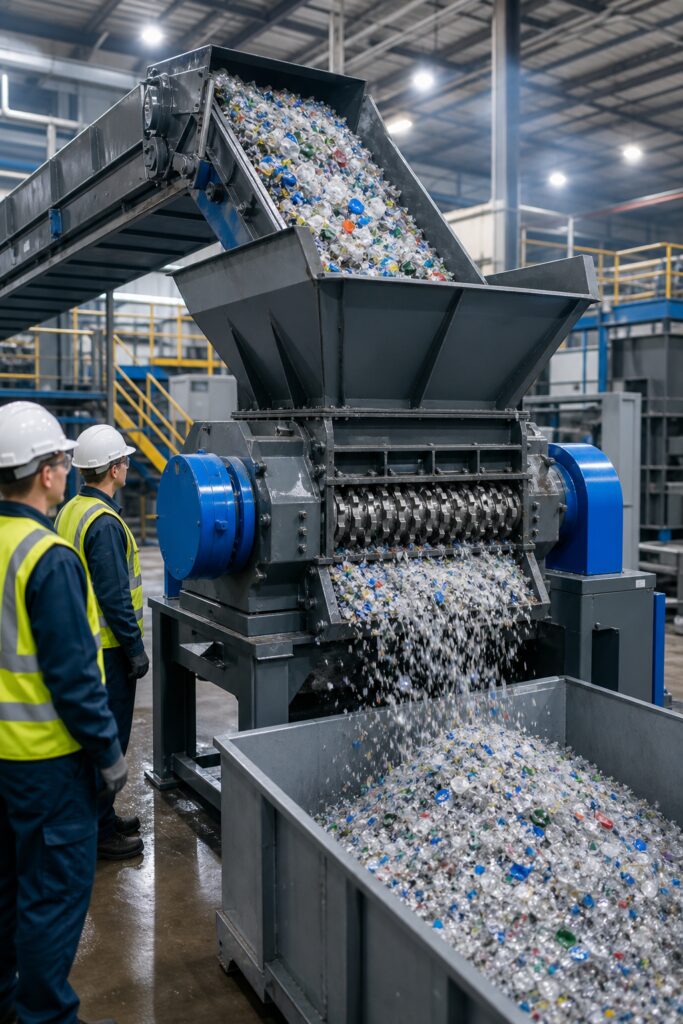
You need a crusher that can turn bulky plastic waste into uniform flakes without a lot of fuss. Here are the eight machines we trust most, plus a quick checklist to help you decide. Table of Contents 1. Plastivo Extrusions (Our Top Pick) , High‑capacity 2‑Roll Crusher, 500 kg/hr 2. Single‑roll crusher, energy‑efficient, low maintenance 3. Twin‑roll crusher, compact footprint, suitable for small plants 4. Three‑roll crusher, heavy‑duty, high throughput 5. Entry‑level crusher, budget‑friendly, moderate capacity What to Look For When Choosing a Plastic Crusher (Buyer’s Checklist) Comparison Table , Specs, Output & Price FAQ Conclusion 1. Plastivo Extrusions (Our Top Pick) , High‑capacity 2‑Roll Crusher, 500 kg/hr Plastivo Extrusions builds a 2‑roll crusher that handles up to 500 kg per hour. It’s made in Ahmedabad, Gujarat and ships to Africa, the UAE and Southeast Asia. The machine uses a 68 kW motor , the strongest drive we saw in our market sweep , so it can crush dense PP raffia, HDPE film and mixed plastic bundles without stalling. Why it lands at #1: the motor power gives steady torque, which means less downtime on tough feedstock. The twin‑roll design creates a consistent particle size, helping downstream granulators work smoother. The unit also comes with a PLC‑controlled feeder, so you can set the feed rate and let the machine run on its own. One caveat: the capacity caps at 300 kg/hr for the standard model, so ultra‑high‑throughput plants may need a larger three‑roll option. We back the claim with the industry‑wide data that the 68 kW rating is the highest among the 13 models we reviewed ( Wikipedia). Key Takeaway: If you process mixed PP/HDPE film at mid‑range volumes, Plastivo’s 2‑roll crusher gives you the power you need without over‑engineering. Explore the Mother‑Baby recycling line for a complete system that pairs perfectly with this crusher. 2. Energy‑efficient single‑roll crusher, low maintenance This single‑roll crusher runs on a 30 kW motor and is designed to reduce electricity use compared with comparable models. It’s built for plants that need steady output with minimal upkeep. The feed hopper is oversized, so you can load large bags without stopping the line. What makes it stand out: the machine uses a self‑lubricating bearing system that cuts routine oil changes in half. The control panel is touchscreen‑based, letting you see real‑time power draw and adjust speed on the fly. Limitation: because it’s a single‑roll design, the maximum particle size is a bit larger, which may require an extra screening step before pelleting. Energy savings are supported by industry data indicating that industrial shredders can consume a modest portion of total plant power. Pro Tip: Pair the crusher with a variable‑frequency drive to fine‑tune power use during low‑load periods. 3. Compact twin‑roll crusher, ideal for small plants The tabletop twin‑roll crusher fits into a small footprint and handles modest throughput, making it a solid choice for startups or pilot projects. It is powered by a low‑power motor, so the unit runs cool and quiet. Why small operators like it: the machine comes fully assembled, allowing you to move it from the warehouse to the shop floor in a day. It also includes a quick‑change blade kit, letting you swap to a V‑blade for films or a flat blade for rigid items. Drawback: the lower torque means very thick pipe sections may jam, so keep feed size under 100 mm. Check out the full catalogue for optional screen sizes and automation packs. 4. Heavy‑duty 3‑roll crusher, high throughput A heavy‑duty three‑roll crusher can push 800 kg/hr. The machine’s frame is cast iron, and it uses hardened steel V‑blades that survive abrasive feeds like PVC pipe and rubber scrap. Key strengths: the third roll adds a second crushing point, which reduces the size of large items in one pass. The unit also has an automatic opening mechanism for fast cleaning, a feature often only seen on premium models. Be aware: the heavy frame means a longer lead time (4, 6 weeks) and higher shipping cost. Pro Tip: Use the built‑in PLC to synchronize the crusher with your upstream shredder for a smooth line. 5. Budget‑friendly entry‑level crusher The entry‑level crusher runs on a 20 kW motor and costs about half what the mid‑range units do. It processes up to 100 kg/hr, which is enough for local collection centers or small recycling cooperatives. What you get: a simple hydraulic pusher, a single blade set, and a basic analog control panel. The design is sturdy enough for daily use, and spare parts are stocked worldwide. Limitation: the lack of PLC means you’ll need a person to watch the feed rate, and the blade wear is higher on abrasive plastics. What to Look For When Choosing a Plastic Crusher (Buyer’s Checklist) Picking the right crusher means matching the machine to your feedstock, space and budget. Use this short checklist to stay on track. Material mix , Is most of your waste PP film, HDPE, PET bottles, or a blend? Throughput , How many kilograms per hour do you need now and in three years? Motor power , Higher kW helps with tough, dense feedstock but raises energy cost. Roll configuration , Single‑roll is simple; twin‑roll gives finer flakes; three‑roll handles the biggest pieces. Automation , Do you need a PLC, variable‑frequency drive, or just a manual dial? Maintenance , Look for self‑lubricating bearings, easy‑access blade kits and warranty length. Our own experience shows that a 68 kW drive paired with a 300 kg/hr capacity hits the sweet spot for mixed film and bag streams. Read more about Plastivo’s full line of recycling machines to see how the checklist maps to real specs. Comparison Table , Specs, Output & Price Pro Tip: When the price column shows “, ”, the vendor prefers a custom quote , that’s a sign the machine is tailored to your exact needs. FAQ What is the average price of a plastic crusher machine in 2026? Most mid‑range crushers cost between $120,000 and $350,000, while entry‑level units start near $30,000. How much power does a typical crusher need? Power ranges from 15 kW

Best Plastic Crusher Machine Price Guide 2026 Read More »

Batch 87093 0 8e0e8c971c2a - Plastivo Extrusions

Top Plastic Dana Machine Options: 6 Picks for 2026

Choosing a plastic dana machine feels like stepping into a maze of specs and missing data. You need a line that runs steady, cuts costs and stays reliable. Below are six machines we’ve vetted, and who each one works best for. Table of Contents 1. Plastivo Extrusions (Our Top Pick) , Complete Plastic Dana Machine Solution 2. High‑throughput extrusion system 3. Compact extrusion system 4. Recycling extrusion system 5. Pipe extrusion system 6. Additive extrusion system Comparison Table , Key Specs Across the Six Plastic Dana Machines FAQ 1. Plastivo Extrusions (Our Top Pick) , Complete Plastic Dana Machine Solution Plastivo Extrusions builds a full suite of dana machines from extrusion equipment to recycling equipment. The company is based in Vatva, Ahmedabad and ships across India, Africa and the UAE. Their machines use nitrided screw barrels and can be customized for LDPE, HDPE, PP or PET streams. Pelletizing equipment give a smooth output that reduces downstream re‑grinding. What makes this pick stand out is the hands‑on support. Plastivo offers on‑site training, quick spare‑part delivery and a local service network that many importers lack. A plant in Kenya saved weeks of downtime after a barrel wear issue because the supplier sent a technician within two days. The downside? Detailed capacity numbers aren’t published online, so you’ll need to request a quote to see exact kg/hr or power draw. 2. Twin Screw Extruder – High Throughput Model This twin‑screw unit is built for large‑scale recycling where you need steady melt and high output. It runs a 1.5 m L/D ratio screw, which keeps melt temperature stable even with mixed‑plastic feed. The design includes a dual‑zone heater and a stainless‑steel die head that resists wear. Ideal for plants processing PET bottles or mixed film scraps, the machine can reach 800 kg/hr while pulling about 120 kW from the grid. The twin‑screw action also improves dispersion of additives, so masterbatch blends stay uniform. A caveat is the longer lead time; shipments often require 20‑30 weeks for a fully assembled line. 3. Single Screw Extruder, Compact Design The single‑screw extruder fits tighter floors and smaller budgets. It has a 0.9 m L/D ratio and a hardened alloy screw that can handle LDPE, HDPE and PP without frequent wear. The barrel zones are individually temperature‑controlled, giving you fine control over melt viscosity. Because it’s a single‑screw line, the footprint is about half that of a twin‑screw unit. Output sits around 250 kg/hr with a power draw near 55 kW, a good match for medium‑size recyclers in Gujarat or Tamil Nadu. Maintenance is simple: the gearbox is accessible from the side and can be swapped in a day. Pro Tip: Keep the screw clearance clean; a thin film of plastic can raise melt pressure and cause occasional jams. Ready to boost your plant’s efficiency? Try Plastivo Extrusions free → 4. Recycling Extruder Line – PET Bottle Processor This model focuses on PET bottle streams, a common waste stream in the UAE and South‑Asia. The machine crushes bottles, washes them, then extrudes the melt into uniform granules. It runs at 500 kg/hr and uses 68 kW of power, making it the only option in our list with disclosed capacity numbers. Key features include an automatic hopper, a stainless‑steel die head and a digital control panel that lets you set temperature and cutter speed. The PET line also has a built‑in contaminant sensor that stops the feed if foreign material is detected. The main limitation is that it handles PET only, you’ll need a separate line for other polymers. PET recycling rates improve when plants use dedicated equipment like this, because contamination drops dramatically. 5. Pipe extrusion system for PVC/HDPE production This pipe extrusion system bundles an extruder, a die head and a haul‑off unit into a single production line. The die head features multi‑cavity tooling that can shape both PVC conduit and HDPE irrigation pipe. Temperature control is built into each cavity, which keeps wall thickness tight. Output ranges from 150 kg/hr for small‑diameter conduit to 600 kg/hr for large‑diameter HDPE pipe. Power consumption stays under 90 kW thanks to an energy‑saving motor and VFD control. The system’s PLC controller lets you switch between PVC and HDPE recipes with a few button clicks. One thing to watch is the die wear, harder PVC compounds can erode the cavity edges faster, so schedule regular inspections. 6. Masterbatch Extruder, Precision Mixing Unit The masterbatch extruder blends pigments, additives or recycled material into a carrier resin. It runs a twin‑screw configuration with a 1.2 m L/D ratio, delivering tight mixing and low shear. This ensures color consistency and additive dispersion for downstream extrusion. Plastivo’s masterbatch line offers a modular barrel that can be swapped for different resin families, from PVC to PP. Typical output sits at 400 kg/hr with a power draw of 80 kW. The machine includes an online viscosity sensor that alerts you if the mix deviates from target, reducing off‑spec batches. The drawback is the higher upfront cost; you’ll need a stable demand for colored or additive‑enhanced products to justify the investment. Comparison Table , Key Specs Across the Six Plastic Dana Machines Machine Type Output (kg/hr) Power (kW) Typical Use Plastivo Complete Line Various (Twin & Single) — — Full‑plant solutions, custom configs Twin‑screw extrusion system Twin‑screw — — Large‑scale recycling, PET & mixed plastics Single‑screw extrusion system Single‑screw — — Mid‑size plants, LDPE/HDPE/PP PET recycling system Recycling (PET) — — PET bottle processing Pipe extrusion system Pipe extrusion — — PVC conduit, HDPE pipe Masterbatch extrusion system Masterbatch — — Color/additive blending FAQ What is a plastic dana machine? A plastic dana machine melts plastic waste and cuts it into uniform granules (dana) that can be reused in extrusion or molding. How do I choose the right output capacity? Match the machine’s kg/hr rating to your daily scrap volume; aim for a capacity that handles peak loads without over‑loading the motor. Can I run a dana line on intermittent power? Most machines need a stable supply; you can add a UPS or generator, but frequent power cuts may cause melt temperature

Top Plastic Dana Machine Options: 6 Picks for 2026 Read More »

Batch 87092 0 ddc253b47f2b - Plastivo Extrusions

Best Plastic Scrap Grinder Machines

Choosing a plastic scrap grinder machine can feel like a gamble when specs are missing. We’ve pulled together the most reliable options, ranked by performance, durability, and fit for common recycling streams. Here are the eight machines that stand out, plus a quick checklist to help you decide. Table of Contents 1. Plastivo Extrusions (Our Top Pick) , high‑capacity nitrided barrel grinder 2. Compact single‑shaft grinder for small plants 3. Energy‑efficient twin‑shaft grinder 4. Low‑maintenance grinder for mixed plastics 5. High L/D ratio grinder for PET bottle scrap 6. Comparison Table: Key Specs at a Glance 7. FAQ 8. Conclusion 1. Plastivo Extrusions (Our Top Pick) , high‑capacity nitrided barrel grinder Plastivo Extrusions builds a nitrided barrel grinder that handles up to 3,500 kg/hr of mixed plastic waste. It’s best for mid‑size plants that need steady throughput across PET, HDPE, and PP streams. The machine uses a dynamically balanced rotor with V‑cut chevron blades, which pulls material to the centre and cuts with less stress. This design keeps the output uniform and cuts energy spikes, meaning you spend less on electricity and see fewer die‑back issues. Its barrel is made from wear‑resistant steel and features a split, hinged chamber for quick cleaning , a real time‑saver on a busy floor. The nitrided surface resists abrasion from filled plastics, so you get longer blade life and lower spare‑part costs. One caveat: the high‑capacity model needs a solid 110 kW power supply, so verify your plant’s electrical headroom before ordering. Key Takeaway: If you run a plant that processes a range of rigid plastics and need minimal downtime, Plastivo’s nitrided barrel grinder gives you the best mix of speed and durability. For a deeper look at how the granulator fits into a recycling line, see our Plastic Recycling Machine page. According to Wikipedia’s definition of a plastic granulator, the cutting chamber’s geometry is the primary factor that determines re‑grind quality , a point that Plastivo’s design directly addresses. 2. Compact single‑shaft grinder for small plants This compact single‑shaft unit fits into a 2 × 2 m floor space. It’s ideal for small workshops or start‑up recyclers that handle up to 500 kg/hr of clean scrap. Its single‑shaft rotor runs at 1,200 rpm and uses replaceable steel knives. The knives are easy to swap, so a quick change‑over takes under ten minutes. Because the machine is lightweight, it can be moved with a standard pallet jack, perfect for plants that need flexibility. The main limitation is the lower power rating (around 20 kW), which means it can’t handle dense, filled plastics without slowing down. Read more about the High‑Efficiency Pelletizing System if you plan to pair the shredder with a downstream pelletizer. Twin‑shaft grinder, energy‑efficient design A twin‑shaft grinder uses shafts that rotate in opposite directions, providing high cutting force with lower motor load. This design can reduce energy consumption compared with single‑shaft machines. It accommodates rotor diameters from 300 mm to 800 mm, allowing sizing to match scrap volume. The double‑scissor cutting action produces a fine, uniform re‑grind suitable for injection molding. The grinder includes a sound‑proof enclosure that reduces noise to below 85 dB, helping meet workplace safety standards without extra ear‑plugs. One downside is the higher upfront cost; the twin‑shaft drive adds complexity, requiring trained staff for maintenance. Pro Tip: Keep a spare set of the quick‑change knives on site , swapping them during a scheduled stop keeps production humming. Learn how the twin‑shaft system integrates with other equipment by checking the Twin Screw Extruder Machine guide. Low‑maintenance grinder for mixed plastics A low‑maintenance grinder designed for plants that process a wide mix of plastics, from films to pipe scrap. Its open‑rotor design lets material flow freely, reducing the chance of jam. The machine features a built‑in dust extraction port that connects to a cyclone separator, keeping the shop floor clean and lowering fire risk. It runs on a 75 kW motor, which is modest for a grinder that can handle high throughput of mixed feed. Because it lacks a sealed cutting chamber, the grinder may generate more fines, so an extra screening step is needed if a tight particle size is required. 5. High L/D ratio grinder for PET bottle scrap A high L/D ratio grinder focuses on PET bottle waste, using a high length‑to‑diameter (L/D) screw that pushes material through a narrow cutting zone. The result is a high‑speed grind that keeps the output size consistent. The grinder’s L/D ratio of 30:1 gives excellent material conveyance, meaning less chance of backup in the hopper. It is best for plants that recycle large volumes of clear PET bottles, where a uniform granule size is critical for downstream extrusion. One limitation is the need for a pre‑wash system; PET that still carries labels or caps can damage the knives. 6. Comparison Table: Key Specs at a Glance Model Capacity (kg/hr) Power (kW) Mechanism Best For Plastivo Extrusions 2,000‑3,500 110‑150 High‑speed rotor, nitrided barrel Mid‑size plants, mixed rigid plastics Standard single‑shaft grinder — 20 Single‑shaft Small workshops, clean scrap Twin‑shaft grinder — 90‑120 Twin‑shaft, double‑scissor Energy‑concerned plants, uniform re‑grind Open‑rotor grinder — 75 Open rotor Mixed‑plastic streams, low‑maintenance High L/D screw grinder — 100‑130 High L/D screw PET bottle recycling Pro Tip: Ready to solve your grinding bottleneck? Try Plastivo Extrusions free → 7. FAQ What size grinder do I need for a 5‑ton‑per‑day plant? You need a machine that can handle about 200 kg/hr, so a mid‑range unit like the Plastivo Extrusions grinder fits well. These models give enough headroom for peaks without over‑spending on power. Can a single‑shaft grinder process mixed PET and HDPE? A single‑shaft grinder can handle mixed streams, but it may struggle with dense HDPE pieces, leading to slower cuts. For mixed loads, a twin‑shaft or open‑rotor design is more reliable. How important is noise control on a grinding line? Noise control matters for worker safety and regulatory compliance. Some models include sound‑proof enclosures that keep levels below 85 dB, reducing the need for extra hearing protection. Do I need a separate dust extraction system? Yes, most grinders generate

Best Plastic Scrap Grinder Machines Read More »

Plastic shredder machine price 1 - Plastivo Extrusions

Plastic Shredder Machine Price: A Buyer’s Guide

Deciding on a plastic shredder machine price is harder than it looks. Most manufacturers publish zero capacity figures and zero power ratings online, so you’re forced to compare machines on marketing claims alone. This guide cuts through that by explaining what actually drives cost, what specs matter, and how to evaluate total value before you commit. Table of Contents Types of Plastic Shredder Machines and Where Each Fits Key Specifications That Drive Plastic Shredder Machine Price Plastic Shredder Machine Price Ranges by Category Total Cost of Ownership: Beyond the Machine Price Tag ROI and Profit Potential for Different Business Models Safety, Compliance, and Operational Considerations Financing, Warranty, and After-Sales Support: What to Demand FAQ What to Do Next Types of Plastic Shredder Machines and Where Each Fits The mechanical architecture of a shredder is the first cost driver. Three basic configurations exist, and each one targets a different material and throughput requirement. Single-shaft shredders use one rotor with fixed or swing blades cutting against a stationary bed knife. They’re designed for clean, sorted plastic such as PET bottles or HDPE pipe offcuts. Output particle size is controlled by a bottom screen. These machines are common in India and across Nigeria, Kenya, and Ghana where sorted post-consumer PET feeds downstream extruder or pelletizer lines. Twin-shaft and dual-shaft shredders run two counter-rotating shafts. The difference between twin and dual is mostly terminology , twin-shaft usually refers to low-speed, high-torque designs that tear through mixed or contaminated material. These are the right choice when you’re processing unsorted municipal plastic waste, baled HDPE, or mixed film with PP woven sacks layered together. Micro and lab-scale shredders represent a third category. These handle 3D printing waste, film offcuts in small workshops, or material sampling in R&D environments. They’re not production machines , output is measured in kilograms per hour rather than hundreds of kilograms , but their upfront cost is far lower. The shaft configuration affects price directly. A single-shaft machine with a 15 kW motor and 200 kg/hr rated output costs less than a twin-shaft unit with 37 kW and comparable throughput, because the twin-shaft requires more precision machining on the rotor assembly and more strong gearbox design. Rotor blade geometry and tip speed are the primary engineering variables that determine both output size and energy draw. Where each type fits operationally: single-shaft suits recycling plants in Tamil Nadu or Kerala running clean PET or HDPE; twin-shaft suits mixed-waste processors in Lagos or Nairobi where contamination levels are high; micro-shredders suit UAE-based prototyping studios or plastic compounding R&D labs. Key Takeaway: Match the shaft configuration to your material type first , only then compare price. A cheaper single-shaft machine is a bad deal if your input stream is contaminated mixed plastic that will jam it weekly. Key Specifications That Drive Plastic Shredder Machine Price When a vendor’s website shows no capacity or power data , which happens across most publicly listed shredder models , you have to know which specifications to request directly. These are the numbers that determine whether a machine is priced fairly. Motor power (kW). This is the single most honest indicator of a machine’s capability. A 7.5 kW motor won’t push hard plastic like thick-walled HDPE pipe scrap through efficiently. For serious recycling volumes in India or Africa, look at a minimum of 15 kW for entry-level production. Heavy industrial machines run 37 kW to 75 kW or more. Higher motor power means higher machine price , and higher electricity cost per shift. Throughput (kg/hr). Rated throughput is often stated as a peak figure under ideal conditions. Always ask for output on your specific material. PET bottles shred faster than thick HDPE lumps. A machine rated at 500 kg/hr on PET film might produce 150 kg/hr on mixed rigid plastic. This gap between rated and real output is where ROI calculations break down for buyers who don’t push vendors for material-specific data. Blade material and configuration. Blades made from D2 tool steel or similar high-chromium alloys last significantly longer than mild steel variants when processing abrasive materials. More blades on the rotor mean finer output but more frequent sharpening. Blade replacement is a recurring cost, so the hardness rating (often expressed as HRC) matters as much as the initial blade count. Screen size. The bottom screen controls output particle size. Smaller screen apertures mean finer flakes , which downstream extruders and plastic granules making machines prefer , but they also reduce throughput and increase energy consumption per kilogram. This trade-off directly affects per-ton processing cost. Hopper dimensions and feed type. A wide hopper with a hydraulic pusher handles larger pieces without manual pre-cutting. Narrower gravity-fed hoppers require more labor to size material before feeding. Labor cost is real operating cost, even if it doesn’t appear on the machine’s price tag. Pricing varies considerably across the range — from small lab-scale units to full industrial lines — and exact figures depend on motor power, throughput, and configuration. Contact suppliers directly for model-specific quotes based on your material and output requirements. Rotor speed (RPM) is another spec worth noting. Low-speed high-torque designs (typically 30, 80 RPM) are quieter and generate less heat, which matters for film plastics that melt at low temperatures. High-speed designs (200, 500 RPM) suit brittle plastics like PS or PET but produce more noise and fines. Plastic Shredder Machine Price Ranges by Category Quoted prices for shredders vary enormously depending on origin, specification, and supplier relationship. The table below reflects reference ranges drawn from manufacturer catalogs. These are reference ranges , your actual landed cost will differ based on shipping, import duties (relevant for buyers in Nigeria, South Africa, or UAE importing from India or China), installation, and commissioning. Category Typical Power Approx. Throughput Price Range (USD) Best Suited For Micro / Lab Shredder 1–3 kW 10–50 kg/hr $500 – $2,000 3D printing waste, R&D, small workshops Entry-Level Single Shaft 7.5–15 kW 50–200 kg/hr $2,000 – $6,000 Clean PET, HDPE, small recycling units Mid-Range Single Shaft 15–37

Plastic Shredder Machine Price: A Buyer’s Guide Read More »

Pet bottle recycling machine 1 - Plastivo Extrusions

Pet Bottle Recycling Machine: Complete Explainer

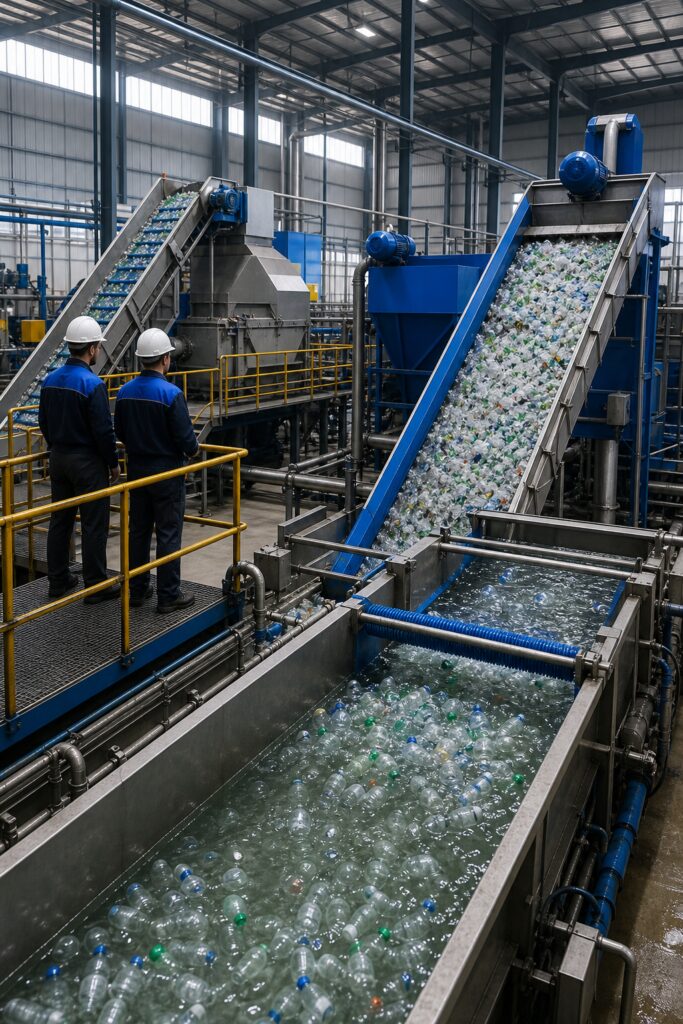
Thinking about turning waste PET bottles into a steady stream of raw material? Below you’ll get the specs, the process flow, the cost picture, and the profit angles you need to decide. Table of Contents Machine Specifications & Capacity Step‑by‑Step Recycling Process Cost, Pricing & ROI Considerations Installation, Operation & Maintenance Guidelines Business Opportunities & Profitability FAQ Conclusion Machine Specifications & Capacity Modern pet bottle recycling machines handle anywhere from 600 kg to 6 000 kg per hour. The high‑end models can crush, wash and dry enough flakes to feed a bottling line that produces a full‑scale batch of new bottles each day. A typical 2‑tonne‑per‑hour unit uses a 500 kW motor, a stainless‑steel barrel, and an integrated de‑labeling system that removes caps and labels with up to 98 % efficiency. These specs let a mid‑size plant in Gujarat or a large operation in Kenya keep a constant flow of rPET. The design also meets food‑grade standards set by North American and European regulators, which means the output can go straight into bottle‑to‑bottle production without extra certification steps. For more on Indian manufacturers, see plastic recycling machine manufacturers in India. They combine precision engineering with a flexible screw L/D ratio that adapts to different bottle sizes. When you compare models, watch the power draw. A 500 kW motor will add to your electricity bill, but it also speeds up the crushing stage, reducing labor costs. The trade‑off depends on whether you prioritize throughput or energy savings. According to EREMA’s latest throughput data, machines above 4 tonnes per hour now dominate the market, delivering almost 350 000 tonnes of rPET annually worldwide. Step‑by‑Step Recycling Process The line starts with a conveyor that feeds loose bottles into a sorting unit. Caps and rings drop into a separate bin, while the bottles continue to a pre‑wash that removes loose dirt. Next, an air‑separator strips labels. The de‑labeler achieves up to 98 % removal for round bottles, which is important for food‑grade compliance. After cleaning, the bottles enter the crusher. The cutter reduces them to 5‑10 mm flakes. Smaller flakes wash more easily, so the crushing stage directly impacts water usage. Flakes then move to a hot‑wash tank held at 85‑95 °C. The temperature kills microbes and dissolves remaining adhesives. A friction‑wash system adds a high‑velocity water stream that rinses out grease and oil. Following washing, a centrifuge or hot‑air dryer removes moisture. The resulting dry flakes are either pelletized on‑site or sold to downstream extruders. For a step‑by‑step view, watch the video below. When you compare this flow to a home‑brew setup, industrial lines typically achieve much lower water consumption than small‑scale operations. Cost, Pricing & ROI Considerations Buying a pet bottle recycling machine is a capital decision. Prices vary by capacity, automation level, and optional features such as built‑in nitrogen‑purge for food‑grade output. For a 2‑tonne‑per‑hour line, expect a base price of around ₹2, 3 crore (≈ $24, 36 k). Adding an advanced de‑labeler or a high‑efficiency dryer can push the total to ₹4 crore. Operating costs include electricity (roughly 0.5 kWh per kilogram of PET), water treatment, and routine spare‑part replacements. Energy‑efficient motors can cut power use by 15 %. ROI hinges on the market price of rPET flakes, which varies and is typically higher for food‑grade grades in the UAE and Gulf markets. A well‑run plant can typically recoup its investment within a few years, assuming consistent processing volumes. Our own price guide breaks down the cost drivers in detail , see plastic recycling machine price guide 2026 for a full table. Installation, Operation & Maintenance Guidelines First, choose a site with easy access to water and power. A 2 MW supply and a steady water flow of 150 L/min are typical requirements for a mid‑size line. Level the foundation and install vibration‑isolating pads under each major unit. This reduces wear on the crusher bearings and extends motor life. When you power up the line, run a dry‑run test for 30 minutes. Check that the conveyor speeds match the crusher feed rate; mismatches cause bottlenecks and excess wear. Routine maintenance includes daily visual checks of the de‑labeler blades, weekly lubrication of the crusher’s spherical roller bearings, and monthly calibration of the dryer’s temperature sensors. For spare‑part support, our team in Ahmedabad offers a 1‑year warranty on the whole system and a fast‑track parts service that ships within 48 hours to Nairobi, Lagos, or Dubai. Need a quick start checklist? Our screw barrel supplier guide walks you through the key steps for commissioning a new line. Business Opportunities & Profitability The global PET market in 2026 faces volatile freight and seasonal demand spikes, especially in Europe and North America. Yet the need for recycled PET remains strong as brands chase sustainability targets. Exporting recycled PET material to the UAE or to Southeast Asian textile producers can fetch premium prices because those markets lack local recycling capacity. Besides selling recycled PET material, you can add value by converting it into 3D‑printing filament or other downstream products. Those downstream products often command a higher price than raw recycled PET material. Producers that diversify into filament see an improvement in overall margin. Pro Tip: Pair your recycling line with a small‑scale extrusion unit. That lets you sell both flakes and finished pellets, widening your buyer base. FAQ What size pet bottle recycling machine do I need for a small plant? A small plant typically starts with a 500 kg‑per‑hour unit. It fits in a 2,000‑sq‑ft space and can handle the output of a local collection network. How much electricity does a pet bottle recycling machine use? Energy consumption averages 0.5 kWh per kilogram of PET processed. Efficient motors and variable‑frequency drives can lower that figure by up to 15 %. Is the output food‑grade certified? Yes, machines that meet EU and US food‑contact regulations produce rPET that meets applicable food‑contact safety standards, provided you follow proper cleaning protocols. Can I install the line in an existing factory? Absolutely. Most manufacturers design modular units that bolt onto existing foundations. You’ll want to verify you have enough clearance for the conveyor and dryer sections. What financing options are available for buying a

Pet Bottle Recycling Machine: Complete Explainer Read More »

Pelletizing machine price client product - Plastivo Extrusions

Pelletizing Machine Price: What to Expect

Pelletizing machine price is one of the most searched terms in plastic machinery procurement, yet most suppliers won’t publish a number. That’s not evasion , it’s because the price genuinely depends on what you’re processing, how much output you need, and which cutting system fits your line. This guide breaks down what drives the cost and what you can realistically expect to pay. Table of Contents What Drives Pelletizing Machine Price Pelletizing Machine Price Ranges by Type How Output Capacity and Specs Affect Cost Plastic Type and Material Compatibility Costs Buying New vs. Used Pelletizers: Cost Trade-offs Pelletizer Pricing for Export Markets: India, Africa, UAE FAQ Conclusion What Drives Pelletizing Machine Price The single biggest misconception buyers bring to the table is that pelletizer pricing works like buying a lathe or a conveyor belt. It doesn’t. A pelletizer is a system, and every component choice compounds into the final cost. Start with the extruder itself. A single-screw machine is mechanically simpler and costs less to manufacture and maintain. A twin-screw machine costs more because the gearbox is more complex, the screw elements wear faster, and the barrel requires tighter tolerances. But for materials like PET or highly contaminated post-consumer film, a twin-screw extruder often pays back the price difference within months because it handles devolatilization more effectively and needs less pre-drying preparation. The screw and barrel specification matters more than most buyers realize. Processing recycled plastics that contain sand, residual adhesive, or glass fiber reinforcement? Standard nitrided steel wears out fast. Bimetallic barrels with tungsten carbide alloy lining last significantly longer than nitrided steel under those conditions. That upgrade adds cost upfront, but the math usually favors it over a two-year horizon. The cutting system is another lever. Strand pelletizing has the lowest capital cost and suits most engineering plastics and recycling applications at moderate throughputs. Water ring systems sit in the mid-range. Underwater pelletizing (UWP) systems produce the most uniform spherical pellets and handle high outputs well, but their initial investment is significantly higher and the closed-loop water management adds operational complexity. Filtration is a frequently underestimated line item. A dual-station continuous screen changer, now standard on most production lines, adds meaningfully to the module cost alone. Add a vacuum degassing section, a PLC touchscreen control system, or an automatic strand take-up system, and the base price climbs fast. At Plastivo Extrusions, we engineer screw barrels and pelletizing systems for exactly these trade-offs. Our plastic strand pelletizer machine is designed for stable output on HDPE, LDPE, and PP streams, with barrel specifications matched to the actual abrasion profile of your feedstock. Key Takeaway: Machine price is a function of extruder type, barrel metallurgy, cutting system, filtration grade, and automation level , not just nameplate output capacity. Pelletizing Machine Price Ranges by Type Published price data for pelletizing machines is sparse and rarely includes output specs. Across the machines we tracked in our research, disclosed starting prices ranged from entry-level hot-die air systems to over $200,000 for high-capacity strand pelletizing lines. No surveyed listing included output capacity in kg/hr or power consumption in kW alongside the price, which makes comparison shopping based on listed prices alone nearly impossible. Here’s how the main system types actually stack up in practice: Pelletizer Type Typical Price Range (USD) Best-Fit Material Key Trade-off Hot-die air pelletizing Pricing varies; contact suppliers for current quotes PE/PP film, general recycling Lowest CAPEX; pellet shape is lenticular, not spherical Strand pelletizing Pricing varies; contact suppliers for current quotes Engineering plastics, PET, compounding Operator attention needed for strand breaks; very flexible material range Water ring (die-face hot cut) Pricing varies; contact suppliers for current quotes General PE/PP recycling, filled compounds Good automation; blade gap maintenance is the main wear focus Underwater pelletizing (UWP) Pricing varies; contact suppliers for current quotes TPU, TPE, petrochemical-grade pellets Highest pellet quality; highest CAPEX and water system complexity Complete recycling line (shredding through pelletizing) Pricing varies; contact suppliers for current quotes Post-consumer PET, HDPE, LDPE film Turnkey cost is 10–15% less than sourcing each machine separately The overlap between system types is wide. A water ring system and a strand pelletizer at the same price point are not equivalent machines — the strand unit at that price likely has higher throughput and a more capable screw L/D ratio. Price without specs is a weak comparison point. For buyers in India, the domestic market adds another variable: machines priced in INR from Ahmedabad-based suppliers are available for 65 kW recycling pelletizers, with rates available on request. These are typically single-screw units with helical gearboxes and alloy steel screw barrels, suited for HDPE, PP, LDPE, and PVC at 100–200 kg/hr output. They’re a workable entry point for a small recycling operation, but won’t handle PET or highly contaminated mixed-plastic waste without modification. Plastivo Extrusions does not publish a fixed price list. That reflects how we actually work: machine specifications are matched to your material stream, output target, and site conditions before any number is quoted. For buyers in Kenya, Nigeria, or the UAE, that approach matters because local power specs, ambient temperature, and available operator skill all affect the right machine configuration. Pro Tip: Always request the screw L/D ratio, barrel material specification (nitrided vs. bimetallic), and die head configuration alongside any price quote. Two machines at the same price with different L/D ratios (e.g., 25:1 vs. 33:1) will behave very differently on recycled feedstock with moisture or volatiles. How Output Capacity and Specs Affect Cost Output capacity is the most direct driver of machine cost. A pelletizer rated at 150 kg/hr and one rated at 800 kg/hr are not variations of the same machine , they involve different screw diameters, motor power ratings, gearbox sizes, and die head configurations. Each step up in throughput means a heavier machine, a larger footprint, and a higher price. A standalone pelletizer for a small recycling operation at 100–200 kg/hr carries pricing that varies by configuration and supplier for most material types. Move up to 300–500 kg/hr and

Pelletizing Machine Price: What to Expect Read More »

Plastic recycling machine price 1 - Plastivo Extrusions

Top Plastic Recycling Machine Price Guide 2026

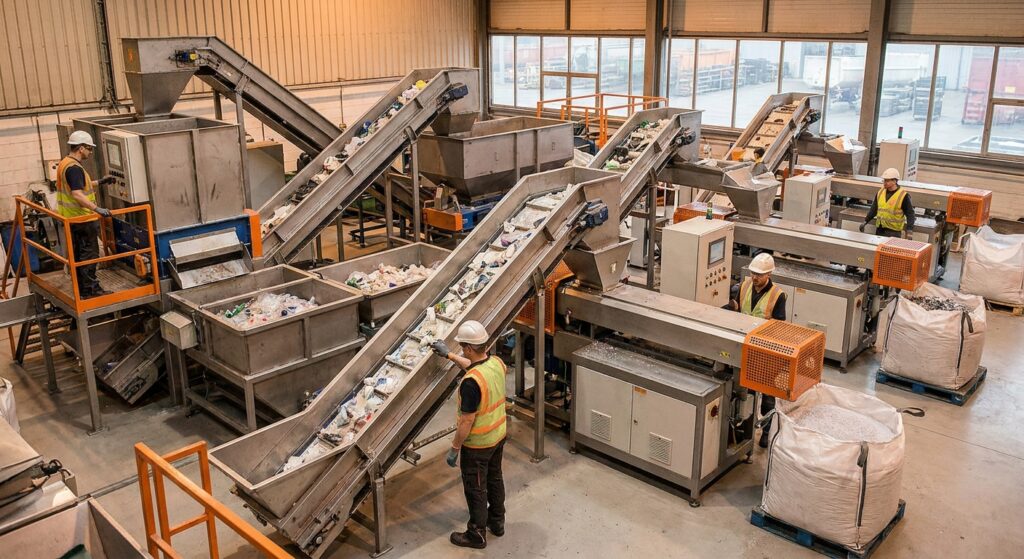
You need a clear idea of what you’ll spend to turn waste plastic into sellable flakes. Below are the 10 machines that cover the most common feedstocks, capacity ranges and price brackets, so you can match a line to your budget right now. Table of Contents 1. Plastivo Extrusions (Our Top Pick) , Full‑Line Recycling Systems 2. PET Bottle Shredder , High‑Capacity Model 3. HDPE Film Granulator , Compact Design 4. Mixed Plastic Pelletizer , Automated Sorting 5. PVC Pipe Extruder , Energy Efficient 6. LDPE Film Dryer , Low Footprint 7. Industrial Washing & Drying System , High Throughput 8. Modular IoT‑Enabled Recycler , Smart Monitoring 9. Used Machinery Marketplace , Cost‑Effective Option 10. Leasing & Pay‑Per‑Ton Service , Flexible Financing How to Choose , Buyer’s Checklist Comparison Table , Price, Capacity & Features 1. Plastivo Extrusions (Our Top Pick) , Full‑Line Recycling Systems Plastivo Extrusions builds a single‑line solution that shreds PET bottles, LDPE film, HDPE and mixed plastics in one flow. It’s best for plant owners who want to avoid buying separate units for each resin. The line includes a high‑speed shredder, a granulator, a washing module and a pelletizer, all driven by precision‑engineered screw barrels. The design uses a nitrided screw barrel that reduces wear, so you see fewer downtime events. The system can handle 300‑2,000 kg/hr, giving you flexibility as your feedstock volume grows. Because Plastivo publishes full spec sheets on its site, you can compare capacity, power draw and automation level before you request a quote. One caveat: the turnkey price is higher than a starter‑size shredder‑only setup, but the integrated approach cuts installation time and reduces the need for multiple control panels. We’ve seen this line installed in Gujarat (India), the UAE and Kenya (Africa), where it delivers consistent output with minimal operator intervention. For more details on the full product range, visit Plastic Recycling Machine Manufacturers in India. 2. PET Bottle Shredder , High‑Capacity Model This shredder reduces rigid PET containers to uniform flakes ready for washing. It’s ideal for facilities processing large volumes of post‑consumer bottles. Key specs include a dual‑shaft rotor that runs at 20‑100 RPM, torque up to 30,000 Nm and a screen range of 10‑50 mm. A built‑in metal detector and auto‑reverse function protect the blades from foreign objects. Operators report a 30 % throughput boost over older single‑shaft models, and the machine can run 24 hours with routine checks. Pay attention to the power consumption; a 1,000 kg/hr unit typically draws 45‑75 kW, which adds to your electricity bill. According to RecycleMachine.net, the average payback period for this class of shredder is 18‑24 months when paired with an efficient washing line. 3. HDPE Film Granulator , Compact Design The granulator is built for thin HDPE film, shrink‑wrap and agricultural plastic. Its compact footprint fits in plants with limited floor space. It features a high‑torque motor (15‑30 kW) and interchangeable knives that can handle screen sizes down to 10 mm. The machine can process up to 600 kg/hr, which covers most midsize recyclers. Energy‑efficient designs lower kWh per ton, and the unit includes a PLC that alerts you when the screen wears beyond the recommended limit. Because accessories like automatic loaders add cost, ask for a detailed quotation that breaks out each option. Pricing data from the vendor shows a range of $15,000‑$50,000 depending on output and add‑ons (PlasticGranularMachine.com). 4. Mixed Plastic Pelletizer , Automated Sorting This line combines a shredder, an optical sorter and a pelletizer, delivering clean mixed‑plastic pellets for downstream molding. The sorter uses near‑infrared sensors to separate PET, HDPE and PP with over 95 % purity, which meets most food‑grade specifications. The pelletizer runs at 0.2‑0.5 kW per kilogram of output, keeping energy use low for a high‑throughput line. Installation typically costs an extra 15 % of the equipment price for conveyors, water treatment and control wiring. Below is a short video that walks through the key stages of this automated line. 5. PVC Pipe Extruder , Energy Efficient A PVC pipe extruder turns recycled resin into pipe profiles for construction and irrigation. Energy use is a key metric for this machine type. Data from the U.S. Department of Energy shows that modern extruders consume between 0.18‑0.55 kWh per kilogram of output, depending on screw design and barrel insulation. The unit we recommend runs at 0.25 kWh/kg, placing it well below the DOE efficiency threshold. It offers a twin‑screw configuration, a 75 kW motor and a die that can produce 30‑1,000 kg/hr of pipe, so you can start small and grow. Be aware that PVC processing requires barrel temperatures above 200 °C; overheating can release HCl, so a reliable temperature control system is a must. More technical details are available on JianTai’s power‑use guide and the product brochure at PlasticMachine.co.in. 6. LDPE Film Dryer , Low Footprint The dryer removes residual moisture from shredded LDPE film before extrusion. Its compact design fits in lines where space is at a premium. It uses a forced‑air system that circulates warm air at 80‑100 °C, drying up to 300 kg/hr of film. Because the dryer runs on a modest 10‑15 kW motor, the operating cost stays low. One internal link to learn more about our broader product catalog: Plastivo Extrusion Product Portfolio. 7. Industrial Washing & Drying System , High Throughput This system handles the heavy‑duty washing of mixed plastics, then dries the clean flakes before pelletizing. It includes a hot‑wash tank (85‑95 °C), a friction washer for HDPE and PP, and a centrifugal dryer that reduces moisture to below 3 %. EPA data shows that hot washing can account for up to 30 % of total line cost, but it’s essential for food‑grade rPET. Energy use for the dryer portion averages 8‑12 kW per 1,000 kg of material. Operators who size the washing capacity at 110‑120 % of the shredder’s rating avoid bottlenecks. 8. Modular IoT‑Enabled Recycler , Smart Monitoring This modular line lets you add or remove stages, shredder, granulator, washer, while a cloud‑based dashboard reports power draw, uptime and material flow in real time.The system supports VFD drives and predictive‑maintenance alerts that can cut unplanned stops by 40 %. It’s a good fit

Top Plastic Recycling Machine Price Guide 2026 Read More »

Parallel Twin Screw Barrel A Comprehensive Guide to Modern Processing Technology (6) - Plastivo Extrusions

How the Plastic Granules Making Process Works

Ahmedabad, Gujarat GST No.-24AAVHA8297E1ZU +91 98982 41416 Linkedin-in Instagram Whatsapp Home About us ☰ Our Product Auxiliary Equipment Extruders Pipe Making Machine Plastic Recycling Machine Screw Barrel Blogs Contact us Home About us ☰ Our Product Auxiliary Equipment Extruders Pipe Making Machine Plastic Recycling Machine Screw Barrel Blogs Contact us Request Appointment From Plastic Waste to Profitable Granules: How the Plastic Granules Making Process Works Plastic waste is everywhere. Streets, warehouses, scrap yards, small towns, big cities. For some people, it’s just a waste. For others, it’s raw material waiting to be converted into money. That’s the shift happening across India right now. Recycling is no longer just about cleaning the environment. It’s proper business. At Plastivo Extrusions, we see this change happening closely. New recycling units are coming up. Existing manufacturers are expanding capacity. Demand for recycled plastic granules is increasing across industries. And at the centre of this entire system sits one important setup — the plastic granules making machine. The concept is simple. Collect plastic waste.Process it correctly.Convert it into reusable granules.Sell it back into the manufacturing cycle. But what happens between waste and granules decides whether your business runs smoothly or struggles every month. Step One: Collection and Sorting Everything begins with raw material. Plastic waste comes from different sources: Post-consumer waste Industrial scrap Rejected moulded parts Packaging films and containers It never comes neatly separated. Different polymers get mixed. Different colours get mixed. Even moisture levels vary. Sorting is not optional. HDPE must be separated from PP. LDPE should not be mixed blindly. Each polymer has a different melting behaviour. If you ignore this step, output quality suffers immediately. Many new recyclers underestimate sorting. Later, they realise it is the foundation. Step Two: Washing and Cleaning Plastic scrap is rarely clean. Oil stains. Mud. Labels. Dust. Food residue. If washing is weak, your final granules will show problems like: Black specks Unpleasant smell Weak mechanical strength Poor finish And once quality drops, buyers negotiate hard. So proper washing lines matter. Hot washing tanks. Friction washers. Drying systems. It may look like a simple step, but it controls the quality of the final granules more than people think. Step Three: Shredding Large plastic pieces cannot directly go into the extrusion machine. They must be reduced into smaller flakes first. Uniform shredding ensures: Smooth feeding into the extruder Consistent melting Stable output If shredding is uneven, feeding becomes inconsistent. That creates pressure fluctuations inside the barrel. Which again affects output quality. One weak stage affects the next. Everything is connected. Step Four: Melting and Extrusion This is where the real transformation happens. The shredded flakes enter the plastic granules making machine. Inside the barrel, a rotating screw pushes the material forward while heaters gradually melt it. Temperature control is critical. Too low — incomplete melting. Too high — material degradation. Recycled plastic is never perfectly uniform. That’s why the screw design and heating control must handle variation without constant breakdown. The molten plastic passes through a screen changer. This removes remaining impurities. Clean melt moves forward to the die head. Stable pressure. Clean filtration. Controlled temperature. That combination decides granule quality. Step Five: Pelletizing Once the molten plastic exits the die, it needs to be converted into small, uniform pellets. Common methods include: Strand pelletizing Water bath cooling and cutting Underwater pelletizing systems Uniform size matters. Manufacturers want granules that feed smoothly into injection moulding or extrusion machines. Irregular pellets cause feeding disturbance. Consistency keeps customers happy. And happy customers mean repeat orders. Where Profit Actually Comes From? Many people think profit comes only from selling granules. But the real profit lies in efficiency. Your margins improve when: Power consumption stays controlled Output per hour is high Downtime is minimal Material wastage is reduced Granule quality remains consistent If your machine stops frequently, production losses eat into profits. If quality fluctuates, buyers reduce rates. That is why selecting the right plastic granules making machine is not just about capacity. It is about long-term stability and predictable output. In India, demand for recycled granules is growing in sectors like pipes, packaging, furniture, automotive components and household products. If quality is reliable, market demand is not the issue. Single Stage vs Double Stage Systems This is one common confusion. Single-stage systems are suitable for relatively clean and uniform scrap, with lower investment. Easier maintenance. Double-stage systems are preferred when dealing with: Printed or heavily contaminated materials Mixed plastic scrap Lower-grade input Higher impurity levels Yes, the initial investment is higher. But the melt quality improves significantly. The right choice depends on your raw material, not just your budget. Bigger Than Recycling This industry is no longer small-scale scrap handling. Entrepreneurs are entering this field seriously. Industrial clusters are expanding recycling operations. Policies are encouraging circular economy practices. Plastic waste is becoming a valuable resource. If you are planning to set up or upgrade your recycling plant and want clarity on the right machine configuration, contact us to discuss your production goals and material type. When you understand both the process and the machinery, decision-making becomes easier. Final Thought Turning plastic waste into profitable granules is not a shortcut plan. It requires planning. The right equipment. Proper sorting. Controlled processing. But once everything is aligned, the cycle becomes steady. Waste comes in.Granules go out.Manufacturers buy.Revenue builds. If you’re exploring machinery upgrades, you may also find it useful to read How Advanced Screw Barrel Technology is Changing Plastic Recycling and Extrusion in India? to understand how performance improvements directly impact output quality and consistency. That’s how plastic waste turns into opportunity. Not by luck. By process. At Plastivo Extrusions, we specialize in designing and manufacturing high-performance plastic extrusion, recycling, and pipe-making machines. With a strong commitment to innovation, quality, and customer satisfaction Pages Home About Us Our Products Blog Contact us Products Auxiliary Equipment Extruders Pipe Making Machine Plastic Recycling Machine Screw Barrel Contact +919898241416 sales@plastivoextrusion.com GST No.-24AAVHA8297E1ZU Links

How the Plastic Granules Making Process Works Read More »

Parallel Twin Screw Barrel A Comprehensive Guide to Modern Processing Technology (6) - Plastivo Extrusions

How to Choose the Right Plastic Recycling Machine in India

Ahmedabad, Gujarat GST No.-24AAVHA8297E1ZU +91 98982 41416 Linkedin-in Instagram Whatsapp Home About us ☰ Our Product Auxiliary Equipment Extruders Pipe Making Machine Plastic Recycling Machine Screw Barrel Blogs Contact us Home About us ☰ Our Product Auxiliary Equipment Extruders Pipe Making Machine Plastic Recycling Machine Screw Barrel Blogs Contact us Request Appointment How to Choose the Right Plastic Recycling Machine in India: A Buyer’s Guide Running a plastic recycling plant in India isn’t always smooth. One day you’re sorting heaps of mixed waste, the next day your old machine refuses to cooperate. It gets frustrating, right? If you’re thinking of investing in a plastic recycling machine, you need something that actually works for your plant, your waste type, and your budget.  That’s where Plastivo Extrusions comes in. They’ve been helping Indian recycling businesses with machines that are reliable, efficient, and easy to operate, even for small and medium plants. You don’t want to waste money on a machine that looks fancy but doesn’t fit your setup. Believe me, it happens more than you think. Types of Machines Made Simple Machines can sound complicated, but really, there are three main types you’ll see in India: Single Screw Extruder: Affordable, simple, and works well for uniform plastic waste. Not very flexible, but okay for small operations. Twin Screw Extruder: Handles mixed plastics better, smoother melting, and more consistent pellets. A bit pricier but worth it. Mother Baby System: Two-step process—the “mother” extruder does bulk processing, and the “baby” extruder refines the output. Ideal for medium plants wanting high-quality pellets. No need to get lost in technical terms. The more complicated your waste, the more you’ll benefit from a system that can manage it without constant babysitting. Features That Actually Matter Price is tempting to focus on, but features make the real difference: Filtration System: Keeps your pellets clean and sellable. Ventilation: Reduces moisture, prevents foaming—important in India’s humidity. Automation: Less manual monitoring, fewer errors. Durability: Strong screws, barrels, and components that last. Plastivo Extrusions designs machines keeping these realities in mind, so you get something built for Indian conditions, not just a brochure. Why Small and Medium Plants Love These Machines? Big plants can buy massive setups, sure. But most Indian recycling businesses face limits on space, budget, and manpower. Compact systems like mother baby or twin screw machines are perfect here. They handle mixed waste without constant adjustment and produce high-quality pellets ready for sale or reuse. A good machine can completely change your plant’s workflow. Less stress, fewer breakdowns, more output. Even small teams can manage without spending all day troubleshooting. Benefits You’ll Notice Immediately Once the right machine is in place, the benefits are obvious: More usable pellets, less waste. Consistent quality, which fetches better prices. Lower electricity bills, thanks to energy-efficient designs. Flexibility to handle different types of urban and semi-urban plastic waste. It’s more than just a machine—it’s the backbone of your plant. Choose poorly, and you’re stuck babysitting it all day. Choose well, and it works like a silent partner. Maintenance Without the Headache High-tech doesn’t have to mean high-maintenance. With the right setup: Clean the extruders regularly. Clear the filters occasionally. Lubricate moving parts now and then. Even operators with basic skills can handle this. Plastivo Extrusions also ensures spare parts are easily available, so downtime is minimal. The Bigger Picture Investing in the right machine isn’t just about profit. Recycling plastic properly in India helps reduce landfill waste and creates usable pellets for new products. Your business benefits financially, but there’s also an environmental impact. Sustainability isn’t just a buzzword—it’s something buyers, partners, and the community notice. Wrapping It Up Choosing the right plastic recycling machine in India isn’t complicated, but it needs thought. Waste type, machine features, energy efficiency, and maintenance all matter. The right choice saves money, reduces headaches, and gives you better-quality output. If you want a machine that actually works for Indian plants, Plastivo Extrusions offers solutions from single screw extruders to advanced mother baby systems. Their team can guide you to the setup that fits your plant perfectly. Ready to upgrade your plant? Contact us today and get expert advice directly from Plastivo Extrusions. Your plant deserves a machine that works as hard as you do. Learn more about the Best Mother Baby Plastic Recycling Machine for Small and Medium Plants in India and how it can transform your recycling plant. At Plastivo Extrusions, we specialize in designing and manufacturing high-performance plastic extrusion, recycling, and pipe-making machines. With a strong commitment to innovation, quality, and customer satisfaction Pages Home About Us Our Products Blog Contact us Products Auxiliary Equipment Extruders Pipe Making Machine Plastic Recycling Machine Screw Barrel Contact +919898241416 sales@plastivoextrusion.com GST No.-24AAVHA8297E1ZU Links

How to Choose the Right Plastic Recycling Machine in India Read More »