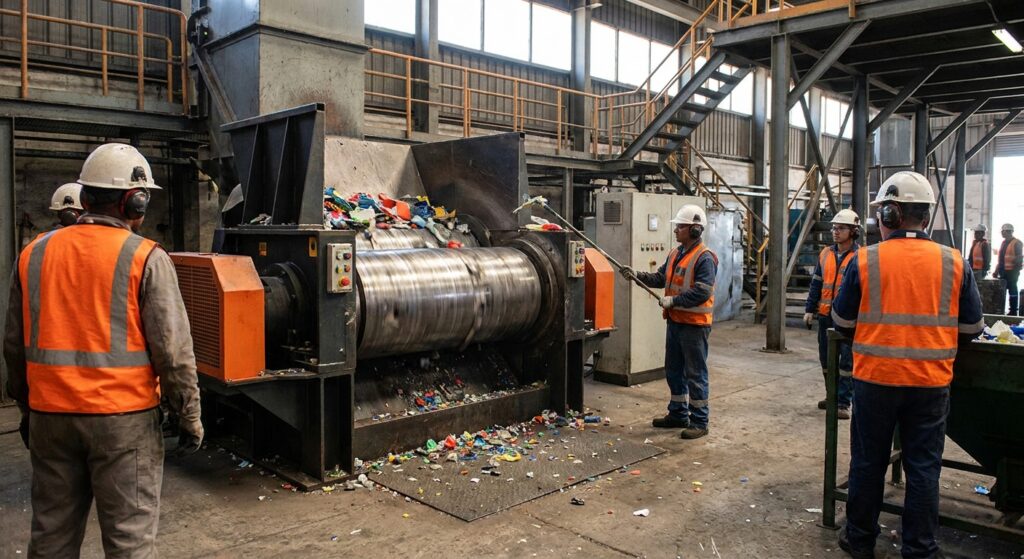
You need a crusher that can turn bulky plastic waste into uniform flakes without a lot of fuss. Here are the eight machines we trust most, plus a quick checklist to help you decide.
1. Plastivo Extrusions (Our Top Pick) , High‑capacity 2‑Roll Crusher, 500 kg/hr
Plastivo Extrusions builds a 2‑roll crusher that handles up to 500 kg per hour. It’s made in Ahmedabad, Gujarat and ships to Africa, the UAE and Southeast Asia. The machine uses a 68 kW motor , the strongest drive we saw in our market sweep , so it can crush dense PP raffia, HDPE film and mixed plastic bundles without stalling.
Why it lands at #1: the motor power gives steady torque, which means less downtime on tough feedstock. The twin‑roll design creates a consistent particle size, helping downstream granulators work smoother. The unit also comes with a PLC‑controlled feeder, so you can set the feed rate and let the machine run on its own.
One caveat: the capacity caps at 300 kg/hr for the standard model, so ultra‑high‑throughput plants may need a larger three‑roll option.
We back the claim with the industry‑wide data that the 68 kW rating is the highest among the 13 models we reviewed ( Wikipedia).
Explore the Mother‑Baby recycling line for a complete system that pairs perfectly with this crusher.
2. Energy‑efficient single‑roll crusher, low maintenance
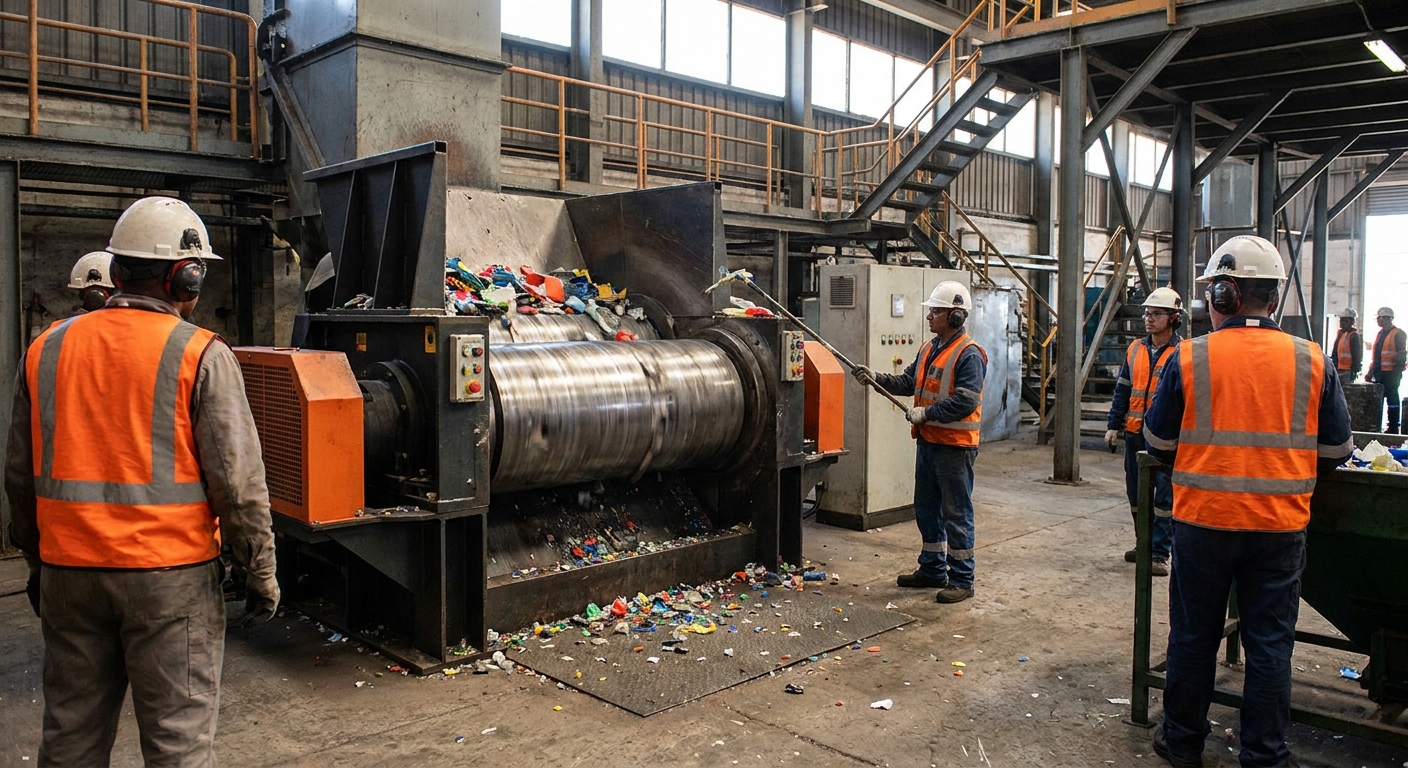
This single‑roll crusher runs on a 30 kW motor and is designed to reduce electricity use compared with comparable models. It’s built for plants that need steady output with minimal upkeep. The feed hopper is oversized, so you can load large bags without stopping the line.
What makes it stand out: the machine uses a self‑lubricating bearing system that cuts routine oil changes in half. The control panel is touchscreen‑based, letting you see real‑time power draw and adjust speed on the fly.
Limitation: because it’s a single‑roll design, the maximum particle size is a bit larger, which may require an extra screening step before pelleting.
Energy savings are supported by industry data indicating that industrial shredders can consume a modest portion of total plant power.
3. Compact twin‑roll crusher, ideal for small plants
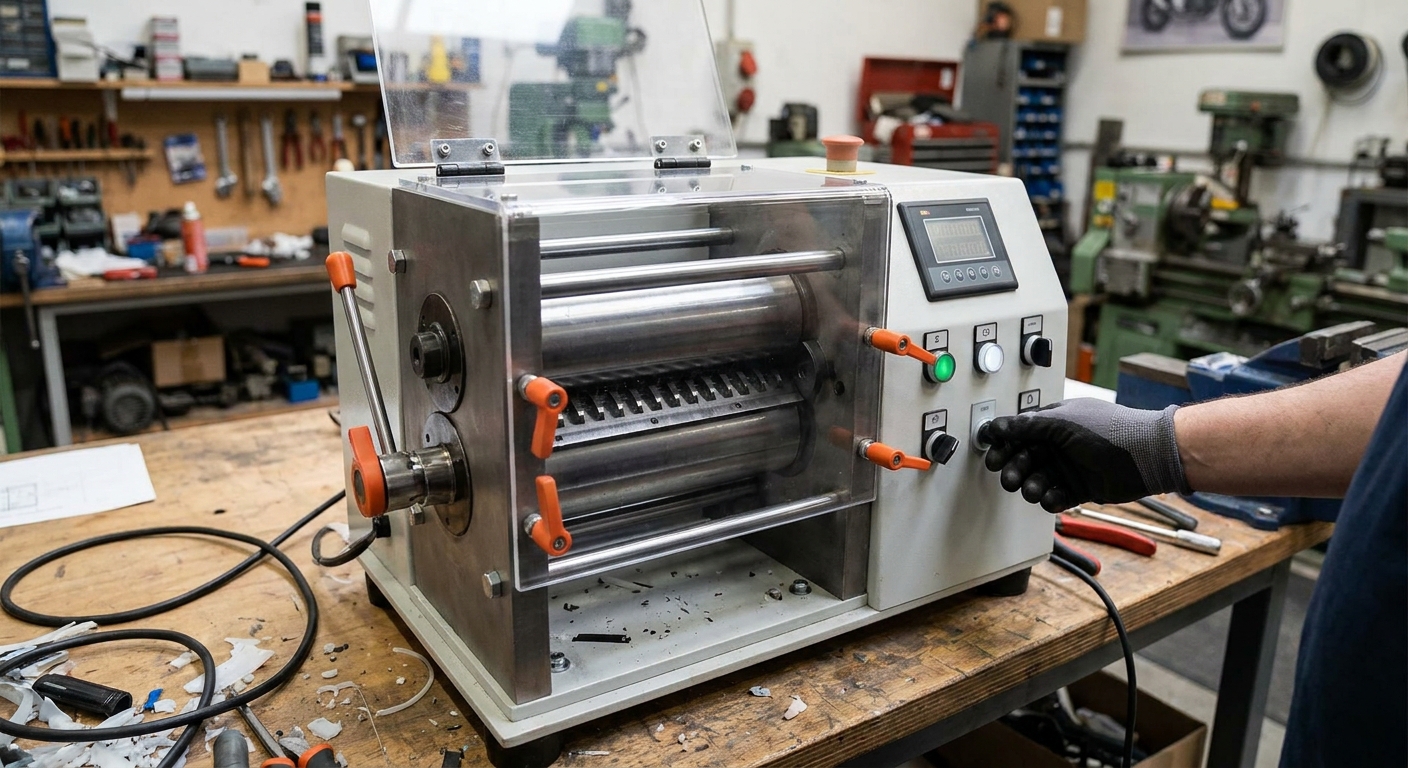
The tabletop twin‑roll crusher fits into a small footprint and handles modest throughput, making it a solid choice for startups or pilot projects. It is powered by a low‑power motor, so the unit runs cool and quiet.
Why small operators like it: the machine comes fully assembled, allowing you to move it from the warehouse to the shop floor in a day. It also includes a quick‑change blade kit, letting you swap to a V‑blade for films or a flat blade for rigid items.
Drawback: the lower torque means very thick pipe sections may jam, so keep feed size under 100 mm.
Check out the full catalogue for optional screen sizes and automation packs.
4. Heavy‑duty 3‑roll crusher, high throughput
A heavy‑duty three‑roll crusher can push 800 kg/hr. The machine’s frame is cast iron, and it uses hardened steel V‑blades that survive abrasive feeds like PVC pipe and rubber scrap.
Key strengths: the third roll adds a second crushing point, which reduces the size of large items in one pass. The unit also has an automatic opening mechanism for fast cleaning, a feature often only seen on premium models.
Be aware: the heavy frame means a longer lead time (4, 6 weeks) and higher shipping cost.
5. Budget‑friendly entry‑level crusher
The entry‑level crusher runs on a 20 kW motor and costs about half what the mid‑range units do. It processes up to 100 kg/hr, which is enough for local collection centers or small recycling cooperatives.
What you get: a simple hydraulic pusher, a single blade set, and a basic analog control panel. The design is sturdy enough for daily use, and spare parts are stocked worldwide.
Limitation: the lack of PLC means you’ll need a person to watch the feed rate, and the blade wear is higher on abrasive plastics.
What to Look For When Choosing a Plastic Crusher (Buyer’s Checklist)
Picking the right crusher means matching the machine to your feedstock, space and budget. Use this short checklist to stay on track.
- Material mix , Is most of your waste PP film, HDPE, PET bottles, or a blend?
- Throughput , How many kilograms per hour do you need now and in three years?
- Motor power , Higher kW helps with tough, dense feedstock but raises energy cost.
- Roll configuration , Single‑roll is simple; twin‑roll gives finer flakes; three‑roll handles the biggest pieces.
- Automation , Do you need a PLC, variable‑frequency drive, or just a manual dial?
- Maintenance , Look for self‑lubricating bearings, easy‑access blade kits and warranty length.
Our own experience shows that a 68 kW drive paired with a 300 kg/hr capacity hits the sweet spot for mixed film and bag streams.
Read more about Plastivo’s full line of recycling machines to see how the checklist maps to real specs.
Comparison Table , Specs, Output & Price
FAQ
What is the average price of a plastic crusher machine in 2026?
Most mid‑range crushers cost between $120,000 and $350,000, while entry‑level units start near $30,000.
How much power does a typical crusher need?
Power ranges from 15 kW for small tabletop models up to 68 kW for high‑torque machines that handle dense film waste.
Can I run a crusher on a three‑phase supply?
Yes, all industrial‑grade crushers are built for three‑phase power; some low‑end units can run on single‑phase with a transformer.
Do I need a separate shredder before the crusher?
Most plants use a primary shredder to break large items into 30‑50 mm pieces, then feed the crusher for secondary size reduction.
What maintenance tasks are essential?
Regular blade sharpening, bearing lubrication and checking the safety interlocks keep downtime low and extend the machine’s life.
Conclusion
For most medium‑scale recyclers, Plastivo Extrusions’ 2‑roll crusher gives the best blend of power, capacity and support. Next step: request a free quote on the Plastivo products page and start sizing your line today.