Thinking about turning waste PET bottles into a steady stream of raw material? Below you’ll get the specs, the process flow, the cost picture, and the profit angles you need to decide.
Machine Specifications & Capacity
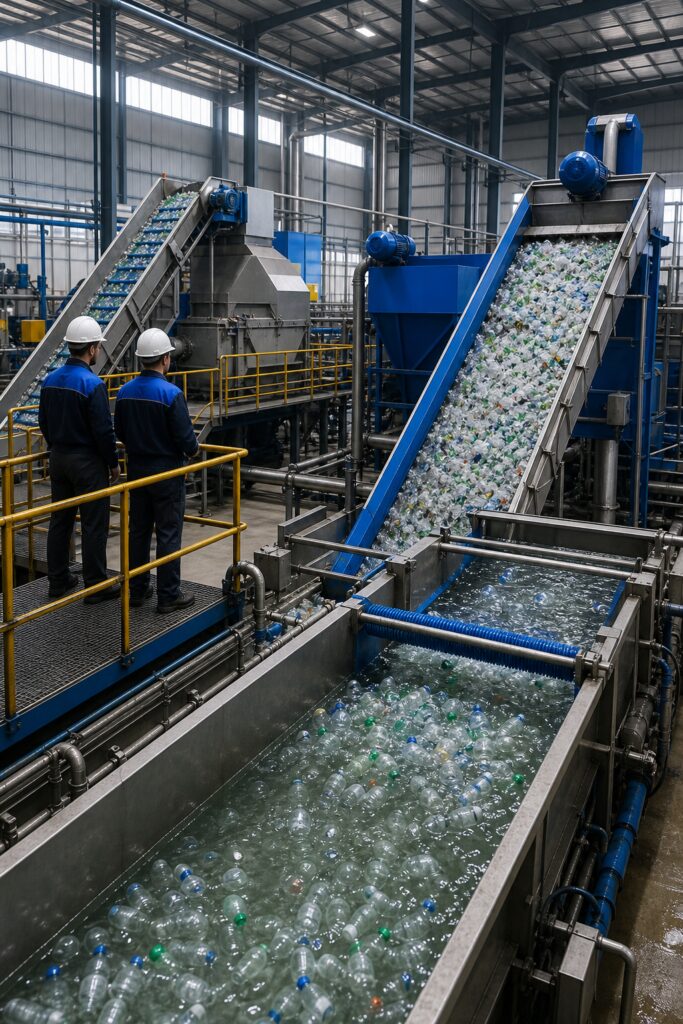
Modern pet bottle recycling machines handle anywhere from 600 kg to 6 000 kg per hour. The high‑end models can crush, wash and dry enough flakes to feed a bottling line that produces a full‑scale batch of new bottles each day. A typical 2‑tonne‑per‑hour unit uses a 500 kW motor, a stainless‑steel barrel, and an integrated de‑labeling system that removes caps and labels with up to 98 % efficiency.
These specs let a mid‑size plant in Gujarat or a large operation in Kenya keep a constant flow of rPET. The design also meets food‑grade standards set by North American and European regulators, which means the output can go straight into bottle‑to‑bottle production without extra certification steps.
For more on Indian manufacturers, see plastic recycling machine manufacturers in India. They combine precision engineering with a flexible screw L/D ratio that adapts to different bottle sizes.
When you compare models, watch the power draw. A 500 kW motor will add to your electricity bill, but it also speeds up the crushing stage, reducing labor costs. The trade‑off depends on whether you prioritize throughput or energy savings.
According to EREMA’s latest throughput data, machines above 4 tonnes per hour now dominate the market, delivering almost 350 000 tonnes of rPET annually worldwide.
Step‑by‑Step Recycling Process
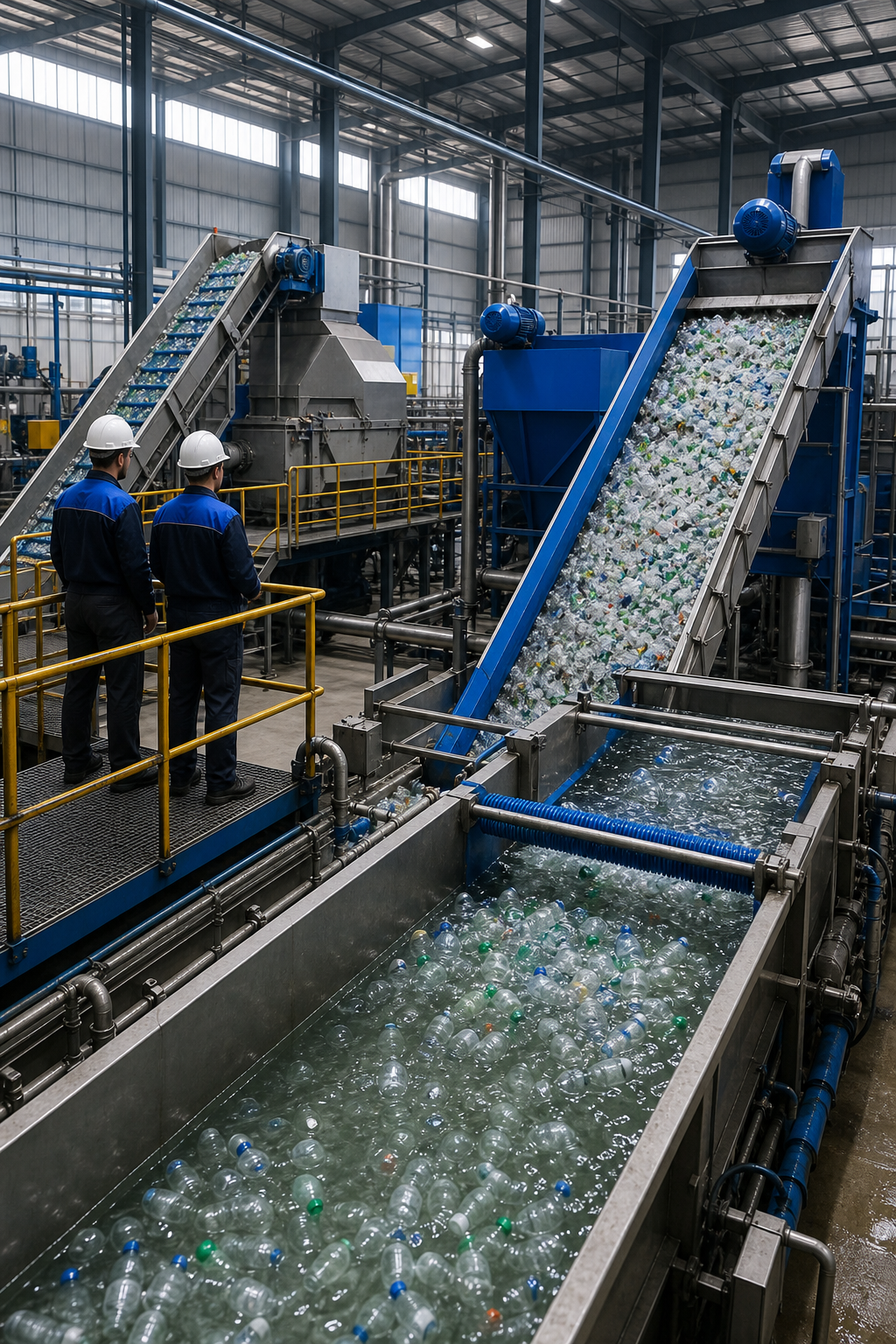
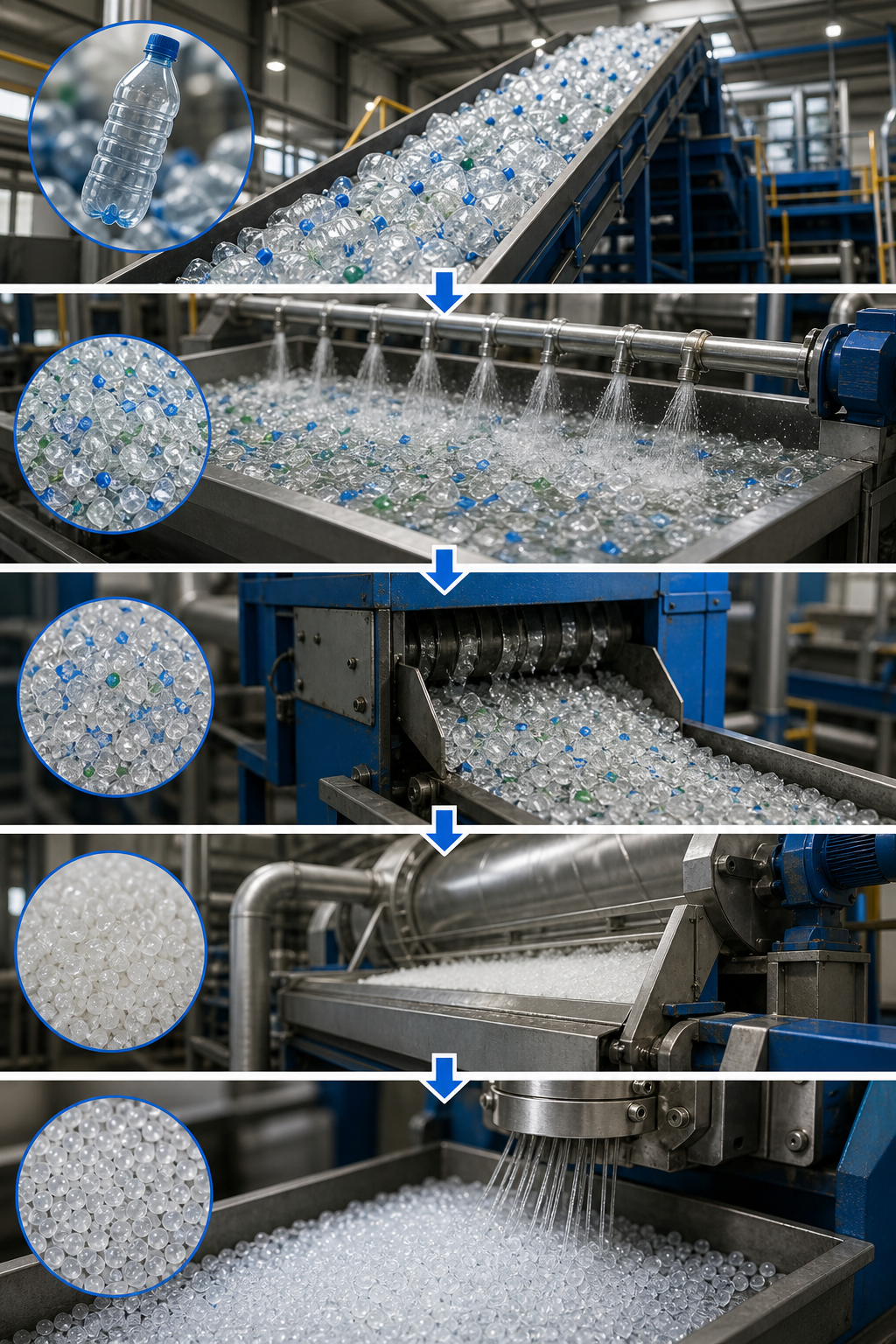
The line starts with a conveyor that feeds loose bottles into a sorting unit. Caps and rings drop into a separate bin, while the bottles continue to a pre‑wash that removes loose dirt.
Next, an air‑separator strips labels. The de‑labeler achieves up to 98 % removal for round bottles, which is important for food‑grade compliance.
After cleaning, the bottles enter the crusher. The cutter reduces them to 5‑10 mm flakes. Smaller flakes wash more easily, so the crushing stage directly impacts water usage.
Flakes then move to a hot‑wash tank held at 85‑95 °C. The temperature kills microbes and dissolves remaining adhesives. A friction‑wash system adds a high‑velocity water stream that rinses out grease and oil.
Following washing, a centrifuge or hot‑air dryer removes moisture. The resulting dry flakes are either pelletized on‑site or sold to downstream extruders.
For a step‑by‑step view, watch the video below.
When you compare this flow to a home‑brew setup, industrial lines typically achieve much lower water consumption than small‑scale operations.
Cost, Pricing & ROI Considerations
Buying a pet bottle recycling machine is a capital decision. Prices vary by capacity, automation level, and optional features such as built‑in nitrogen‑purge for food‑grade output.
For a 2‑tonne‑per‑hour line, expect a base price of around ₹2, 3 crore (≈ $24, 36 k). Adding an advanced de‑labeler or a high‑efficiency dryer can push the total to ₹4 crore.
Operating costs include electricity (roughly 0.5 kWh per kilogram of PET), water treatment, and routine spare‑part replacements. Energy‑efficient motors can cut power use by 15 %.
ROI hinges on the market price of rPET flakes, which varies and is typically higher for food‑grade grades in the UAE and Gulf markets.
A well‑run plant can typically recoup its investment within a few years, assuming consistent processing volumes.
Our own price guide breaks down the cost drivers in detail , see plastic recycling machine price guide 2026 for a full table.
Installation, Operation & Maintenance Guidelines
First, choose a site with easy access to water and power. A 2 MW supply and a steady water flow of 150 L/min are typical requirements for a mid‑size line.
Level the foundation and install vibration‑isolating pads under each major unit. This reduces wear on the crusher bearings and extends motor life.
When you power up the line, run a dry‑run test for 30 minutes. Check that the conveyor speeds match the crusher feed rate; mismatches cause bottlenecks and excess wear.
Routine maintenance includes daily visual checks of the de‑labeler blades, weekly lubrication of the crusher’s spherical roller bearings, and monthly calibration of the dryer’s temperature sensors.
For spare‑part support, our team in Ahmedabad offers a 1‑year warranty on the whole system and a fast‑track parts service that ships within 48 hours to Nairobi, Lagos, or Dubai.
Need a quick start checklist? Our screw barrel supplier guide walks you through the key steps for commissioning a new line.
Business Opportunities & Profitability
The global PET market in 2026 faces volatile freight and seasonal demand spikes, especially in Europe and North America. Yet the need for recycled PET remains strong as brands chase sustainability targets.
Exporting recycled PET material to the UAE or to Southeast Asian textile producers can fetch premium prices because those markets lack local recycling capacity.
Besides selling recycled PET material, you can add value by converting it into 3D‑printing filament or other downstream products. Those downstream products often command a higher price than raw recycled PET material.
Producers that diversify into filament see an improvement in overall margin.
FAQ
What size pet bottle recycling machine do I need for a small plant?
A small plant typically starts with a 500 kg‑per‑hour unit. It fits in a 2,000‑sq‑ft space and can handle the output of a local collection network.
How much electricity does a pet bottle recycling machine use?
Energy consumption averages 0.5 kWh per kilogram of PET processed. Efficient motors and variable‑frequency drives can lower that figure by up to 15 %.
Is the output food‑grade certified?
Yes, machines that meet EU and US food‑contact regulations produce rPET that meets applicable food‑contact safety standards, provided you follow proper cleaning protocols.
Can I install the line in an existing factory?
Absolutely. Most manufacturers design modular units that bolt onto existing foundations. You’ll want to verify you have enough clearance for the conveyor and dryer sections.
What financing options are available for buying a machine?
Many buyers use equipment‑finance loans from local banks or leasing firms. In India, the government’s MSME scheme offers interest subsidies for green‑technology projects.
Conclusion
We recommend Plastivo Extrusions’ 2‑tonne‑per‑hour pet bottle recycling machine as the most reliable entry point for new or expanding plants. Contact us to get a customized quote and start your recycling project today.