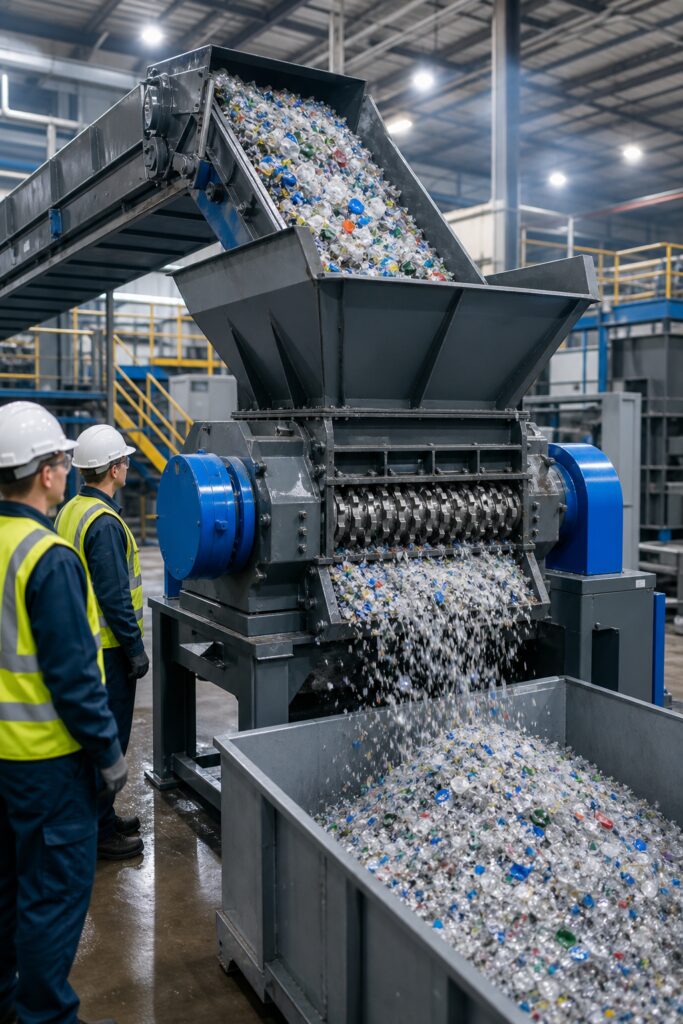
Plastic Shredder Machine Price: A Buyer’s Guide
Deciding on a plastic shredder machine price is harder than it looks. Most manufacturers publish zero capacity figures and zero power ratings online, so you’re forced to compare machines on marketing claims alone. This guide cuts through that by explaining what actually drives cost, what specs matter, and how to evaluate total value before you commit. Table of Contents Types of Plastic Shredder Machines and Where Each Fits Key Specifications That Drive Plastic Shredder Machine Price Plastic Shredder Machine Price Ranges by Category Total Cost of Ownership: Beyond the Machine Price Tag ROI and Profit Potential for Different Business Models Safety, Compliance, and Operational Considerations Financing, Warranty, and After-Sales Support: What to Demand FAQ What to Do Next Types of Plastic Shredder Machines and Where Each Fits The mechanical architecture of a shredder is the first cost driver. Three basic configurations exist, and each one targets a different material and throughput requirement. Single-shaft shredders use one rotor with fixed or swing blades cutting against a stationary bed knife. They’re designed for clean, sorted plastic such as PET bottles or HDPE pipe offcuts. Output particle size is controlled by a bottom screen. These machines are common in India and across Nigeria, Kenya, and Ghana where sorted post-consumer PET feeds downstream extruder or pelletizer lines. Twin-shaft and dual-shaft shredders run two counter-rotating shafts. The difference between twin and dual is mostly terminology , twin-shaft usually refers to low-speed, high-torque designs that tear through mixed or contaminated material. These are the right choice when you’re processing unsorted municipal plastic waste, baled HDPE, or mixed film with PP woven sacks layered together. Micro and lab-scale shredders represent a third category. These handle 3D printing waste, film offcuts in small workshops, or material sampling in R&D environments. They’re not production machines , output is measured in kilograms per hour rather than hundreds of kilograms , but their upfront cost is far lower. The shaft configuration affects price directly. A single-shaft machine with a 15 kW motor and 200 kg/hr rated output costs less than a twin-shaft unit with 37 kW and comparable throughput, because the twin-shaft requires more precision machining on the rotor assembly and more strong gearbox design. Rotor blade geometry and tip speed are the primary engineering variables that determine both output size and energy draw. Where each type fits operationally: single-shaft suits recycling plants in Tamil Nadu or Kerala running clean PET or HDPE; twin-shaft suits mixed-waste processors in Lagos or Nairobi where contamination levels are high; micro-shredders suit UAE-based prototyping studios or plastic compounding R&D labs. Key Takeaway: Match the shaft configuration to your material type first , only then compare price. A cheaper single-shaft machine is a bad deal if your input stream is contaminated mixed plastic that will jam it weekly. Key Specifications That Drive Plastic Shredder Machine Price When a vendor’s website shows no capacity or power data , which happens across most publicly listed shredder models , you have to know which specifications to request directly. These are the numbers that determine whether a machine is priced fairly. Motor power (kW). This is the single most honest indicator of a machine’s capability. A 7.5 kW motor won’t push hard plastic like thick-walled HDPE pipe scrap through efficiently. For serious recycling volumes in India or Africa, look at a minimum of 15 kW for entry-level production. Heavy industrial machines run 37 kW to 75 kW or more. Higher motor power means higher machine price , and higher electricity cost per shift. Throughput (kg/hr). Rated throughput is often stated as a peak figure under ideal conditions. Always ask for output on your specific material. PET bottles shred faster than thick HDPE lumps. A machine rated at 500 kg/hr on PET film might produce 150 kg/hr on mixed rigid plastic. This gap between rated and real output is where ROI calculations break down for buyers who don’t push vendors for material-specific data. Blade material and configuration. Blades made from D2 tool steel or similar high-chromium alloys last significantly longer than mild steel variants when processing abrasive materials. More blades on the rotor mean finer output but more frequent sharpening. Blade replacement is a recurring cost, so the hardness rating (often expressed as HRC) matters as much as the initial blade count. Screen size. The bottom screen controls output particle size. Smaller screen apertures mean finer flakes , which downstream extruders and plastic granules making machines prefer , but they also reduce throughput and increase energy consumption per kilogram. This trade-off directly affects per-ton processing cost. Hopper dimensions and feed type. A wide hopper with a hydraulic pusher handles larger pieces without manual pre-cutting. Narrower gravity-fed hoppers require more labor to size material before feeding. Labor cost is real operating cost, even if it doesn’t appear on the machine’s price tag. Pricing varies considerably across the range — from small lab-scale units to full industrial lines — and exact figures depend on motor power, throughput, and configuration. Contact suppliers directly for model-specific quotes based on your material and output requirements. Rotor speed (RPM) is another spec worth noting. Low-speed high-torque designs (typically 30, 80 RPM) are quieter and generate less heat, which matters for film plastics that melt at low temperatures. High-speed designs (200, 500 RPM) suit brittle plastics like PS or PET but produce more noise and fines. Plastic Shredder Machine Price Ranges by Category Quoted prices for shredders vary enormously depending on origin, specification, and supplier relationship. The table below reflects reference ranges drawn from manufacturer catalogs. These are reference ranges , your actual landed cost will differ based on shipping, import duties (relevant for buyers in Nigeria, South Africa, or UAE importing from India or China), installation, and commissioning. Category Typical Power Approx. Throughput Price Range (USD) Best Suited For Micro / Lab Shredder 1–3 kW 10–50 kg/hr $500 – $2,000 3D printing waste, R&D, small workshops Entry-Level Single Shaft 7.5–15 kW 50–200 kg/hr $2,000 – $6,000 Clean PET, HDPE, small recycling units Mid-Range Single Shaft 15–37
Plastic Shredder Machine Price: A Buyer’s Guide Read More »