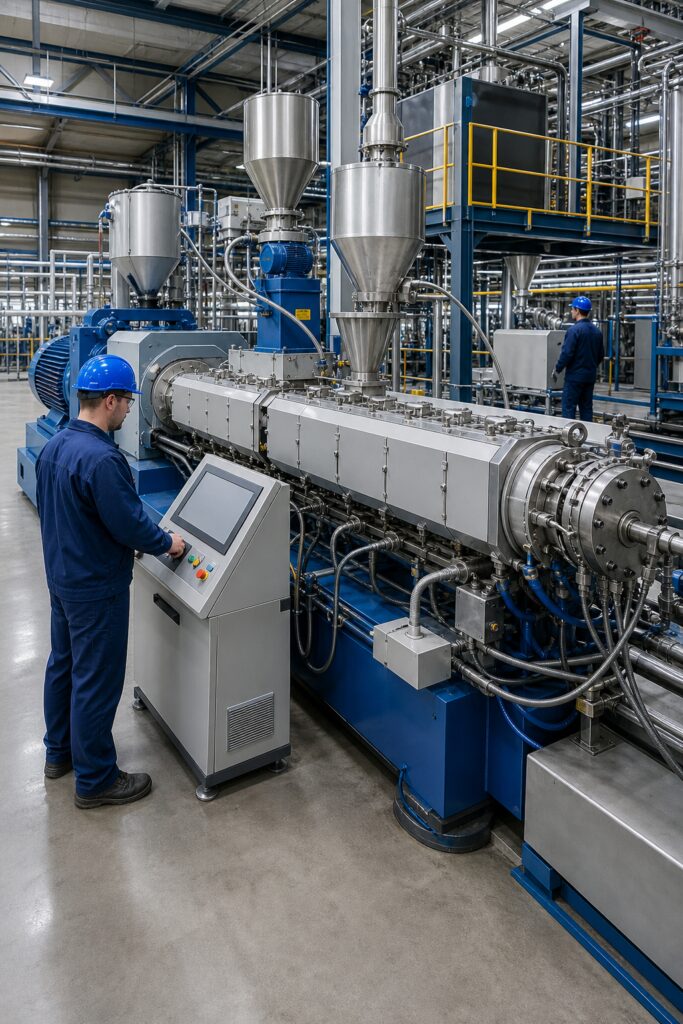
Top Twin Screw Extruder Picks for Plastic Processors
Need a twin‑screw extruder that can handle tough polymers and keep your line humming? Here are the top picks, and a quick way to spot the right fit for your plant. Table of Contents 1. Plastivo Extrusions (Our Top Pick) , Custom Twin‑Screw Solutions 2. Coperion ZSK 58 Mc , High‑Torque Engineering Plastics 3. KraussMaffei ZE BluePower , High Free‑Volume, High Torque 4. Leistritz ZSE 18 MAXX , Pharma & R&D Pilot Scale 5. Twin Screw Extruder Comparison , Key Specs & Use Cases How to Choose the Right Extruder FAQ Conclusion 1. Plastivo Extrusions (Our Top Pick) , Custom Twin‑Screw Solutions Plastivo Extrusions builds twin‑screw machines in Gujarat that mix, melt, and push raw pellets with precision. The company offers nitrided and bimetallic screw barrels that resist wear and keep melt temperature stable. Its custom‑design service lets you pick screw L/D ratios, barrel length, and feeder type. That means a plant that processes PET bottles in the UAE can get a line tuned for high moisture removal, while a pipe maker in Kenya can opt for a low‑shear zone to protect PVC blends. Because the barrel material is disclosed , nitrided steel with HRC 60‑65 surface hardness , you know exactly how the machine will stand up to abrasive fillers. The design also includes a split stuffing box for quick barrel changes, a feature that cuts downtime on recipe swaps. One caveat: the standard catalog focuses on medium‑size output. For ultra‑high throughput needs, you’ll likely look at a larger OEM. For more on screw‑barrel choices, see our Extruder Screw and Barrel guide. 2. Coperion ZSK 58 Mc , High‑Torque Engineering Plastics The ZSK 58 Mc is a 58 mm co‑rotating twin‑screw extruder designed for high‑torque engineering plastics processing. Its torque density of 18 Nm/cm³ lets you run high‑fill recipes, glass‑filled PA or carbon‑reinforced PC, without choking the line. In‑line filtration can be integrated to handle recyclate, turning mixed post‑consumer waste into a clean melt. Energy use stays low because the gearbox transfers torque directly to the screws. Maintenance is simple thanks to a quick‑release gearbox lantern; you can open it without tools once the shafts stop. Watch the machine in action below, the video shows the feeding system and the barrel’s split stuffing box. Energy‑monitoring features are integrated, logging OEE and supporting predictive maintenance. One limitation: the ZSK line leans on German‑made gearboxes, so spare parts can take longer to ship to Africa or South‑East Asia. 3. KraussMaffei ZE BluePower , High Free‑Volume, High Torque The ZE BluePower series uses a co‑rotating twin‑screw layout with a torque density of up to 16 Nm/cm³. Its high free‑volume barrel lets you run low‑viscosity powders and high‑fill compounds without choking. Modular barrel sections with a C‑clamp system give rapid change‑over, so you can switch from a PP masterbatch run to a PET recycling batch in a shift. Side‑feeders up to four can be added for additives, fibers, or liquid boosters. The drive system allows technicians to remove screws by pulling the powertrain forward, saving time on maintenance days. Heat transfer is even thanks to a water‑cooled three‑phase motor and high‑efficiency gear unit. On the downside, the system’s high‑precision bearings demand regular oil checks, and the initial cost can be steep for small‑scale users. For a quick win, consider this tip. Pro Tip: Pair the ZE BluePower with a twin‑screw side feeder that has a built‑in gravimetric dosing unit. It keeps additive ratios tight and cuts recipe‑change time. 4. Leistritz ZSE 18 MAXX , Pharma & R&D Pilot Scale Leistritz’s ZSE 18 MAXX is a 35 mm co‑rotating twin‑screw extruder aimed at pharma and research labs. Throughput sits at 40 kg/h, which is perfect for pilot batches of specialty polymers or HME (hot‑melt extrusion) medicines. The machine’s OD/ID ratio of 1.66 gives a sweet spot between torque and melt flow. Its gear train splits torque across two shafts, delivering up to 15 Nm/cm³. The control interface provides real‑time shear and extensional viscosity data, allowing parameter adjustments on the fly, a boon for formulation work. All metal surfaces meet GMP guidelines, and the barrel can be sterilized in‑place, a must for pharma runs. A limitation is the modest output; you’ll need to scale to a larger Leistritz model for full production. Learn more about the parallel‑screw design that boosts mixing consistency in our Parallel Twin Screw Barrel overview. 5. Twin Screw Extruder Comparison , Key Specs & Use Cases Below is a quick side‑by‑side look at the five machines we covered. Use the grid to match your key need , torque, throughput, or regulatory compliance. Machine Screw Ø (mm) Torque Density (Nm/cm³) Max Throughput (kg/h) Best Application Plastivo Twin Screw — — — Custom compounding, PET recycling (India, UAE) Coperion ZSK 58 Mc 58 18 high capacity High‑torque engineering plastics, recycling KraussMaffei ZE BluePower 28‑166 13.6‑16 mid‑size capacity High‑free‑volume compounding, powder coatings Leistritz ZSE 18 MAXX 35 15 40 Pharma HME, pilot‑scale R&D Notice the co‑rotating trend: most models with known screw geometry rotate the same way, which usually gives better melt conveyance and mixing. If your material is highly viscous, you might still consider a counter‑rotating design, but those are rarer. Key Takeaway: Match torque density to your filler load , higher torque lets you push more glass or carbon fiber without sacrificing melt flow. How to Choose the Right Extruder Define your target throughput (kg/h). Check material family , PET, PA, PVC, pharma blends each have temperature and shear needs. Look at barrel material and L/D ratio for wear resistance. Consider integration: side‑feeders, downstream pelletizers, control system compatibility. Ask the supplier about spare‑part logistics for your region. Pro Tip: Ask for a short on‑site trial run. It lets you verify melt quality and energy draw before a big purchase. FAQ What is the difference between co‑rotating and counter‑rotating twin screw extruders? Co‑rotating extruders have both screws turn the same direction, which gives a steady drag flow and good mixing for most plastics. Counter‑rotating machines spin opposite directions, creating a tighter intermesh that can handle very viscous or
Top Twin Screw Extruder Picks for Plastic Processors Read More »