Single Screw Extruder: Technical Guide for Plastic Processors
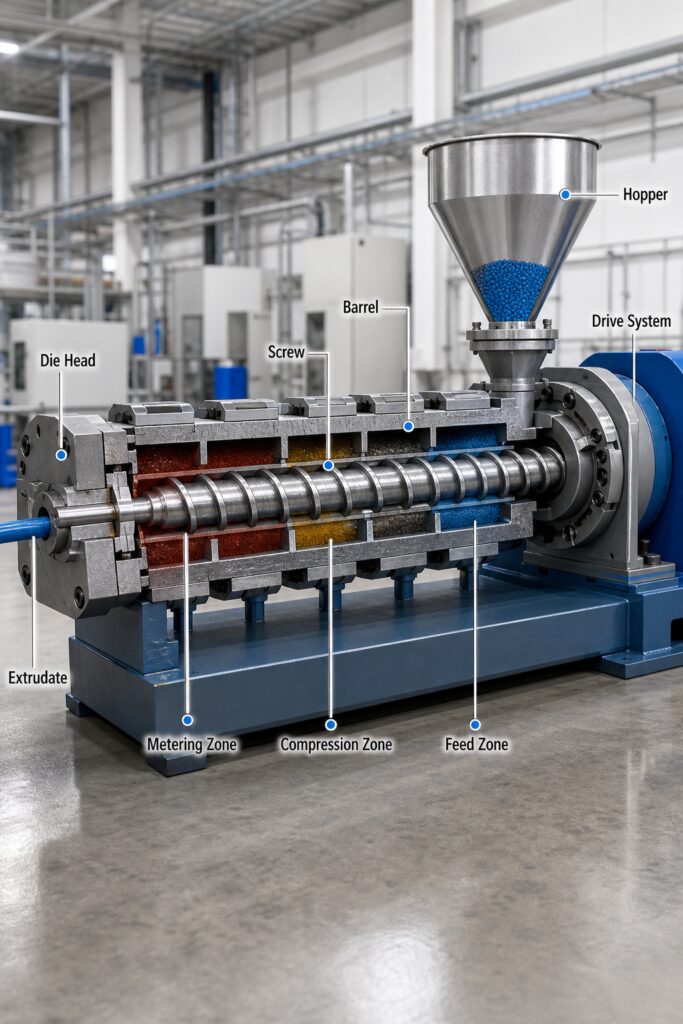
Choosing the right single screw extruder can make or break your line’s uptime. Below we break down the core parts, how they melt polymer, key specs, design trade‑offs, and upkeep tricks. This guide gives you the facts you need to pick a machine that fits your plant. Table of Contents Anatomy of a Single‑Screw Extruder How Screw Zones Drive Melting and Flow Key Performance Parameters and Operational Limits Design Specifics: L/D Ratio, Screw Diameter, Horsepower, Barrel Length Maintenance, Troubleshooting, and Emerging Trends Anatomy of a Single‑Screw Extruder A single screw extruder consists of a barrel, a rotating screw, a hopper, a die head and auxiliary systems like heaters and drives. The barrel houses the screw and provides a heated skin that transfers heat to the polymer as the screw turns. The screw itself has three zones , feed, compression and metering , each shaping the melt flow. The die head shapes the final product and the hopper feeds raw granules into the barrel. Modern machines often feature a nitrided, bimetallic barrel that resists wear from abrasive blends. Extruder Screw and Barrel from Plastivo Extrusions delivers that durability while keeping melt temperature stable. The design reduces downtime and extends the life of the barrel, a benefit many plant managers notice when processing reinforced compounds. Researchers note that barrel material choice directly impacts melt quality and energy use (ScienceDirect). A hardened surface transfers heat faster, which shortens the melting length and improves throughput. How Screw Zones Drive Melting and Flow In the feed zone the solid granules form a compacted bed. As the screw rotates, the material contacts the hot barrel wall and begins to melt a few flights downstream. The heat comes from the barrel, not the polymer, so the temperature gradient is steep. Once the melt forms, the screw geometry forces a transition from plug flow , where the material moves as a solid plug , to drag flow, where the melt is sheared and pulled along the screw channel. This drag creates a velocity profile that accelerates the melt toward the die. Advanced modeling shows how screw geometry, channel depth and barrel temperature shape that flow. Peer‑reviewed studies explain the analytical and numerical methods used to predict melt behavior, highlighting the importance of the flat‑plate model for shallow channels. Key Performance Parameters and Operational Limits When you size an extruder you look at throughput (kg/h), melt temperature, pressure at the die, and screw speed. Throughput is limited by the screw’s ability to convey melt without excessive shear that could degrade the polymer. Typical pressure ranges sit between 1.5 and 4 MPa for commodity plastics; higher pressures are needed for rigid profiles or filled compounds. Temperature control is critical , too low leaves unmelted particles, too high causes thermal degradation. Technical literature indicates that an appropriately sized motor can handle typical HDPE throughput when the L/D ratio is balanced. Design Specifics: L/D Ratio, Screw Diameter, Horsepower, Barrel Length The L/D ratio (length‑to‑diameter) dictates how much the polymer can melt and mix before reaching the die. A higher L/D (e.g., 30:1) gives more residence time for thorough melting, while a lower L/D (e.g., 20:1) favors higher output for simple grades. Screw diameter sets the capacity , larger diameters move more material per revolution. However, larger screws need more torque, so horsepower must match. A high‑power motor is common for 70 mm diameter screws in pipe production. Barrel length follows the L/D choice; longer barrels increase melt uniformity but add footprint. Plastivo’s custom designs let you pick the exact combination that fits your floor space and product requirements. Single Screw Barrel offers hardened, nitrided construction that tolerates long barrels without warping. Maintenance, Troubleshooting, and Emerging Trends Regular screw removal and inspection keep wear in check. A yearly check of the outside diameter, flight clearance and straightness catches early signs of deformation. If a screw binds during hot operation, the barrel’s thermal expansion can be the culprit. A 2.5‑in. barrel expands measurably at 250 °C, enough to trap a slightly oversized screw. Installing the screw cold, then heating the barrel, avoids this issue. Cleaning should use brass tools and copper gauze , steel tools damage the chrome plating. Stearic acid flakes help lift resin residues without scratching the surface. Pro Tip: Schedule a cold‑install inspection before each production run; it saves hours of downtime later. Emerging trends include modular extruders that let you swap screw sections for different grades, and digital twins that simulate melt flow in real time. Energy‑saving drives and inverter‑controlled heaters are becoming standard, cutting power draw by up to 15 %. High‑Efficiency Pelletizing System pairs well with a well‑maintained extruder, turning melt into uniform pellets for downstream processing. FAQ What is a single screw extruder? A single screw extruder is a machine that melts and transports polymer through a rotating screw inside a heated barrel, then forces it through a die to form continuous shapes. How does the screw create melt flow? The screw’s compression zone squeezes the polymer, raising its temperature until it liquefies, then the metering zone pushes the melt forward as a viscous flow. What materials can I process with a single screw extruder? You can process most thermoplastics , PE, PP, PVC, PET, and many engineered blends , as long as the barrel temperature matches the material’s melting range. How often should I inspect the screw? Inspect the screw at least once a year or whenever you notice a change in output, pressure or melt quality. Can I use a single screw extruder for recycling? Yes, many recycling lines use single screw extruders to melt shredded waste before pelletizing, especially for PET, HDPE and LDPE streams. What are the energy‑saving options? Inverter‑controlled heaters, frequency‑converter drives and modular barrel designs reduce heat loss and motor draw, lowering overall consumption. Ready to boost your line’s reliability and output? Try Plastivo Extrusions free → We recommend Plastivo’s nitrided, bimetallic single screw extruder for its durability and melt consistency. Contact the team today to get a quote and start a trial on
Single Screw Extruder: Technical Guide for Plastic Processors Read More »