Thinking about setting up a plastic recycling plant? You need to know what the line actually does, which machines matter most, and how to size it for your waste stream. Below we break down the basics, walk through the process steps, and help you pick the right capacity and automation level.
Understanding Plastic Recycling Plant Fundamentals
A plastic recycling plant takes post‑consumer or industrial plastic waste and turns it into reusable raw material. The plant works like a reverse factory: instead of shaping virgin resin into products, it grinds, cleans, melts and re‑forms scrap into pellets or flakes.
The first job is to separate the incoming material by polymer type. Optical sorters, magnets and air classifiers split PET, HDPE, PP and other grades. Clean streams then move to washing, where hot water and detergents strip labels, adhesives and food residue. After washing, the material is shredded into uniform pieces called “flakes”.
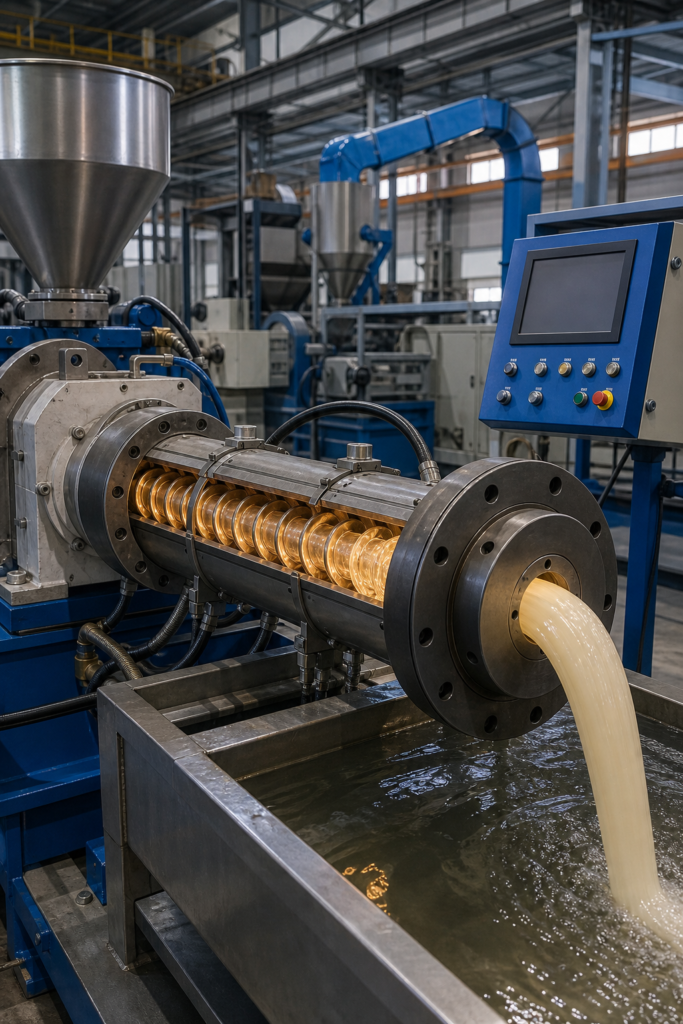
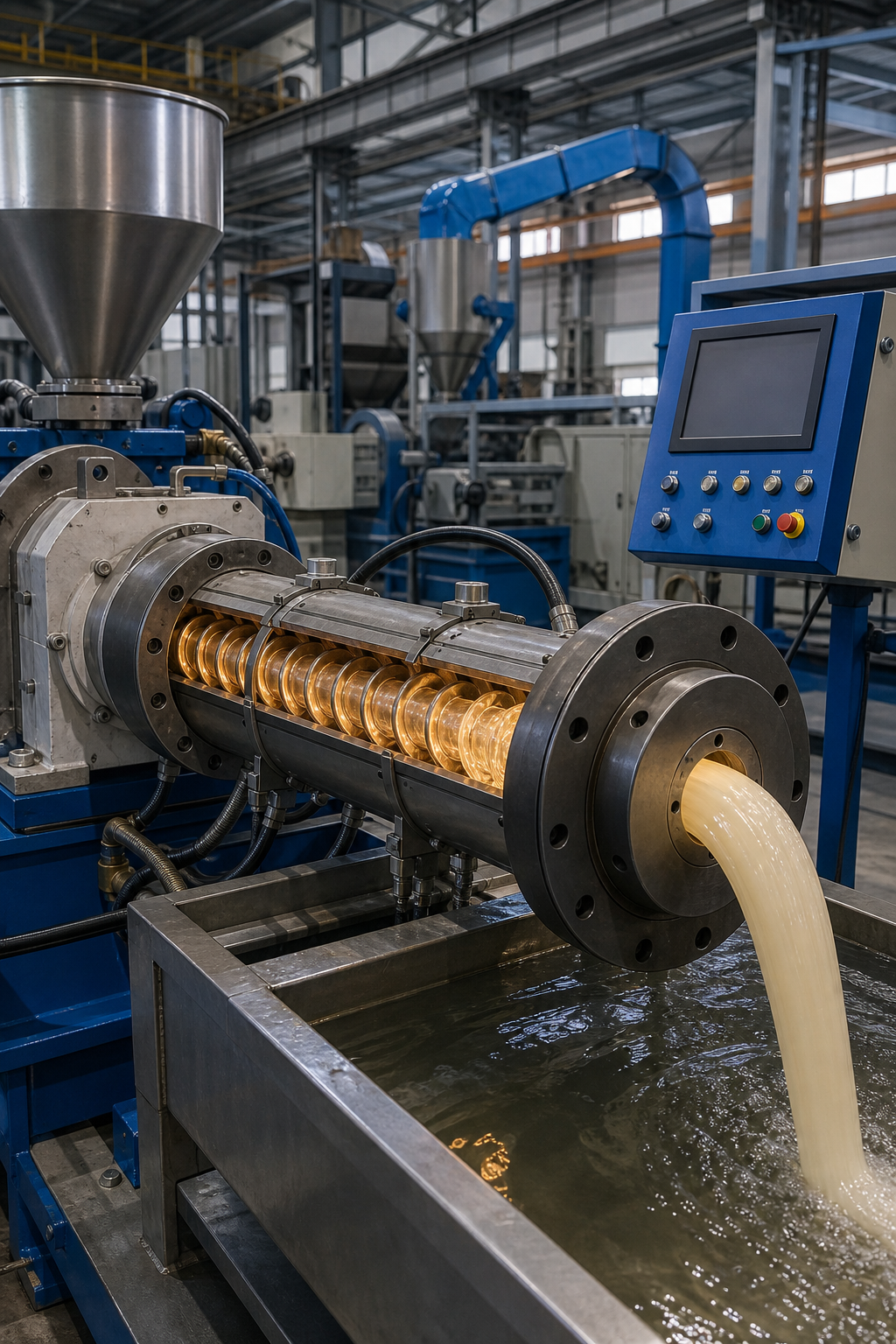
Flakes are dried, then fed into an extruder. Inside the barrel, a screw mixes the melt, removes moisture, and forces the molten plastic through a screen. The result is a strand of solidified plastic that is cut into 2‑4 mm pellets, the standard feedstock for injection molding, blow molding and other downstream processes.
Key industry standards define the terminology and quality levels for each step. Following these standards helps plant owners prove their product meets market specifications and can fetch a premium price.
In India, regulatory agencies flag plastic waste as a major environmental threat, prompting stricter regulations and new business opportunities for recyclers. That regulatory push makes it important to design a plant that meets local emission limits and waste‑handling rules.
Key Equipment and Their Technical Specs
The heart of any recycling line is the extruder. A single‑screw barrel with a high‑L/D ratio (length‑to‑diameter) provides steady melt flow while keeping energy use low. Modern barrels often feature nitrided surfaces or bimetallic construction to resist abrasion from mixed plastics.
Typical specs for a midsize single‑screw extruder include:
- Screw L/D ratio: 20‑30
- Barrel material: 38CrMoAl alloy, nitrided for hardness
- Motor power: 75‑150 kW
- Max melt temperature: 260‑280 °C (for PET) or 180‑230 °C (for PE)
Downstream, a pelletizer cuts the extruded strand into uniform granules. Strand pelletizers can handle 200‑2 000 kg/hr, while water‑ring or cutter‑compactor units offer tighter size control for film‑grade resins.
Before the extruder, shredders and granulators reduce bulky waste to 8‑12 mm flakes. Single‑shaft shredders run at low speed with high torque and can process material at high rates. Granulators add a screen mesh to achieve the final flake size needed for consistent melting.
For plants that handle mixed or contaminated streams, a second‑stage extruder (often called the “baby” extruder) can act as a filter, removing fines and improving pellet clarity.
When you choose equipment, look for sensors that monitor melt temperature, pressure and screw speed in real time. These data points let operators adjust settings on the fly, preventing overheating and reducing waste.
Process Flow: From Waste Intake to Regranulation
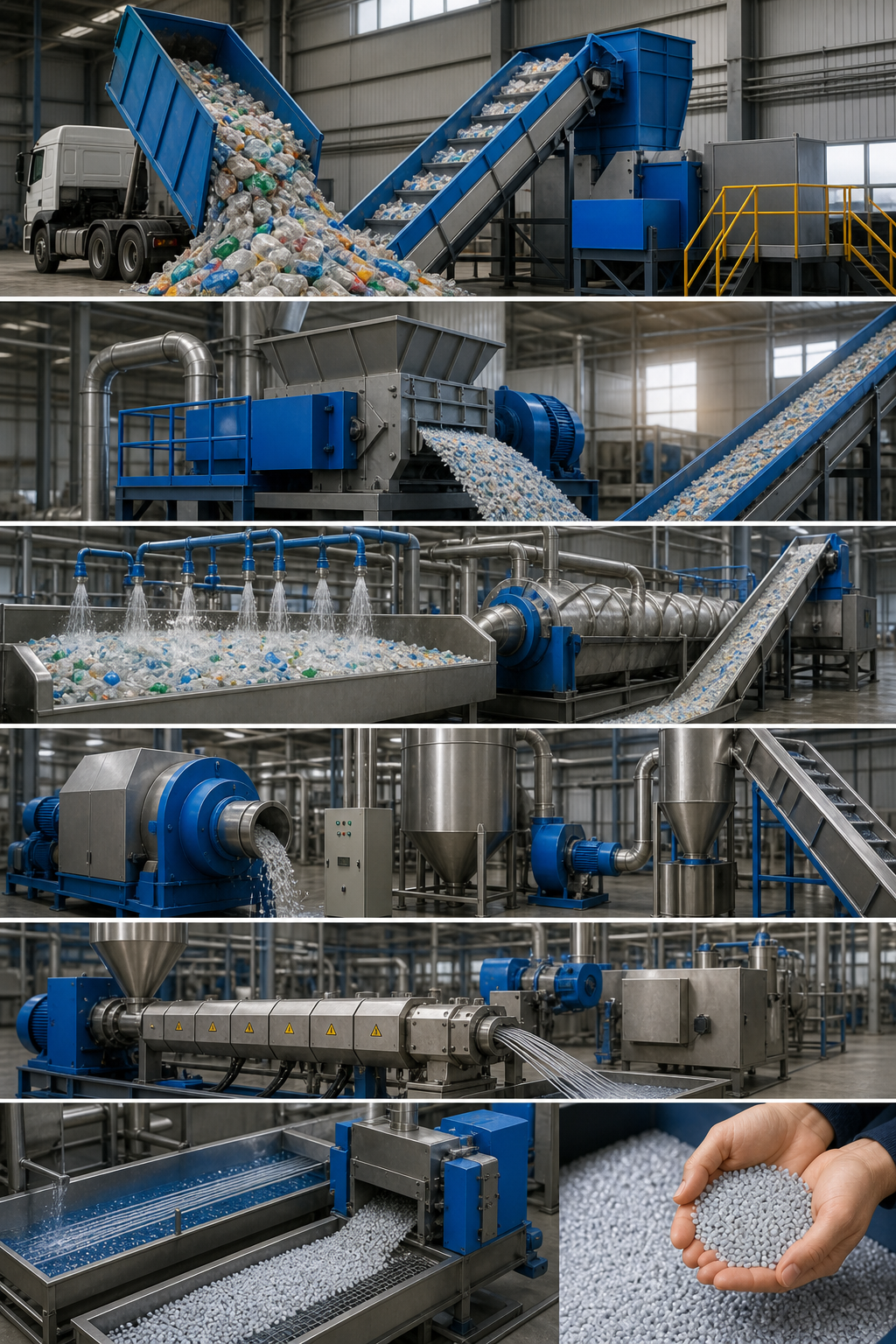
Below is the typical sequence a plant follows, from the moment a bale arrives at the dock to the point where ready‑to‑use pellets roll out of the line.
1.Intake and Baling: Trucks unload baled PET bottles, HDPE film rolls or mixed‑plastic bundles onto a conveyor. Bales are weighed and logged for traceability.
2.Pre‑Sorting: Workers or robotic arms remove large contaminants , metal, glass, wood , that could damage downstream machinery.
3.Shredding: A single‑shaft shredder chops the bale into 30‑50 mm pieces. The shredder’s low‑speed, high‑torque design minimizes wear when processing abrasive plastics.
4.Granulating: Granulators reduce the shredded bits to 8‑12 mm flakes, which flow more easily through washing tanks.
5.Washing: Flakes pass through hot water and caustic solutions that strip labels, adhesives and food residue. A float‑sink tank then separates lighter polymers (like HDPE) from heavier ones (like PET).
6.Drying: Air‑knife dryers or centrifugal dryers bring moisture below 1 % to avoid steam pockets in the melt.
7.Extrusion & Pelletizing: Dried flakes enter the extruder barrel. The screw homogeneously mixes the melt, pushes it through a screen, and the emerging strand is cut into pellets.
8.Quality Check: Infrared spectrometers verify polymer type, while sieves confirm pellet size. Any out‑of‑spec material is re‑routed for re‑processing.
9.Packaging: Pellets are cooled, de‑dusted, and packed into bulk bags for shipment to molding companies.
The whole line can be run continuously, with each station feeding the next via conveyor belts and automated gates. Automation reduces labor costs and helps keep contamination levels low.
Additional wash cycles can improve contaminant removal, enhancing the market value of the final pellets.
Choosing the Right Plant Capacity and Automation Level
Capacity is measured in kilograms per hour (kg/hr). Small boutique lines run at 200‑500 kg/hr, while large integrated plants can achieve high throughput rates. The right size depends on three things: feedstock volume, target market and capital available.
If you process a single polymer (e.g., PET bottles) and have a reliable supply contract, a higher‑throughput line makes sense. Mixed‑plastic streams, however, often require slower speeds to allow extra sorting and drying steps.
Automation level is the next decision point. Fully automated plants use PLC‑controlled conveyors, robotic sorters and real‑time monitoring dashboards. This reduces labor but adds upfront cost and requires skilled technicians for maintenance.
Automated wash‑dry‑extrude lines are available that can handle mixed streams with minimal manual intervention. Plastivo Extrusions’ mother‑baby system provides a hybrid approach: the “mother” extruder runs at high speed, while the “baby” unit adds a second filtration stage for tighter quality control without the expense of full automation.
When budgeting, consider the total cost of ownership: electricity, wear parts, and service contracts. A nitrided barrel can cut replacement frequency by up to 60 %, saving lakhs of rupees over a year.
Finally, think about future expansion. Modular designs let you add a second extruder or an extra dryer without overhauling the entire line.
FAQ
What is the typical output of a small plastic recycling plant?
A small plant usually produces 200‑500 kg/hr of cleaned pellets, enough for regional packaging or pipe manufacturers.
Do I need a separate washing line for each polymer type?
Not always. Some modern washers use adjustable temperature and chemical dosing to handle PET, HDPE and PP in the same line, but separate lines can improve purity and reduce cross‑contamination.
How much does automation add to the capital cost?
Automation can add 30‑50 % to the initial purchase price, but it often cuts labor costs by 40‑60 % and improves product consistency, leading to higher resale prices for the pellets.
Can I run a recycling plant on renewable energy?
Yes. Many plants pair solar or wind power with high‑efficiency motors and heat‑recovery systems, cutting electricity use by up to 20 %.
What maintenance does a nitrided barrel need?
The barrel itself requires little routine work; periodic visual checks for wear and a monthly oil change on the screw bearings keep it running smoothly.
Is there a market for mixed‑plastic pellets?
Mixed‑plastic pellets fetch lower prices than single‑polymer grades, but they are in demand for non‑food applications such as construction, automotive under‑body parts and agricultural films.
Ready to solve your recycling challenges? Try Plastivo Extrusions free →
Conclusion
If you need a reliable, flexible solution, start with Plastivo Extrusions’ mother‑baby system and size the line to match your feedstock volume. Contact us today to get a custom quote and begin turning waste into profit.