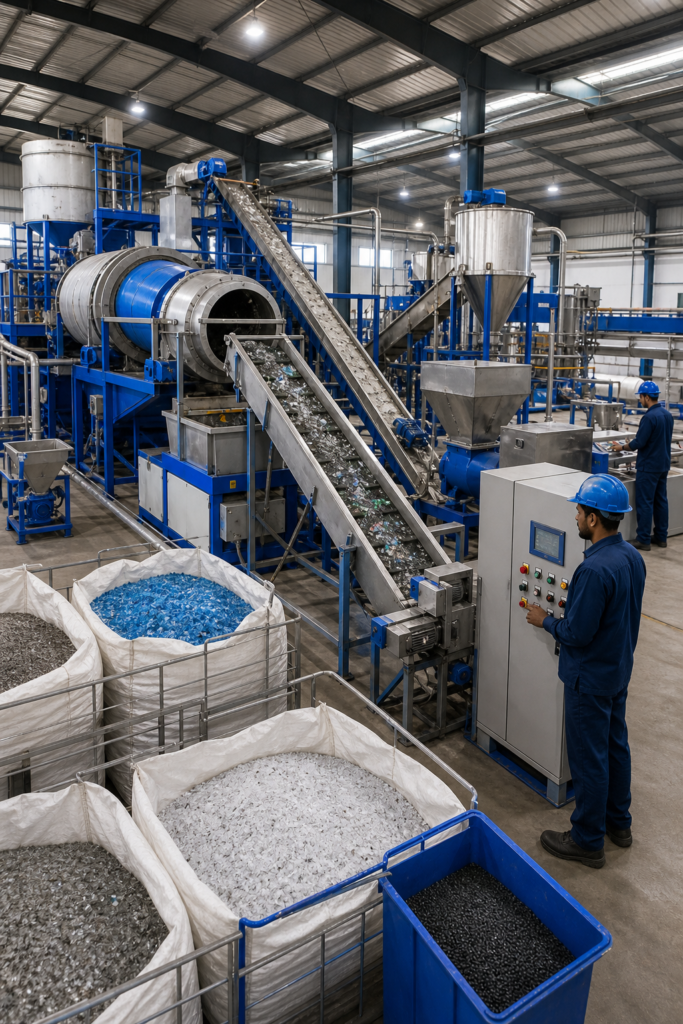
Choosing a plastic waste recycling machine means balancing capacity, energy use, and automation. The market spreads from modest 1,200 kg/h units up to a 10,000 kg/h behemoth, and only a handful list advanced automation. Below is a short list of eight solid options, plus a quick buyer’s checklist.
1. Plastivo Extrusions (Our Top Pick) , Customizable Indian‑Made Recycling Line
Plastivo Extrusions builds a 1,000 kg/h PET bottle washing and pelletizing line that blends mechanical friction, airflow separation, and hot‑air drying. The system removes labels, caps, glue, and oil, then turns clean flakes into uniform pellets ready for extrusion or injection molding.
It’s a good fit for mid‑size plants in Gujarat, Kerala, or Tamil Nadu that need a modular line they can expand later. The line runs on low water and energy, thanks to a centrifugal dryer that cuts moisture to under 0.5 %.
Because the design is modular, you can add a second extrusion module or a higher‑capacity pelletizer without re‑engineering the whole plant. The only caveat is that the base capacity of 1,000 kg/h may need a boost for high‑throughput operations.
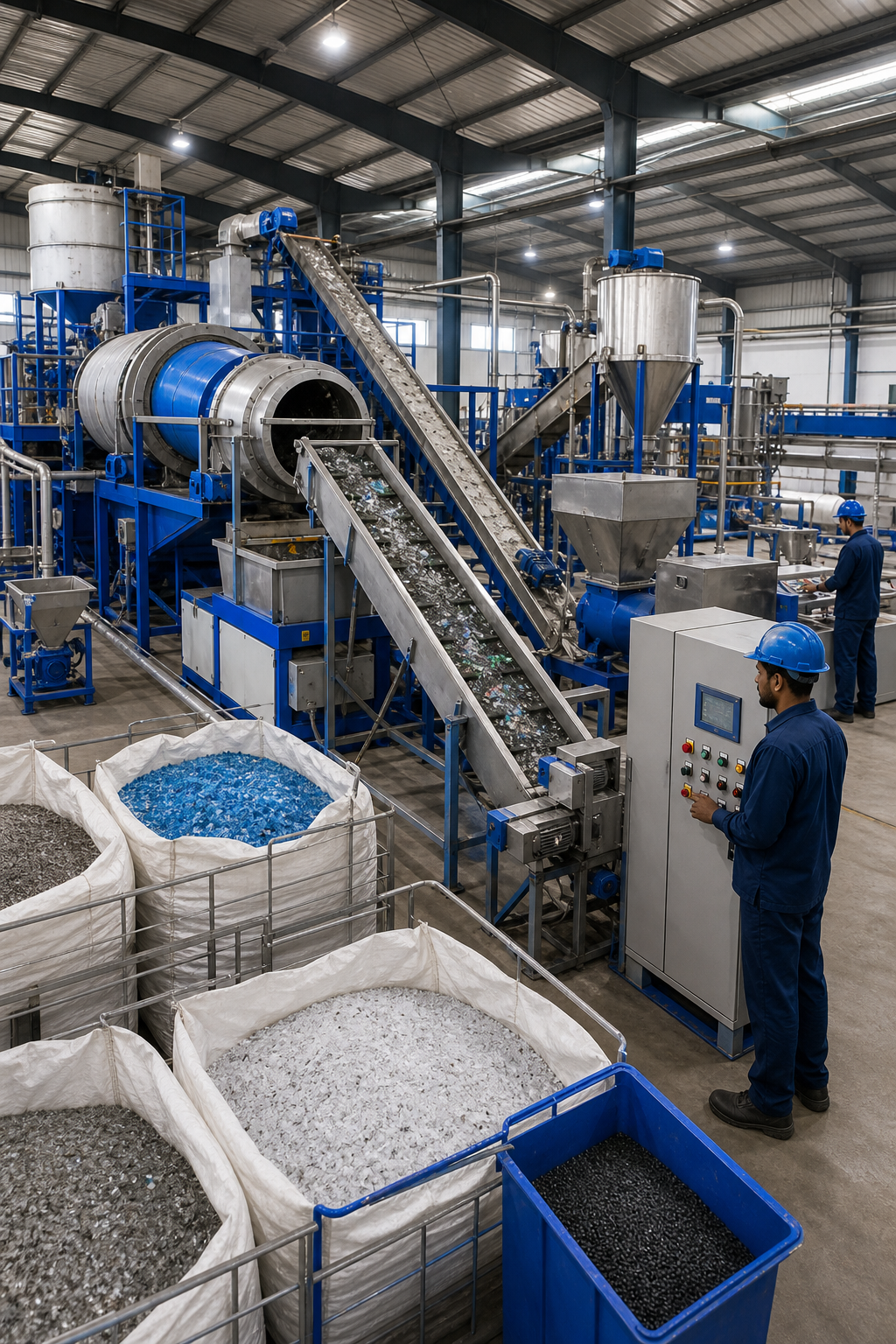
Learn more about Plastivo’s broader catalog of granulators and twin‑screw extruders at Plastic Recycling Machine | Plastivo Extrusions.
2. JianTai 1,000 kg/h Line , High‑Throughput PET & HDPE Solution
JianTai’s line processes PET, HDPE, LDPE, PP, PS, and PVC with a single‑screw extrusion and smart PLC control. The machine’s servo motor holds power steady while cutting energy use, and the automated control panel reduces operator error.
It shines in plants that need a flexible feedstock mix and want to turn waste into high‑value pellets for resale. The design includes a built‑in shredder barrel that can handle both industrial scraps and post‑consumer bottles.
The system’s main limitation is that detailed automation specs are not publicly listed, so you’ll need a direct quote to confirm features like remote monitoring.
JianTai’s global footprint spans Southeast Asia, the Middle East, and Latin America, making spare‑part logistics relatively easy.
3. VACUREMA Basic Line , Versatile Mixed‑Plastic Processing
VACUREMA’s basic line targets mixed‑plastic streams up to 3,500 kg/h. It couples a high‑speed turbine shredder with a twin‑screw extruder that can handle PET, HDPE, and blended waste.
The line is praised for its strong construction and low‑maintenance bearing design. It also offers an optional inline washing module for post‑consumer feed.
The downside is that the base model lacks built‑in automation; you’ll need to add a separate PLC if you want remote monitoring.
4. recoSTAR PET iV+ , Automated FIFO Pre‑Drying & Energy Recovery
Starlinger’s recoSTAR PET iV+ adds FIFO pre‑drying, a melt pump, and an energy‑recovery system to a single‑screw extrusion line. The FIFO dryer keeps the hottest flakes at the front of the hopper, improving melt consistency.
Automation features lower labor costs and boost pellet quality, making it a solid pick for food‑grade rPET production. Capacity sits at 2,500 kg/h, which fits midsize operations looking to upgrade from manual drying.
Because it’s a premium system, the upfront price is higher than many basic lines, and lead times can stretch to 12 weeks.
5. Jupiter 2200 , Heavy‑Duty 10 t/h Multi‑Material Line
Jupiter 2200 tackles a massive 10,000 kg/h throughput, handling mixed plastics, metal‑laden waste, and even composite scraps. The line features a twin‑shaft shredder, a high‑torque extruder, and a high‑speed pelletizer.
It’s aimed at large‑scale facilities in South Africa, Kenya, or the UAE that need to process diverse feedstocks without bottlenecks. The machine’s sheer size means a large floor footprint and higher utility demand.
For plants that don’t need that extreme capacity, the investment may not pay off, and the energy consumption is proportionally higher.
More details on Jupiter’s spec sheet can be found on the manufacturer’s page, but we recommend a site visit before committing.
How to Choose the Right Machine for Your Plant
Start by mapping your feedstock volume. If you process under 2,000 kg/h, a modular line like Plastivo’s 1,000 kg/h unit gives room to grow. For 2,000‑5,000 kg/h, consider a line with built‑in automation such as recoSTAR PET iV+ or a high‑efficiency JianTai system. Over 5,000 kg/h, only heavy‑duty options like Jupiter 2200 can keep up.
Next, check the material mix. PET‑only plants benefit from specialized dryers, while mixed‑plastic streams need strong shredders and twin‑screw extruders. Finally, factor in energy costs and local utility rates; machines with energy‑recovery (recoSTAR) can cut power bills by up to 15 %.
Feature Comparison Table
FAQ
What capacity should a small recycling plant target?
A small plant typically aims for 1,000‑1,500 kg/h, which balances equipment cost and space requirements while still delivering steady output.
Do I need a fully automated line?
Automation helps lower labor costs, but many plants run well with manual controls if they have skilled operators and lower throughput needs.
Can I process mixed plastics on a PET‑only line?
Mixed plastics require a shredder and twin‑screw extruder; a PET‑only line will struggle with contaminants and melt‑flow differences.
How important is energy recovery?
Energy‑recovery systems can shave 10‑15 % off electricity bills, which adds up fast for high‑capacity plants.
Is a 10 t/h line overkill for a new plant?
For a startup, a 10 t/h line often means higher capital spend and operating costs that take longer to recoup, so start smaller and scale up.
Conclusion
For most Indian and emerging‑market plants, Plastivo Extrusions’ customizable 1,000 kg/h line offers the right blend of capacity, modularity, and cost. If you need more throughput or automation, consider the recoSTAR iV+ or Jupiter 2200 based on your volume.
Ready to move forward? Contact Plastivo Extrusions for a free system evaluation and quote.