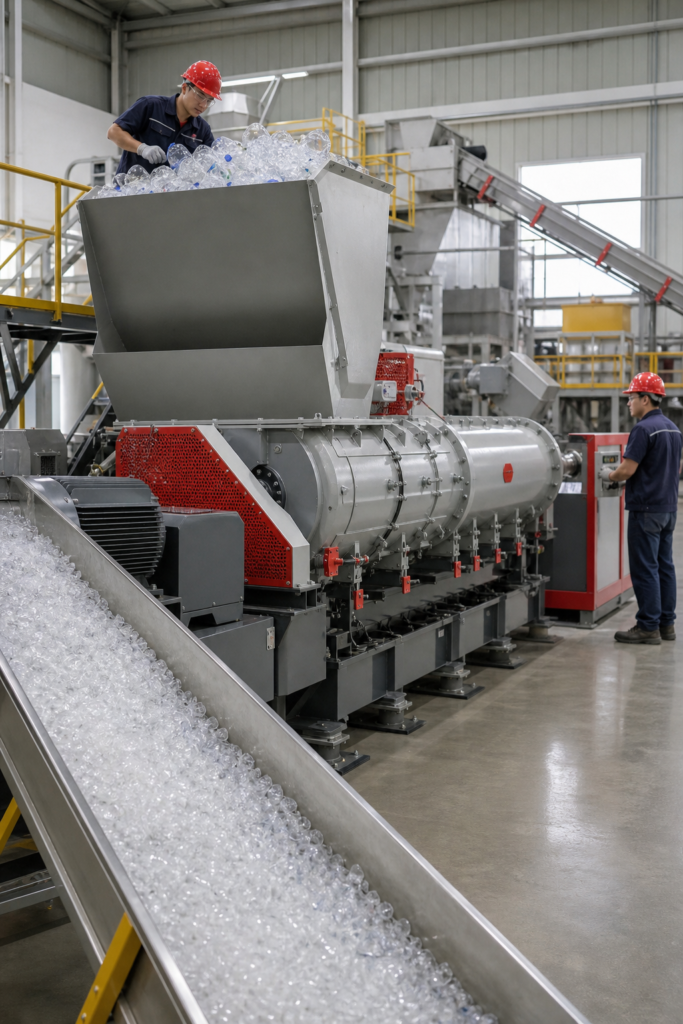
Choosing a plastic scrap grinder machine can feel like a gamble when specs are missing. We’ve pulled together the most reliable options, ranked by performance, durability, and fit for common recycling streams. Here are the eight machines that stand out, plus a quick checklist to help you decide.
1. Plastivo Extrusions (Our Top Pick) , high‑capacity nitrided barrel grinder
Plastivo Extrusions builds a nitrided barrel grinder that handles up to 3,500 kg/hr of mixed plastic waste. It’s best for mid‑size plants that need steady throughput across PET, HDPE, and PP streams.
The machine uses a dynamically balanced rotor with V‑cut chevron blades, which pulls material to the centre and cuts with less stress. This design keeps the output uniform and cuts energy spikes, meaning you spend less on electricity and see fewer die‑back issues.
Its barrel is made from wear‑resistant steel and features a split, hinged chamber for quick cleaning , a real time‑saver on a busy floor. The nitrided surface resists abrasion from filled plastics, so you get longer blade life and lower spare‑part costs.
One caveat: the high‑capacity model needs a solid 110 kW power supply, so verify your plant’s electrical headroom before ordering.
For a deeper look at how the granulator fits into a recycling line, see our Plastic Recycling Machine page.
According to Wikipedia’s definition of a plastic granulator, the cutting chamber’s geometry is the primary factor that determines re‑grind quality , a point that Plastivo’s design directly addresses.
2. Compact single‑shaft grinder for small plants
This compact single‑shaft unit fits into a 2 × 2 m floor space. It’s ideal for small workshops or start‑up recyclers that handle up to 500 kg/hr of clean scrap.
Its single‑shaft rotor runs at 1,200 rpm and uses replaceable steel knives. The knives are easy to swap, so a quick change‑over takes under ten minutes.
Because the machine is lightweight, it can be moved with a standard pallet jack, perfect for plants that need flexibility.
The main limitation is the lower power rating (around 20 kW), which means it can’t handle dense, filled plastics without slowing down.
Read more about the High‑Efficiency Pelletizing System if you plan to pair the shredder with a downstream pelletizer.
Twin‑shaft grinder, energy‑efficient design
A twin‑shaft grinder uses shafts that rotate in opposite directions, providing high cutting force with lower motor load. This design can reduce energy consumption compared with single‑shaft machines.
It accommodates rotor diameters from 300 mm to 800 mm, allowing sizing to match scrap volume. The double‑scissor cutting action produces a fine, uniform re‑grind suitable for injection molding.
The grinder includes a sound‑proof enclosure that reduces noise to below 85 dB, helping meet workplace safety standards without extra ear‑plugs.
One downside is the higher upfront cost; the twin‑shaft drive adds complexity, requiring trained staff for maintenance.
Learn how the twin‑shaft system integrates with other equipment by checking the Twin Screw Extruder Machine guide.
Low‑maintenance grinder for mixed plastics
A low‑maintenance grinder designed for plants that process a wide mix of plastics, from films to pipe scrap. Its open‑rotor design lets material flow freely, reducing the chance of jam.
The machine features a built‑in dust extraction port that connects to a cyclone separator, keeping the shop floor clean and lowering fire risk.
It runs on a 75 kW motor, which is modest for a grinder that can handle high throughput of mixed feed.
Because it lacks a sealed cutting chamber, the grinder may generate more fines, so an extra screening step is needed if a tight particle size is required.
5. High L/D ratio grinder for PET bottle scrap
A high L/D ratio grinder focuses on PET bottle waste, using a high length‑to‑diameter (L/D) screw that pushes material through a narrow cutting zone. The result is a high‑speed grind that keeps the output size consistent.
The grinder’s L/D ratio of 30:1 gives excellent material conveyance, meaning less chance of backup in the hopper.
It is best for plants that recycle large volumes of clear PET bottles, where a uniform granule size is critical for downstream extrusion.
One limitation is the need for a pre‑wash system; PET that still carries labels or caps can damage the knives.
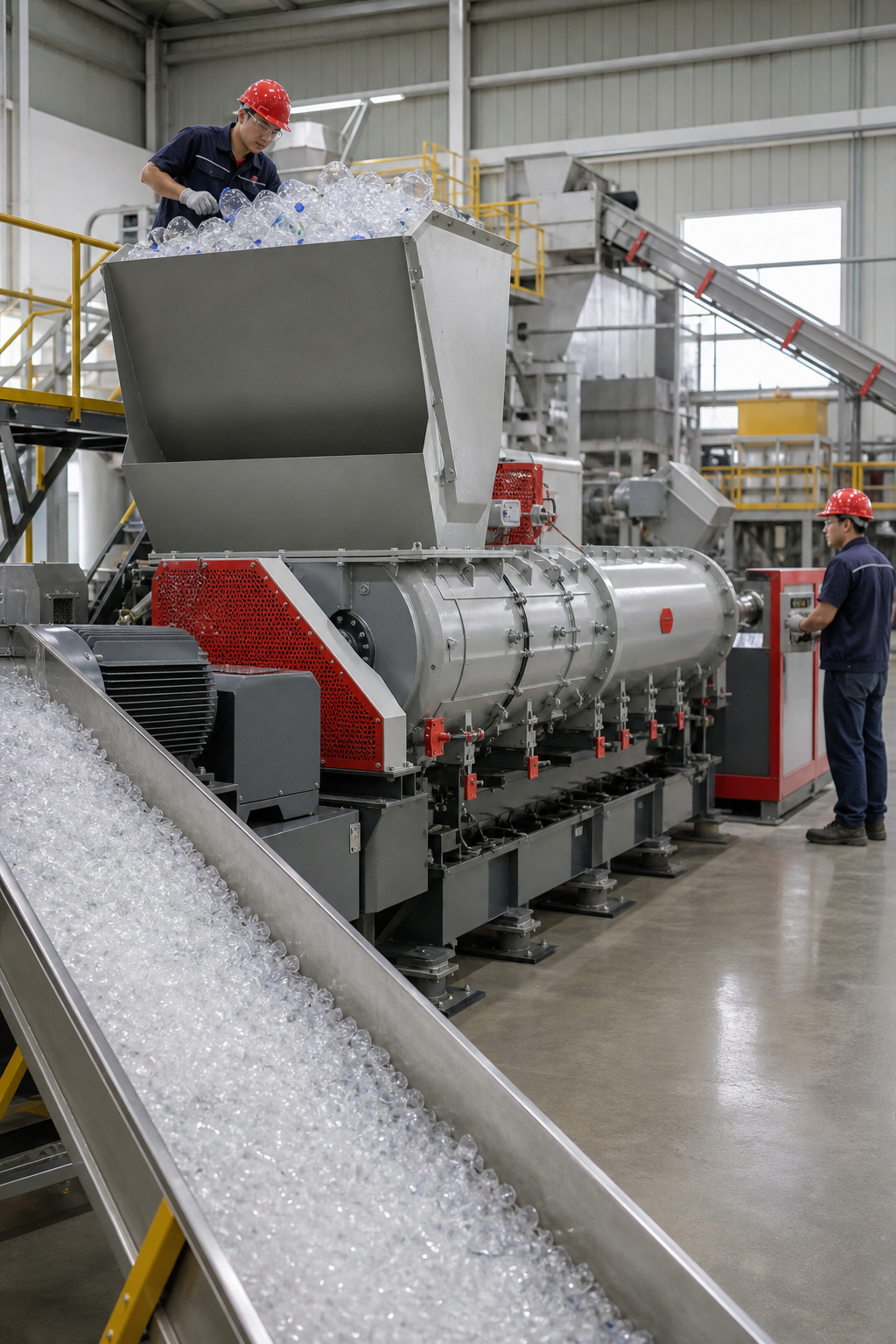
6. Comparison Table: Key Specs at a Glance
7. FAQ
What size grinder do I need for a 5‑ton‑per‑day plant?
You need a machine that can handle about 200 kg/hr, so a mid‑range unit like the Plastivo Extrusions grinder fits well. These models give enough headroom for peaks without over‑spending on power.
Can a single‑shaft grinder process mixed PET and HDPE?
A single‑shaft grinder can handle mixed streams, but it may struggle with dense HDPE pieces, leading to slower cuts. For mixed loads, a twin‑shaft or open‑rotor design is more reliable.
How important is noise control on a grinding line?
Noise control matters for worker safety and regulatory compliance. Some models include sound‑proof enclosures that keep levels below 85 dB, reducing the need for extra hearing protection.
Do I need a separate dust extraction system?
Yes, most grinders generate fine particles. Adding a cyclone separator or a built‑in blower, as seen on comparable models, keeps the shop clean and helps meet environmental standards.
What power rating should I expect for a 2,000 kg/hr grinder?
Typical power draws sit between 100 kW and 150 kW for that capacity. Plastivo Extrusions models fall in that range, offering a balance of speed and energy use.
8. Conclusion
For most mid‑size recycling plants, Plastivo Extrusions’ high‑capacity nitrided barrel grinder gives the best mix of speed, durability, and support. Contact us to get a quote and see how quickly you can boost your re‑grind output.