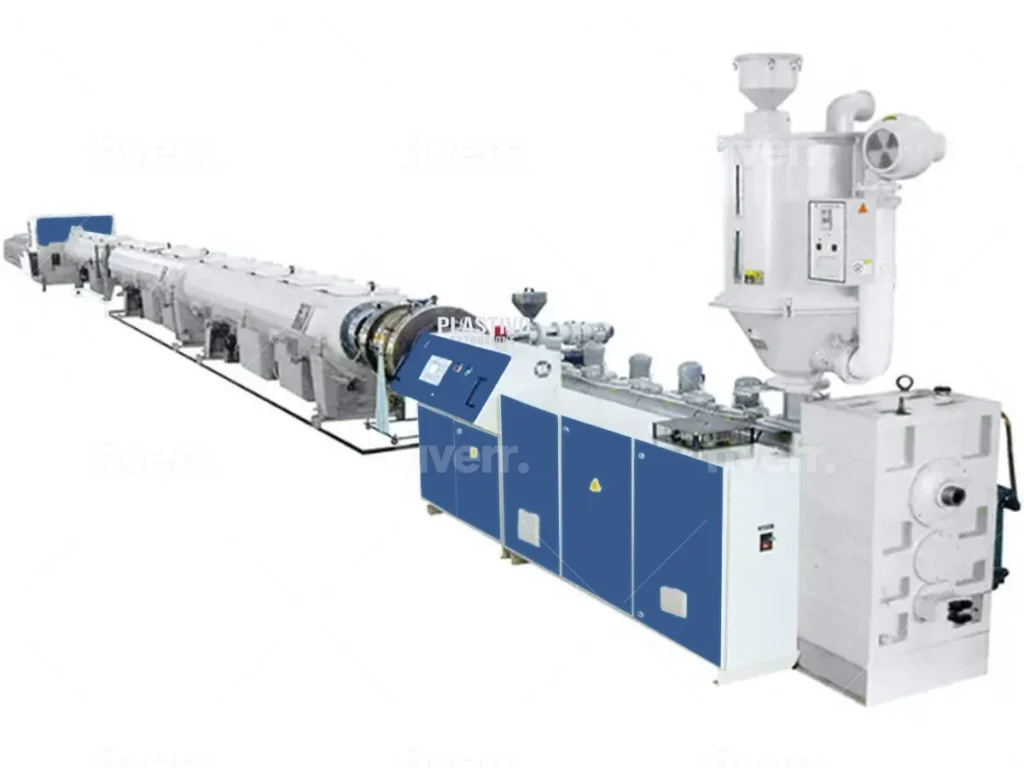
HDPE Pipe Making Machine Price in India: What Affects the Cost in 2026?
So you’re planning to invest in an HDPE pipe-making machine.
First question that comes to mind — what’s the price? Fair enough. Everyone asks that.
But there isn’t one fixed number. Because what you are actually paying for depends on multiple technical and practical factors. Two machines may look similar from the outside. Inside, they can be completely different.
At Plastivo Extrusions, we often see buyers focusing only on the lowest quotation. Later, they realise the smarter question is not “What is the cheapest option?” but “What gives stable production for years?”
Let’s look at what really affects pricing.
Capacity Changes the Equation
Production capacity plays a major role.
If you plan to manufacture small-diameter pipes in moderate quantities, the investment will be lower. But if your goal is large diameter, high-pressure pipes with heavy hourly output, the entire extrusion line becomes bigger and stronger.
Higher capacity means:
- Bigger extruder size
- Higher motor power
- Heavy-duty gearbox
- Larger cooling system
- Stronger haul-off mechanism
All of this increases the cost. But it also increases revenue potential. Buying more capacity than required is also not ideal. Underutilised machines slow down return on investment.
The Extruder – Where Quality Is Decided
In HDPE pipe production, melt consistency is everything.
If the screw design is average, you’ll see thickness variation and unstable pressure. Rejection rate increases quietly.
A well-designed screw and barrel system improves:
- Melting efficiency
- Pressure stability
- Output consistency
- Power usage control
Better metallurgy and precision machining raise the initial price. But they reduce long-term maintenance problems. You don’t see the screw from the outside. But it decides your production stability.
Automation – Cost vs Convenience
Some manufacturers still prefer basic systems with manual monitoring. Lower investment. More operator involvement.
Others prefer PLC-based panels, touchscreen controls and synchronised speed systems. That increases cost.
Automation helps in:
- Reducing human error
- Maintaining uniform pipe thickness
- Managing temperature automatically
- Improving production consistency
In 2026, labour dependency has become a real concern. Automation reduces daily stress inside the plant. Yes, it adds to the price. But it also simplifies operations.
Cooling and Calibration – Often Overlooked
After extrusion, pipes must maintain shape and roundness. That depends heavily on vacuum calibration and cooling systems.
If cooling is unstable, pipes may develop:
- Oval shape
- Surface unevenness
- Wall thickness variation
High-quality stainless steel tanks, proper vacuum pumps and efficient water circulation increase the machine cost slightly. But they reduce rejection and improve finishing. This is one area where cutting costs can hurt quality.
Haul-Off, Cutting and Finishing
Pulling speed must match extrusion speed. If it fluctuates, thickness changes along the pipe length.
Upgraded haul-off systems provide stable traction. Advanced cutting units give cleaner edges and less wastage. Basic systems cost less. Better systems improve daily smoothness. Small components. Big impact.
Power Consumption – The Hidden Factor
Electricity is a continuous expense. Especially in long production shifts. Energy-efficient motors and drives may increase initial cost slightly. But they offer:
- Lower monthly power bills
- Stable performance
- Reduced overheating
- Longer equipment life
Over five years, operating cost matters more than purchase price. Many buyers ignore this calculation.
Service and Support
This is rarely discussed during price comparison.
Ask yourself:
- Are spare parts easily available?
- Is installation support included?
- Will technical guidance be available during startup?
If the machine stops and support is delayed, production loss begins immediately. Sometimes paying slightly more for reliable after-sales service makes a big difference.
Market Scenario in 2026
Infrastructure projects across India are expanding. Water supply networks, gas distribution lines, irrigation systems, and urban development are all pushing HDPE pipe demand higher than ever.
That means manufacturers cannot rely on just any machine. It’s no longer about buying the cheapest setup and hoping it works. You need equipment that runs consistently. Stable production. Controlled quality. Manageable operating cost. That’s what matters now.
If you’re planning to invest or upgrade your production line in 2026, it’s better to speak with experienced manufacturers who understand both technology and market demand. Contact us to discuss your production goals, required capacity, and budget. The right guidance at the beginning can save you years of operational stress later.
Final Thought
HDPE pipe making machine price in India depends on capacity, extrusion quality, automation level, cooling efficiency, power usage and service reliability.
The lowest price is not always the safest choice.
Better to evaluate what the machine will cost you over the next five years, not just what it costs today. Because in manufacturing, consistency quietly builds profit.
And in 2026, efficiency will decide who grows… and who struggles.
Learn how manufacturers turn waste into revenue in From Plastic Waste to Profitable Granules: How the Plastic Granules Making Process Works and discover the process step by step.

At Plastivo Extrusions, we specialize in designing and manufacturing high-performance plastic extrusion, recycling, and pipe-making machines. With a strong commitment to innovation, quality, and customer satisfaction
Pages
Contact
- +919898241416
- sales@plastivoextrusion.com
- GST No.-24AAVHA8297E1ZU
Links
